

Tipu Sultan and the Perils of Canonising Cruelty
- Kiran D. Tare

- Feb 17
- 5 min read
To treat the Mysore ruler and Chhatrapati Shivaji Maharaj as comparable figures is not merely bad history, but an abdication of all moral judgement.

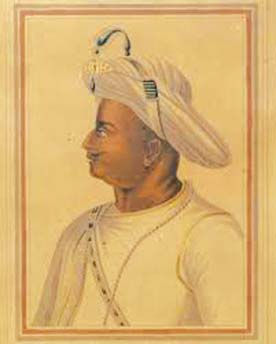
When Maharashtra Congress chief Harshwardhan Sapkal, with an eye to minority appeasement, recently declared Tipu Sultan the equivalent of Chhatrapati Shivaji Maharaj, he was tapping into a long-running project which is the rehabilitation of the Mysore ruler as a ‘secular, proto-nationalist hero.’
Sapkal’s argument was that just as Chhatrapati Shivaji Maharaj fought foreign domination (Mughals, the Deccan Sultans, the British), Tipu (r. 1782-99), too, fought the British with determination. Therefore, both men belong to the same moral universe of bravery, tolerance and patriotism. This syllogism, long popular in Congress and so-called ‘left-liberal’ circles, has long relied on an aggressive editing of the historical record.
Such arguments conveniently forget the sheer brutality that non-Muslims, especially Hindus and Christians, had to endure under Tipu’s rule and what his regime actually looked like.
One of its most influential cultural moments in the modern canonisation of Tipu came in 1997, when the respected playwright Girish Karnad staged ‘The Dreams of Tipu Sultan’ - a play that presented the Mysore ruler as a tragic, visionary patriot, wronged by colonial chroniclers and misunderstood by history.
Karnad described his work as a “counter-discourse” to British records, built on ‘alternative’ documents and intended to rescue Tipu from the caricature of oriental despotism. The critical acclaim was immense and so was the political signalling. Karnad later suggested that Bengaluru’s international airport should have been named after Tipu rather than Kempe Gowda, provoking furious protests from the descendants of those who had suffered under Tipu.
Consistent Whitewashing
Such whitewashing sits uneasily with the documentary record. Tipu inherited from his father, the usurper Haidar Ali who overthrew his Wodeyar patron, not just a kingdom but a template for rule by terror. Haidar’s campaigns in Malabar in the 1760s were marked by mass executions, village burnings and forced deportations. French officer De La Tour, serving Haidar, described roads strewn with mutilated bodies and Mopilla auxiliaries massacring civilians without sparing women or children. Indian chronicler Ramchandra Rao Punganuri recorded thousands of Nairs hanged and tens of thousands deported to Seringapatam. Mark Wilks, who was political resident at the court of Mysore from 1803 to 1808, and interviewed several Mysore officials, estimated that of fifteen thousand forcibly relocated captives of which perhaps two hundred survived.
Wilks, in his monumental three-volume ‘Historical Sketches of South India’ (1810), notes that from his youth Tipu took “particular delight” in wounding or killing sacred bulls attached to Hindu temples - a detail liberals prefer to dismiss as colonial gossip, until they recall that Wilks was recording conversations with Mysore’s own officers. Tipu’s letters are even less ambiguous. Writing in 1786 about a rebellion in Supa, he recalled with grim satisfaction how, under his father, ten to fifteen thousand men had been hanged from trees - trees that were, in his words, “waiting for more men.”
An 18th-century Portuguese ecclesiastical account, preserved in Antigualhas, describes mass circumcisions of Christians and Hindus alike, temples demolished, churches razed, priests imprisoned or banished, and celebrations held to mark conversions.
Economic records tell a similar story. The Asiatic Annual Register (1799), drawing on information from one of Tipu’s own officers and translated by Captain James Achilles Kirkpatrick, reports that revenues fell sharply after Tipu replaced experienced Hindu officials with Muslims and deported around 70,000 Christian cultivators from Biddinore and Sonda.
The pattern repeated in Kodagu (Coorg). In his own memoir, Tarikh-i-Khudadadi, Tipu describes crushing repeated rebellions, rebuilding forts, renaming towns, and issuing a vow to Allah that if the Kodavas rebelled again, he would convert the entire population to Islam and transplant them elsewhere.
The problem is not that Tipu fought the British. The problem is that a growing class of Indian liberals wishes to remember only that and canonize him as a glowing ‘freedom fighter’ in the annals of Indian resistance to foreign rule – a perception reinforced in the public imagination through Bhagwan S. Gidwani’s distorted historical fiction ‘The Sword of Tipu Sultan’ and particularly, filmmaker Sanjay Khan controversial television serial based on it, which aired between 1990-91 and misrepresented Tipu as a benevolent ruler.
Then there is the matter of Tipu’s harem, which liberal retellings either ignore or sanitise. Contemporary accounts by Francis Buchanan (A Journey from Madras) and official reports by Captain Marriott record over 600 women confined in the seraglio, many seized from Hindu families, including Brahmins and royal households, often after their male relatives were executed for alleged treason.
Tipu’s own correspondence removes any lingering ambiguity. Letters to the Ottoman Sultan (1799) and to Zaman Shah of Afghanistan (1797), preserved in Official Documents Relative to the Negotiations Carried on by Tippoo Sultaun and the Wellesley Despatches, speak openly of jihad, of cleansing Hindustan of ‘infidels’ and of mass conversions in Malabar.
This was not the language of a proto-nationalist imagining a plural India but the language of a theocratic ruler imagining religious conquest.
To compare this worldview with that of Chhatrapati Shivaji is intellectually dishonest. Shivaji Maharaj’s statecraft drew legitimacy from dharma, not forced conversion. His treatment of religious sites and women attested across hostile and friendly sources alike followed strong moral codes that Tipu’s own records openly rejected.
A Freedom Fighter?
The most elaborate act of historical laundering concerns Tipu Sultan’s afterlife as an anti-colonial hero, sometimes even as India’s “first freedom fighter.”
Tipu fought the British. So did many rulers. That alone does not make him a freedom fighter, still less a martyr for India’s independence. He fought to preserve his own kingdom and his own ideological project, and failed. Adolf Hitler also fought Britain; it did not make him a champion of freedom.
As the late G.B. Mehendale observed in his forensic ‘Tipu as he really was,’ an anthology edited by Irfan Habib, tellingly titled Confronting Colonialism: Resistance and Modernisation under Haidar Ali and Tipu Sultan, frames Tipu as if he were engaged in a proto-national struggle against foreign domination. The evidence suggests otherwise. Tipu did not oppose colonialism as a system. He opposed British power because it obstructed his own ambitions.
In February 1797 a damaged French ship limped into Mangalore. Its captain, François Ripaud, a confidence trickster posing as a senior French emissary from Mauritius, convinced Tipu that France was preparing a major expedition to expel the British from India. Tipu believed him. What followed is revealing. In instructions dated 2 April 1797 to his envoys, Tipu proposed that France send 10,000 French soldiers and 30,000 African troops, in return for which all territory and property seized from the British and Portuguese would be divided equally between France and Mysore (Asiatic Annual Register, 1799).
This was Tipu’s idea of “confronting colonialism” by replacing one European empire with another, while retaining his own sovereignty. There was nothing national let alone Indian about it.
His correspondence with Zaman Shah of Afghanistan, dated 5 February 1797, exposes the larger design and outlines a joint holy war.
As per this plan, the Afghan ruler was to expel the Hindu Marathas from Delhi; Tipu, advancing from the south, would crush their remaining power in the Deccan. The objective was not independence from Europe, but the re-establishment of Islamic rule over Hindustan. The British were merely one obstacle among several.
This intent aligns precisely with Tipu’s internal policies. Works produced under his patronage repeatedly exhort Muslims to wage jihad against ‘infidels.’ His revenue regulations explicitly rewarded conversion: converts paid half the tax and were exempt from house levies. Temples were destroyed in large numbers. Tipu’s was an Islamic state by design, and not an embryonic secular polity resisting foreign domination.
To describe Tipu’s record as ‘anti-colonial nationalism’ is to pervert the term. Tipu’s struggle was not against colonialism as an exploitative system but against a non-Muslim power - European or Indian - that stood in the way of his theocratic project. The British happened to be the strongest of his enemies. Unfortunately, that coincidence has been elevated into virtue.


Tipu is an object of reverence in Pakistan; naturally so, as he lived and died for Islam. A Street in Islamabad (Rawalpindi) is named after him. A missile developed by Pakistan bears his name. Even in India there is no lack of his admirers. Recently the Government of Karnataka decided to celebrate his birth anniversary, a decision which generated considerable opposition. While the official line was that Tipu was a freedom fighter, a liberal, tolerant and enlightened ruler, its opponents accused that he was a bigot, a mass murderer, a rapist. This book is written to show him as he really was.
You can get the book here : https://samvitprakashan.com/product/tipu-as-he-really-was/