top of page

By:

Anusreeta Dutta

26 April 2026 at 1:22:24 pm

One Maharashtra, Unequal Priorities

Six decades after statehood, constitutional safeguards remain necessary to bridge the gap between western Maharashtra and the regions left behind. Maharashtra is often referred to as India’s economic engine. The state, which is home to Mumbai’s financial ecosystem and Pune’s industrial corridor, contributes about 14 percent to the GDP of India. There is a long-standing dispute behind this achievement that has affected state politics for decades. Is every district in Maharashtra thriving at...

One Maharashtra, Unequal Priorities

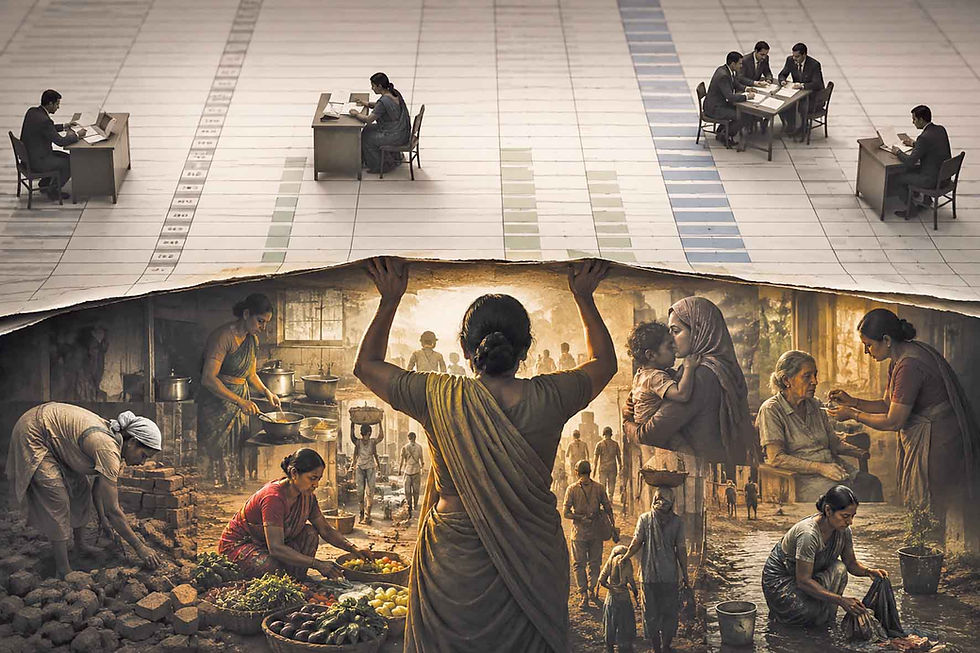
Six decades after statehood, constitutional safeguards remain necessary to bridge the gap between western Maharashtra and the regions left behind. Maharashtra is often referred to as India’s economic engine. The state, which is home to Mumbai’s financial ecosystem and Pune’s industrial corridor, contributes about 14 percent to the GDP of India. There is a long-standing dispute behind this achievement that has affected state politics for decades. Is every district in Maharashtra thriving at the same pace? It is not just a political question. It is written into the Constitution proper. Unlike most states in India, Maharashtra has a unique constitutional provision under Article 371(2) which empowers the Governor to ensure that development funding and opportunities are equally shared between Vidarbha, Marathwada and the rest of Maharashtra. The clause was born out of fears that some areas would be forgotten once the state was established in 1960. Six decades later, the existence of this constitutional safeguard raises an uncomfortable question: why does Maharashtra need tools to balance regional development still? Regional Disparity The seeds of regional disparity were sown long before the birth of Maharashtra. Western Maharashtra had early investments in irrigation, cooperative sugar mills, educational institutions and transportation. The centres of industrial growth followed by agricultural commercialisation were Pune, Satara, Sangli, Kolhapur and part of Nashik. Vidarbha and Marathwada chose the other. Agriculture was still heavily dependent on monsoon rains, industrialization was slow and irrigation coverage was less than the state averages. Regional studies in Maharashtra have repeatedly shown that irrigation intensity and agricultural yield are higher in western districts than in much of eastern Maharashtra. These differences subsequently led to calls for institutional safeguards. In contrast, in western Maharashtra, government moves are increasingly geared towards growth, not deficit reduction. The region’s success is built on industrial corridors, logistics infrastructure, urban mobility projects and advanced manufacturing clusters. Pune has emerged as a hub for vehicles, computer technology, defence production and startups. Mumbai remains a major draw for investment in metro rail networks, coastal roadways, financial services infrastructure and international business zones. Agricultural practices in western Maharashtra are in a relatively advanced stage of development. Irrigation coverage is much better than many districts in the east, so the authorities can concentrate on raising productivity, export-oriented, value-added farming and agro-processing industries. Western Maharashtra’s policy, in a nutshell, is to make competitive regions more competitive. Eastern Maharashtra is very different. Here, the Governments have not only focused on accelerating growth but also on reducing the backlog of development. The main policy question is irrigation. For many decades official studies have consistently identified irrigation as the most important factor for regional disparities. Even with dedicated funds, the backlog of irrigation in Vidarbha and Marathwada kept growing, requiring repeated interventions by successive governments. To tackle this, region-specific irrigation corporations, such as Vidarbha Irrigation Development Corporation (VIDC) and Godavari Marathwada Irrigation Development Corporation (GMIDC) were established with a specific mandate to speed up water infrastructure projects. The Union Government has sanctioned a special irrigation package for Vidarbha, Marathwada and draught prone areas of Maharashtra, with an objective to increase irrigation potential and improve water security of the farmers. Even today, a lot of public money is spent on irrigation projects in eastern Maharashtra. Government affidavits and parliamentary replies say crores of rupees are spent every year to make up for irrigation shortfalls and to finish long-pending projects. This emphasis reflects an important reality: while the western part of Maharashtra talks about competitiveness, the eastern part of Maharashtra continues to debate water access. Another area where there are divergent approaches is industrial policy. Market forces have played a major role in the industrial expansion of western Maharashtra, a process assisted by the existing infrastructure and urbanization. In contrast, Eastern Maharashtra has frequently depended on state-led interventions to draw investment to lagging regions. Projects such as the Multi-modal International Cargo Hub and Airport at Nagpur (MIHAN), logistics corridors, special industrial incentives and infrastructure subsidies were to divert industrial expansion away from the Mumbai-Pune region. Likewise, recent government announcements have earmarked Vidarbha to become a future hub for solar energy, semiconductors, aerospace manufacturing and logistics, with Marathwada being pitched for electric vehicle and electronics investments. Whereas in western Maharashtra, the policy tends to buttress pre-existing advantages, in eastern Maharashtra the industrial policy aims to generate such advantages from the beginning. Regional Equilibrium These divisions have persisted, leading to separate institutions of governance. Vidarbha and Marathwada have statutory development boards to monitor regional imbalances and recommend corrective actions. Their emergence is an indication of a broader acceptance that market forces alone have not been adequate to promote balanced growth in Maharashtra. The second capital of Maharashtra is also Nagpur. The same ideology. The state legislature meets every winter in eastern Maharashtra to ensure that the issues concerning the region remain in the political focus. The issues discussed generally are irrigation, agriculture, tribal welfare and regional development in these sessions. The controversy over regional equity, however, is still unresolved. According to critics, despite decades of special packages and focused strategies, many irrigation projects continue to face delays, cost overruns and implementation problems. Several big projects in Vidarbha remain incomplete despite years of cash pledges. There is now a growing body of policy thinking that suggests that Maharashtra may have to give up the very terminology of backlog elimination. In its own discussion on balanced regional development, the state attaches more importance to reforms in governance, diversification of the economy and speeding up growth, than to compensatory spending. The challenge is not just building canals and roadways anymore but building lasting economic ecosystems that can hold on to talent, draw investment and create jobs beyond the traditional Mumbai-Pune boom corridor. The real test for Maharashtra will be whether future policies can turn Vidarbha and Marathwada from regions requiring special support to regions capable of driving growth on their own. Till then Maharashtra’s development story will be two stories. (The author is a columnist and climate researcher with experience in political research analysis and energy policy. Views personal.)

Welcome the New Year with Open Arms

The end of one calendar year and the beginning of another invite us to reflect on the journey behind us and welcome the New Year with gratitude and inner peace.

As the calendar quietly turns its final pages, we arrive at that tender, reflective space between what has been and what is yet to come. The year is drawing to a close, not with noise alone, but with meaning and quiet introspection. It is a moment that invites us to pause, to breathe deeply, and to acknowledge the journey we have travelled over the past twelve months, with all its lessons, efforts, and emotions. Every ending, after all, carries within it the promise of a new beginning, reminding us that closure is not an end but a transition into possibility.


The closing of a year is not merely a change of dates. It is a symbolic threshold, a pause between what has been lived and what is yet to unfold. Behind us lie days filled with effort and learning, challenges and joys, disappointments and small victories, silent struggles, and moments that will remain unforgettable. Ahead of us stretches a fresh, unwritten chapter, clean pages waiting patiently for new stories to be written, new dreams to be imagined, and renewed hope to take root.


Let us welcome the New Year with open arms, embracing it with openness and intention. Not hesitantly, not fearfully, but wholeheartedly and with quiet confidence. Let us greet it with happiness, not the fleeting kind dependent on circumstances or external rewards, but the deeper happiness that grows from acceptance, gratitude, and inner peace. Let us consciously invite positivity into our lives, understanding that positivity is not the absence of problems but the presence of strength, faith, and clarity even when challenges arise.


As we step forward, let us consciously choose to leave behind the bitterness of the past year. The misunderstandings, the regrets, and the moments of anger or sadness were teachers, not punishments. They came to shape us, to refine our understanding, and to help us grow wiser, stronger, and more compassionate. There is no need to carry their weight into the future or allow them to cloud what lies ahead. What no longer serves our peace, growth, or well-being deserves a gentle and respectful farewell.


This does not mean forgetting the past. On the contrary, it means honouring it with honesty and gratitude. Let us cherish all the memories of the previous year, the laughter shared with loved ones, the quiet moments of self-discovery, the goals achieved through perseverance, and even the failures that taught us resilience and humility. Each memory, whether pleasant or painful, has played a role in shaping who we are today and how we see the world. They are threads in the fabric of our life story, woven together by time and experience, and each one truly matters.


The New Year brings with it a quiet yet powerful sense of renewal. It whispers possibilities and opens the door to fresh beginnings. It encourages us to believe again, to try again despite past setbacks, and to dream again with renewed faith. It invites us to set intentions, not merely resolutions written in haste, but thoughtful and meaningful commitments to ourselves. Commitments to grow steadily, to learn continuously, to be kinder in our words and actions, to work sincerely toward our goals, and to live more consciously each day.


Let us move forward with hope in our hearts and faith guiding our steps. Let us trust that even if the path ahead is not always smooth or predictable, we have the inner strength and resilience to walk it with grace. Let us consciously choose patience over haste, gratitude over complaint, and compassion over judgement in our daily lives. And let us make room for beautiful things, beautiful thoughts, beautiful habits, beautiful relationships, and meaningful experiences that enrich our lives and uplift our spirit.


May the coming year be one of balance and clarity, guiding us toward a more mindful way of living. May it bring peace to the mind, warmth to the heart, and a deeper sense of purpose to our actions and choices. May we learn to celebrate small joys, respect our own pace, and honour our inner values as we move through each day. May we become not just more successful in what we do, but more fulfilled in who we are.


As the old year gently takes its leave, let us bow to it with gratitude. And as the New Year arrives, let us step forward with courage, positivity, and open hearts, ready to embrace all that life has in store.


Happy New Year to you.


(The writer is a tutor based in Thane. Views personal.)


Comments


bottom of page