The Price of a Classroom Seat
For a student from a drought-stricken village in Maharashtra, getting into college may be only the beginning of a much harder struggle. The real challenge often starts afterwards: finding two meals a day, paying hostel rent, buying books and meeting the everyday expenses of living in a city. A university admission letter may open the door to opportunity, but poverty can make it impossible to walk through it.
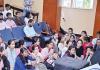
A survey conducted by Student Helping Hands, an organisation working with students from drought-affected regions, has brought this largely overlooked dimension of educational inequality into focus. The survey was carried out among participants at a conference organised by the organisation in Pune. Its findings suggest that financial assistance for disadvantaged students must extend well beyond tuition fees if higher education is to remain accessible to them.
Drought has consequences that reach far beyond the fields. When agricultural livelihoods collapse, families are often compelled to migrate in search of work. Children’s education is among the first casualties of this displacement. Those who manage to move to cities for further studies frequently discover that the costs of urban living are as formidable as the academic demands of their courses. For some, the immediate concern is food; for others, it is the mounting burden of college fees, accommodation and study materials.
Beyond Fees
The survey gathered responses from 526 students. Of these, 143, or 27.2 percent, were women, while 383, or 72.8 percent, were men. A substantial 81.4 percent were between 18 and 25 years of age, with the remaining 18.6 percent belonging to the 26–35 age group. Some 88.8 percent were pursuing regular academic courses, while approximately 12 percent were preparing for competitive examinations.
The geographical spread of respondents is equally revealing. Marathwada accounted for 145 participants, or 27.6 percent of the total, while 56 students, or 10.6 percent, came from Vidarbha. The largest group, 325 students or 61.8 percent, belonged to other parts of Maharashtra. The figures suggest that the financial difficulties confronting students who migrate to Pune for education are not confined to the state's traditionally drought-prone regions. They reflect a wider problem of economic vulnerability among young people seeking educational opportunities away from home.
The most telling findings concern the kind of assistance students actually need. As many as 222 respondents, approximately 42 percent, sought a food scholarship. The remaining 304, or 57.8 percent, requested support for academic fees, hostel charges, access to study spaces and other educational necessities.
The demand for food scholarships deserves particular attention. Educational policy tends to measure deprivation through familiar indicators such as tuition costs, examination fees and scholarships. Yet a student who cannot afford regular meals is unlikely to concentrate adequately in a classroom, prepare for examinations or make the most of an educational opportunity. Hunger is not an incidental inconvenience in the pursuit of learning; it can become a direct impediment to it.
Wider Safety Net
The distinction between being admitted to an institution and being able to complete a course is crucial. Fee waivers and concessions may help students cross the threshold of higher education, but they do not necessarily enable them to remain there. Accommodation, nutritious food, healthcare, books, transport and access to suitable study facilities all contribute to educational continuity. When these costs accumulate, dropping out can become an economic necessity rather than an academic choice.
A more comprehensive response would therefore combine food scholarships with financial assistance for educational expenses. Institutions and social organisations could also expand earn-and-learn programmes, provide affordable accommodation and create accessible study spaces. Such interventions would address the circumstances in which students actually live and study, rather than treating education as an expense confined to the classroom.
The government has an important role, but the responsibility need not rest with it alone. Educational institutions, voluntary organisations, philanthropists and individuals can help build a support system that identifies vulnerable students before financial distress forces them out of college. The survey conducted by Student Helping Hands offers a useful starting point: assistance must be based on the specific needs of students, not merely on broad assumptions about poverty.
For families already struggling with drought and uncertain livelihoods, a child’s education is a possible route out of intergenerational economic insecurity. Helping such students remain in the educational system can strengthen not only their own prospects but also the social and economic resilience of their families.
(The writer is a lawyer and president, Student Helping Hands. Views personal)