

All eyes on your gold now
- Quaid Najmi
- May 11
- 4 min read
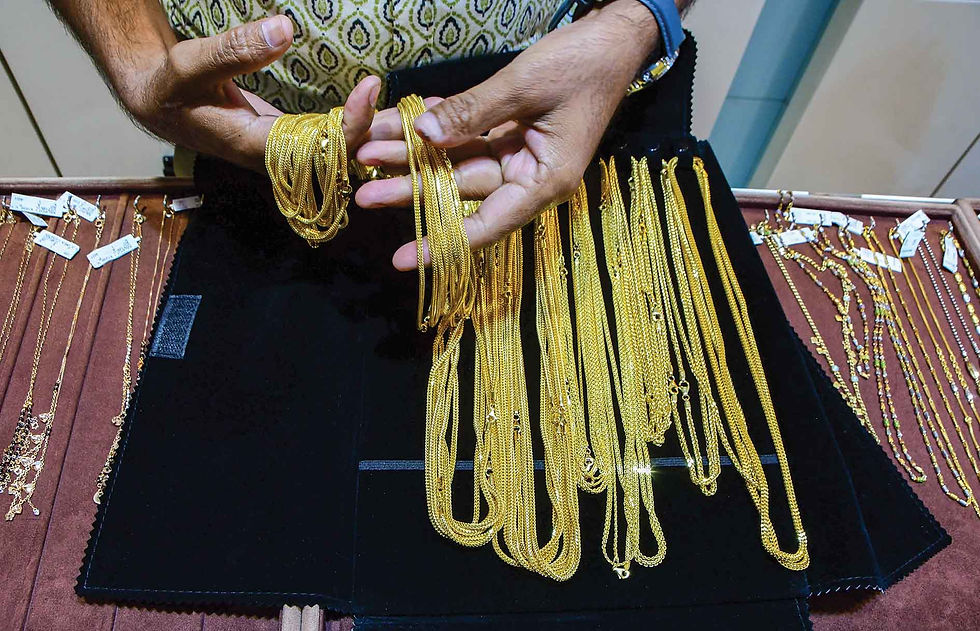
Mumbai: As Prime Minister Narendra Modi called upon citizens to embrace austerity and voluntarily refrain from purchasing gold for at least a year, a nationwide furor erupted over India’s deep emotional, cultural and economic relationship with the precious, glittering yellow metal.
The PM’s innocuous appeal for frugality quickly snowballed into a larger debate on the staggering quantity of gold lying idle in Indian households, estimated at over 35,000 tonnes.
The PM’s remarks rattled all – from the households to the stock and jewellery markets, coming at a particularly sensitive juncture - the peak summer wedding season, when gold purchases traditionally surge across the country.
While cautiously backing the larger national interests, industry leaders also sounded alarm bells over the possible economic fallout for millions dependent on the trade.
Indian Bullion & Jewellery Association (IBJA) national spokesperson Kumar Jain said the PM’s statement had struck at the very heart of Indian social and cultural traditions.
“Indians treasure their gold. It is more than an ornament or investment, spells a security handed down through generations in families. Official estimates suggest more than 35,000 tonnes of gold and jewellery are lying in homes and bank lockers in India,” Jain said.
However, he warned clearly that any abrupt decline in gold demand could severely hit the livelihoods of nearly three-crore workers, designers and artisans, employed in the sprawling jewellery ecosystem of large showrooms to tiny family-run businesses.
“In Mumbai alone, nearly 55 to 60 lakh workers depend directly or indirectly on the jewellery trade. If people suddenly stop buying gold, the impact on employment may be devastating,” Jain told ‘The Perfect Voice’.
Wide Speculation
The timing of the appeal triggered speculation over the state of the economy and India’s foreign exchange reserves. India imports nearly 700-800 tonnes of gold annually, exerting constant pressure on the Current Account Deficit (CAD). With gold prices soaring to nearly Rs 1.50 lakh per 10 grams, the yellow metal has already slipped beyond the reach of most ordinary Indians.
Nevertheless, several trade bodies nodded and even proposed an alternative route: monetising the massive dormant gold stockpile already available in homes of Indians.
Gem & Jewellery Export Promotion Council (GJEPC) Chairman Kirit Bhansali said the industry understood the compulsions behind the appeal given the volatile global economic climate.
“We fully respect the government’s concerns and the larger national interest. The industry has survived difficult periods in the past - from the Gold Control Act to the 80:20 import rule - and adapted successfully. We will work with all stakeholders to arrive at practical and balanced solutions,” Bhansali assured.
Household Gold
The All India Gem & Jewellery Domestic Council (GJC) went a step further, advocating an overhaul of the Gold Monetisation Scheme (GMS) to channel idle household gold into the formal economy.
GJC Chairman Rajesh Rokde said India’s economic strength must take precedence over consumer sentiment, particularly amid mounting import bills and pressure on forex reserves.
“India is already sitting on thousands of tonnes of unused gold. The answer may not lie only in curbing demand, but in unlocking the value of existing reserves through a transparent, regulated and jeweller-integrated GMS,” Rokde argued.
He said a robust GMS could reduce dependence on imports, improve transparency, formalise the sector and convert dormant wealth into productive national capital.
Echoing similar views, GJC Vice-Chairman Avinash Gupta said idle gold locked away in homes and lockers represented “dead capital” at a time when India urgently needed to strengthen its financial ecosystem.
However, outside the organised industry, the PM’s comments fuelled unease and sharp speculation. Pune-based businessman and RTI activist Prafful Sarda bluntly claimed the appeal could be a precursor to harsher measures ahead.
“It sounds like a danger sign of something more serious - possibly steep hikes in petrol, diesel and cooking gas prices, or even future attempts to regulate the enormous quantities of gold lying in temples and households,” Sarda told ‘The Perfect Voice’.
For millions of Indians, gold represents emotional attachments, insurance during emergencies, a social necessity during marriages, and a most fiercely held household savings for the middle-classes or rural homes. The PM’s plea also led to loud hiccups in the stock markets – the share prices of prominent listed gold companies fell between 8-11 pc today.



Comments