

An Urban Trial by Fire

In Maharashtra’s upcoming municipal elections, potholes and power struggles will together decide the future of the state’s urban politics.
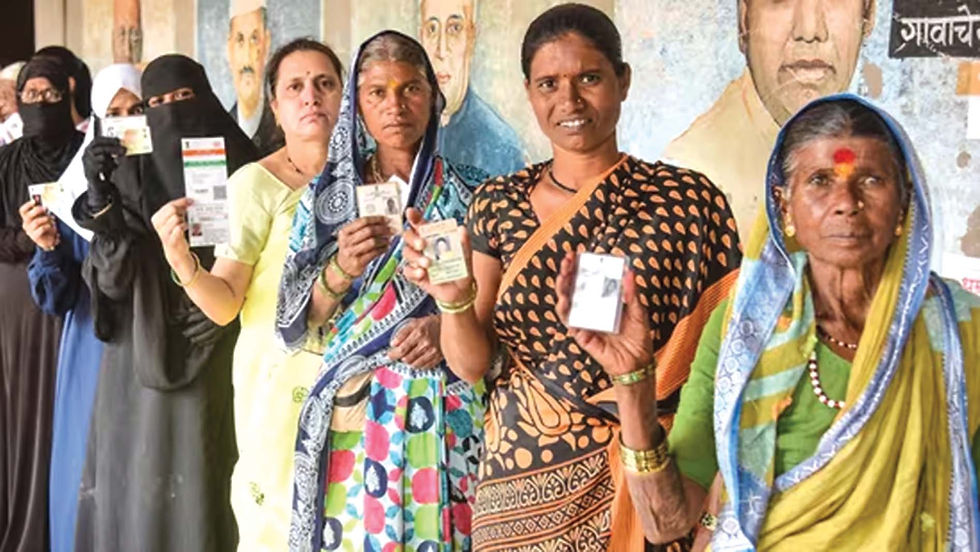
The forthcoming municipal elections in Maharashtra covering 29 municipal corporations look deceptively local. Yes, they will determine who fixes roads, clears garbage and manages water supply. But they amount to something far larger than this - a state-wide referendum on political organisation, alliance arithmetic and urban credibility. From Mumbai to Pune, Nagpur to Nashik, Sambhajinagar to Kolhapur, these contests will reveal which parties genuinely command the loyalties of urban Maharashtra and which survive largely on borrowed momentum.
Core Issues
Municipal elections are often underestimated because they lack the glamour of Assembly or parliamentary polls. That is a mistake. City governments shape daily life more directly than any other tier of the state. They are fought ward by ward, where familiarity matters more than oratory and accessibility more than ideology. For the often sceptical, impatient and vocal urban middle class, civic polls are less about grand narratives and more about competence. Bad roads, erratic water supply, traffic congestion and opaque permissions are lived irritations. It is precisely for this reason that municipal elections have a habit of unsettling political certainties.
Mumbai remains the centrepiece. Control of the Brihanmumbai Municipal Corporation is coveted not merely because of its enormous finances, but because it confers political primacy in India’s financial capital. For the Bharatiya Janata Party, the election is about consolidating its claim to be the city’s dominant force, aided by its alliance with Eknath Shinde’s Shiv Sena. For the Shinde faction, it must prove that it has inherited not just the party symbol but the organisational muscle and voter base of the old Shiv Sena led by Balasaheb Thackeray.
Reunion Factor
Complicating this is the rapprochement between Uddhav Thackeray and Raj Thackeray that has revived a certain nostalgia for the older, emotive idea of Marathi politics. It has warmed the hearts of loyalists who see in it a cultural reunion. Whether it will warm ballot boxes is another matter. Ward-level coordination, discipline and candidate management - areas where both outfits have historically struggled - will determine the outcome. The Congress’s decision to contest alone further fragments the opposition space, potentially benefiting the BJP-led alliance in tightly contested wards. Had the Thackeray brothers come together earlier, the shockwaves would have been stronger. Today, voters are more clear-eyed about the circumstances that pushed them together. Still, the consolidation of their previously divided vote shares could be electorally meaningful. The BJP would be unwise to dismiss it.
Pune offers a contrasting test. A rapidly expanding city with a large middle-class population, it is notably intolerant of civic incompetence. Traffic snarls, water shortages, public transport gaps and unplanned growth dominate conversations. The BJP has cultivated a strong base here over the years, but dissatisfaction with civic planning and internal leadership rivalries threaten to erode that advantage. Opposition parties are hoping to convert this public anger into votes - a task easier promised than delivered. Both factions of the Nationalist Congress Party are energising their cadres, but the real question remains whether and when Sharad Pawar and Ajit Pawar might align. They have done so before when power beckoned, though Sharad Pawar’s instincts remain famously opaque. Meanwhile, rivalries within the ruling alliance - such as between Murlidhar Mohol and Ravindra Dhangekar - risk weakening the BJP–Shiv Sena (Shinde) front from within.
Nagpur carries symbolism beyond its size. Home to Chief Minister Devendra Fadnavis and Union minister Nitin Gadkari, it is a city where political stature raises expectations. Voters will judge whether this prominence has translated into tangible improvements like better roads, reliable water supply and thoughtful urban expansion. A strong showing would reinforce the ruling alliance’s claim to effective governance; signs of fatigue would reverberate statewide. Nagpur’s politics have swung before, and the BJP knows the perils of complacency. Candidate selection, complicated further by caste considerations, will be decisive.
Nashik is more fluid still. Shaped by rapid urbanisation, religious tourism and an economy tied to agriculture, it faces persistent civic stresses. Road safety, water management and planning controversies have kept local leaders under scrutiny. Alliance politics here are especially tangled, with strong local figures often outweighing party labels. The approaching Sinhastha Kumbh Mela and the fallout from the Tapovan tree-felling episode have sharpened public unease. Delayed communication and reactive governance have not helped. Unless Chief Minister Fadnavis intervenes decisively, the BJP’s ambitions in Nashik may remain unrealised.
Restless Churn
Sambhajinagar reflects Maharashtra’s restless churn. Identity politics, unmet development promises and economic aspiration intersect uneasily. Employment, industrial growth and infrastructure are foremost concerns for middle-class families. Symbolism alone no longer suffices. The BJP’s local leadership appears fragile, potentially giving the Shinde camp an edge. An overly assertive approach by the BJP could backfire, while the Uddhav Thackeray faction and the Maharashtra Navnirman Sena may yet exploit local discontent to challenge the ruling alliance.
Kolhapur, meanwhile, underscores the enduring power of local leadership. Flood management, urban amenities and agriculture-linked support systems shape electoral choices. Here, individual credibility often outweighs party branding. National parties falter if they fail to adapt their narratives to local realities. While the BJP and Shinde-led Shiv Sena see opportunity amid administrative drift, Congress and Ajit Pawar’s faction retain deep roots. Candidate selection will be critical; for leaders like Satej Patil, the election will serve as a personal referendum.
Across the state, the BJP–Shinde alliance remains the principal force, but seat-sharing disputes and local ambitions could strain cohesion. The Thackeray brothers’ cooperation has the potential to reshape select contests, though its success depends on discipline rather than sentiment. Congress’s choice to go it alone adds volatility, particularly in close races where marginal shifts can decide outcomes.
For urban voters, these elections are a chance to shape governance where it is felt most acutely. Though fought over drains and streetlights, their verdict will illuminate the future trajectory of politics in the state.
(The writer is a political observer. Views personal.)


Comments