top of page

By:

Rahul Kulkarni

30 March 2025 at 3:32:54 pm

The Boundary Collapse

When kindness becomes micromanagement It started with a simple leave request.   “Hey, can I take Friday off? Need a personal day,” Meera messaged Rohit. Rohit replied instantly:   “Of course. All good. Just stay reachable if anything urgent comes up.”   He meant it as reassurance. But the team didn’t hear reassurance. They heard a rule.   By noon, two things had shifted inside The Workshop:   Meera felt guilty for even asking. Everyone else quietly updated their mental handbook: Leave is...

The Boundary Collapse

When kindness becomes micromanagement It started with a simple leave request.   “Hey, can I take Friday off? Need a personal day,” Meera messaged Rohit. Rohit replied instantly:   “Of course. All good. Just stay reachable if anything urgent comes up.”   He meant it as reassurance. But the team didn’t hear reassurance. They heard a rule.   By noon, two things had shifted inside The Workshop:   Meera felt guilty for even asking. Everyone else quietly updated their mental handbook: Leave is allowed… but not really. This is boundary collapse… when a leader’s good intentions unintentionally blur the limits that protect autonomy and rest. When care quietly turns into control Founders rarely intend to micromanage.   What looks like control from the outside often starts as care from the inside. “Let me help before something breaks.” “Let me stay involved so we don’t lose time.” “Loop me in… I don’t want you stressed.” Supportive tone.   Good intentions.   But one invisible truth defines workplace psychology: When power says “optional,” it never feels optional.
So when a client requested a revision, Rohit gently pinged:   “If you’re free, could you take a look?” Of course she logged in.   Of course she handled it.   And by Monday, the cultural shift was complete: Leave = location change, not a boundary.   A founder’s instinct had quietly become a system. Pattern 1: The Generous Micromanager Modern micromanagement rarely looks aggressive. It looks thoughtful :   “Let me refine this so you’re not stuck.” “I’ll review it quickly.”   “Share drafts so we stay aligned.”   Leaders believe they’re being helpful. Teams hear:   “You don’t fully trust me.” “I should check with you before finishing anything.”   “My decisions aren’t final.” Gentle micromanagement shrinks ownership faster than harsh micromanagement ever did because people can’t challenge kindness. Pattern 2: Cultural conditioning around availability In many Indian workplaces, “time off” has an unspoken footnote: Be reachable. Just in case. No one says it directly.   No one pushes back openly.   The expectation survives through habit: Leave… but monitor messages. Rest… but don’t disconnect. Recover… but stay alert. Contrast this with a global team we worked with: A designer wrote,   “I’ll be off Friday, but available if needed.” Her manager replied:   “If you’re working on your off-day, we mismanaged the workload… not the boundary.”   One conversation.   Two cultural philosophies.   Two completely different emotional outcomes.   Pattern 3: The override reflex Every founder has a version of this reflex.   Whenever Rohit sensed risk, real or imagined, he stepped in: Rewriting copy.   Adjusting a design.   Rescoping a task.   Reframing an email. Always fast.   Always polite.   Always “just helping.” But each override delivered one message:   “Your autonomy is conditional.” You own decisions…   until the founder feels uneasy.   You take initiative…   until instinct replaces delegation.   No confrontation.   No drama.   Just quiet erosion of confidence.   The family-business amplification Boundary collapse becomes extreme in family-managed companies.   We worked with one firm where four family members… founder, spouse, father, cousin… all had informal authority. Everyone cared.   Everyone meant well.   But for employees, decision-making became a maze: Strategy approved by the founder.   Aesthetics by the spouse.   Finance by the father. Tone by the cousin.   They didn’t need leadership.   They needed clarity.   Good intentions without boundaries create internal anarchy. The global contrast A European product team offered a striking counterexample.   There, the founder rarely intervened mid-stream… not because of distance, but because of design:   “If you own the decision, you own the consequences.” Decision rights were clear.   Escalation paths were explicit.   Authority didn’t shift with mood or urgency. No late-night edits.   No surprise rewrites.   No “quick checks.”   No emotional overrides. As one designer put it:   “If my boss wants to intervene, he has to call a decision review. That friction protects my autonomy.” The result:   Faster execution, higher ownership and zero emotional whiplash. Boundaries weren’t personal.   They were structural .   That difference changes everything. Why boundary collapse is so costly Its damage is not dramatic.   It’s cumulative.   People stop resting → you get presence, not energy.   People stop taking initiative → decisions freeze.   People stop trusting empowerment → autonomy becomes theatre.   People start anticipating the boss → performance becomes emotional labour.   People burn out silently → not from work, but from vigilance.   Boundary collapse doesn’t create chaos.   It creates hyper-alertness, the heaviest tax on any team. The real paradox Leaders think they’re being supportive. Teams experience supervision.   Leaders assume boundaries are obvious. Teams see boundaries as fluid. Leaders think autonomy is granted. Teams act as though autonomy can be revoked at any moment. This is the Boundary Collapse → a misunderstanding born not from intent, but from the invisible weight of power. Micromanagement today rarely looks like anger.   More often,   it looks like kindness without limits. (Rahul Kulkarni is Co-founder at PPS Consulting. He patterns the human mechanics of scaling where workplace behavior quietly shapes business outcomes. Views personal.)

Ashwin: A spinner who spun narratives as well as balls

ree

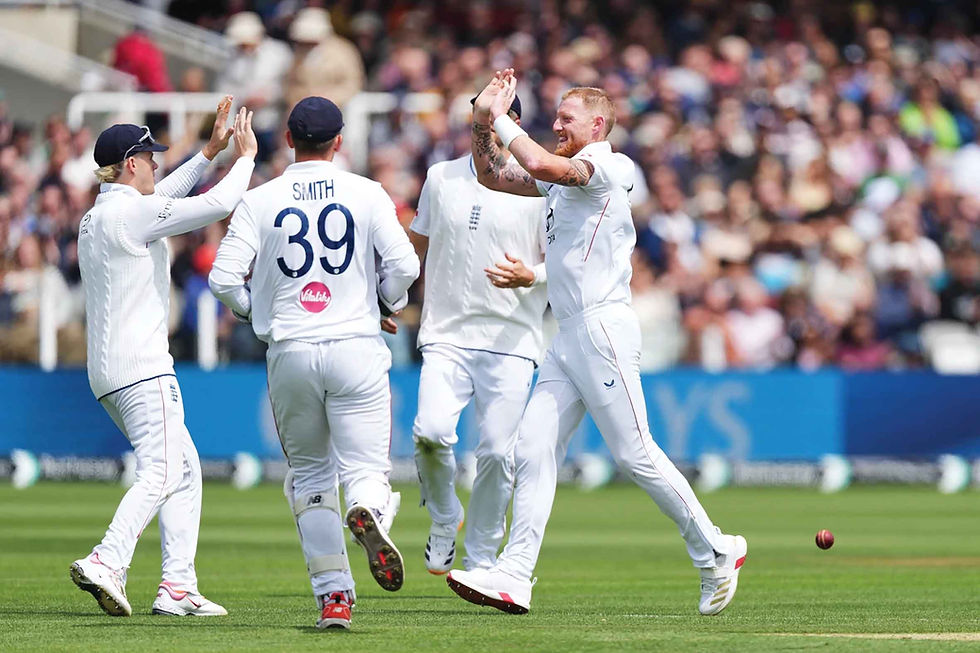
Ravichandran Ashwin, the eternal tinkerer of Indian cricket, has finally decided to hang up his IPL boots after the 2025 season. What a shocker—said no one who’s been watching his recent performances. At 39, Ashwin announced his retirement via social media, probably because he couldn’t bear another auction where teams pretend to bid on him like he’s a vintage wine that’s turned to vinegar. After 17 years of spinning webs (and occasionally getting tangled in them), he’s bowing out with 221 matches under his belt, 187 wickets at an average of 30.23, and an economy rate of 7.20 that screams “reliable, but not exactly Lasith Malinga territory.” But hey, let’s not dwell on the numbers; let’s celebrate the man who turned the IPL into his personal laboratory for experiments that sometimes worked, sometimes exploded spectacularly.


Let’s start with the highs, because every opinion piece needs a sugar rush before the diabetic coma sets in. Ashwin’s best IPL moments? Oh, where to begin with this wizard of off-spin. Remember his 4/34 against whoever-it-was—probably some hapless batsmen who thought they could dance down the track without consequences. That spell is etched in IPL lore as one of his top bowling efforts, where he turned the ball like it owed him money. And batting? The man once smashed a 50 for Rajasthan Royals against Delhi Capitals in 2022, proving he’s not just a bowler who occasionally holds a bat—he’s a bowler who occasionally pretends to be a batsman. His all-round prowess helped Chennai Super Kings win titles twice, back when MS Dhoni was still whispering sweet nothings to spinners. Ashwin was a pioneer, a trendsetter, innovating with carrom balls and arm balls that left batsmen looking like they’d seen a ghost. In his prime, he was the guy you wanted in death overs, not because he’d take five wickets, but because he’d make the opposition rethink their life choices. Kudos, Ash; you made spin sexy in a league obsessed with sixes. Or at least, tolerable.


But ah, the controversies—the spice that made Ashwin the IPL’s resident drama king. Who could forget the 2019 Mankading of Jos Buttler? There he was, mid-delivery stride, spotting Buttler wandering out of his crease like a tourist lost in Jaipur traffic, and bam! Run-out without bowling the ball. Spirit of cricket? Pfft, Ashwin called it “instinct,” while the world erupted in faux outrage. Critics screamed “unsportsmanlike,” but let’s be real: if Buttler can’t stay in his crease, maybe he should try gardening instead. Then there’s the 2022 “retired out” fiasco against Lucknow Super Giants, where Ashwin tactically benched himself mid-innings, becoming the first IPL player to do so. Innovative? Sure. But it felt like quitting a bad date halfway through—classy, or just cowardly? Oh, and his YouTube channel antics! Posting videos dissecting CSK’s strategies, criticizing teammates like Noor Ahmad, and stirring pots like a celebrity chef. Last season, he even dragged Dewald Brevis into a price-tag row, questioning Mumbai Indians’ splurge on the kid while ignoring his own waning form. The man collected controversies like kids collect Pokémon cards: obsessively and with zero regrets.


Now, for the failures, because balance is key, and sarcasm demands we roast the lows. Ashwin’s IPL journey wasn’t all carrom-ball glory; there were seasons where he bowled like he’d forgotten his glasses at home. Take 2025, his much-hyped return to CSK for a cool ₹9.75 crore. What did we get? Five wickets in six matches, an average that could double as a highway speed limit, and Dhoni himself admitting the team’s bowling woes. Ashwin looked lost, handing out runs like free samples at a mall. Critics piled on, calling his performances “safe” but ineffective, as CSK tumbled down the table. Remember those Powerplay battles he lamented back in 2019 with Kings XI Punjab? Yeah, his team lost most games there, thanks in part to overseas pacers flopping and Ashwin’s inability to stem the flow. Injuries didn’t help, nor did his occasional brain fades, like failing to adapt outside subcontinental pitches in international cricket, which bled into IPL inconsistencies. And let’s chuckle at his fan-trolling episode in 2025, where he begged CSK supporters to “learn from loyal RCB fans” amid the team’s slump. Bold move, Ash—alienating your own base while underperforming. In Rajasthan Royals’ 2025 underperformance saga, he was part of the tactical misfires that saw them flounder, proving even legends can turn into liabilities when age catches up.


In the end, Ashwin’s IPL retirement feels like the merciful end to a long-running sitcom.


(The Writer is a senior journalist based in Mumbai. Views personal.)

Comments


bottom of page