

Bhutan: Where Happiness is a Way of Life
- Archita Redkar

- Mar 26
- 3 min read
From misty mountains to fluttering prayer flags, every corner whispers peace.

Nestled in the eastern Himalayas, the enchanting kingdom of Bhutan feels like a place where time slows down and life breathes in harmony with nature. Known as the “Land of the Thunder Dragon", Bhutan is not just a destination—it is an experience that touches the heart deeply.
Geographically, Bhutan is a small, landlocked country bordered by India to the south and China to the north. Its terrain ranges from subtropical plains to snow-covered Himalayan peaks, offering breathtaking landscapes at every turn.
The pristine environment is protected by strict conservation policies, making Bhutan one of the world’s only carbon-negative countries.
Easy for Indians
One of the most beautiful aspects of Bhutan lies in its unique relationship with India. The bond between the two nations is warm, respectful, and deeply rooted in history.
India is Bhutan’s closest ally, supporting its economic growth, infrastructure, and development. For Indian citizens, this relationship translates into ease of travel—no visa is required, and Indian currency is widely accepted alongside Bhutan’s official currency, the Ngultrum. The near-equal value of both currencies makes travel financially comfortable and convenient.
The best time to visit Bhutan is during spring (March to May) and autumn (September to November). During spring, the valleys bloom with vibrant rhododendrons, while autumn offers clear skies and stunning mountain views. Festivals, known as Tshechus, are held during these seasons, bringing the country alive with masked dances, music, and spiritual celebrations.
Bhutan is home to some of the most mesmerising places in the Himalayas. The capital city, Thimphu, blends tradition with modernity, offering monasteries, markets, and cultural sites. Paro is famous for the iconic Tiger’s Nest Monastery, perched dramatically on a cliffside—a sight that leaves every traveller in awe. Punakha, with its stunning Punakha Dzong, offers a serene blend of history and natural beauty.
Sharing Humanity
It was during a quiet morning in Paro that Bhutan revealed its true essence to me. As I began the steep hike towards Tiger’s Nest, I noticed an elderly monk slowly making his way up the same path. His steps were unhurried, his face calm, and in his hands, he carried a small prayer wheel. At one resting point, I sat beside him, catching my breath, while he simply smiled. Without a word, he offered me a sip of butter tea from his flask. That simple gesture—so pure, so unassuming—felt like a silent lesson. In that moment, surrounded by mountains and prayer flags, I realised Bhutan isn’t about reaching destinations; it is about sharing humanity, even in silence. That brief encounter stayed with me far longer than any photograph ever could.
Bhutanese cuisine is simple yet bold in flavour. The national dish, Ema Datshi, is a fiery mix of chillies and cheese that reflects the country’s love for spice. Meals are often organic, wholesome, and deeply connected to the land.
What truly defines Bhutan, however, is its people. The Bhutanese are known for their warmth, humility, and deep sense of contentment. Their lifestyle is rooted in tradition, with most people wearing national attire—a gho for men and a kira for women. Life here is guided by the philosophy of Gross National Happiness, prioritising well-being over material wealth.
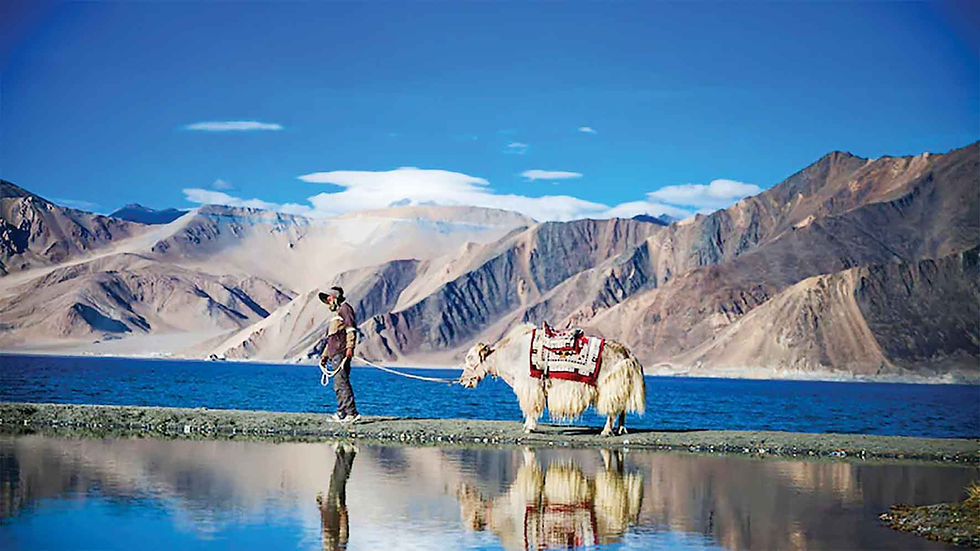
Domestic animals play a vital role in Bhutanese daily life. Yaks, cows, and horses are not just livestock but companions that support agriculture, transportation, and livelihoods in mountainous regions. In high-altitude areas, yaks provide milk, wool, and fuel, becoming indispensable to survival.
Spirituality forms the soul of Bhutan. Monasteries, or dzongs, are not just architectural marvels but centres of faith and community life. The presence of monks chanting prayers, the scent of incense, and the sight of prayer wheels create a deeply calming atmosphere.
Travelling to Bhutan is not just about seeing new places—it is about feeling a different way of life. For Indian travellers, the journey becomes even more special due to the ease of access, currency advantage, and cultural familiarity. Yet, Bhutan still feels wonderfully different—quieter, purer, and more mindful.
In a world that constantly rushes forward, Bhutan gently reminds us to pause, breathe, and appreciate the present. It is not just a destination on a map but a place that stays in your heart long after you leave.
(The writer is a tourism professional and runs a company, Global Voyages. She could be contacted at goglobalvoyages@gmail.com. Views personal.)


Comments