

Bruges: A Journey Back in Time

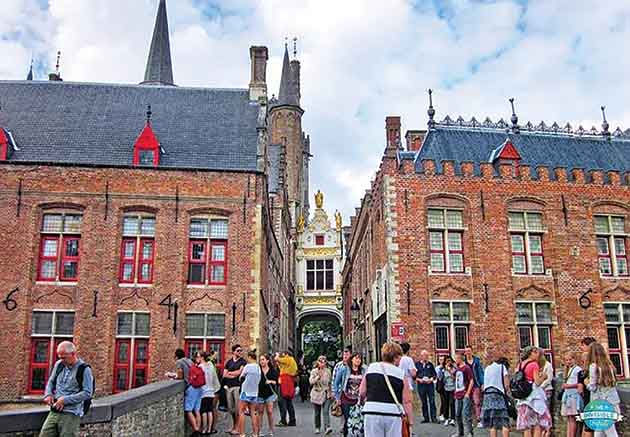
Bruges is one of those European cities that seems to have been designed for a postcard. With its mediaeval architecture, peaceful canals, cobblestone streets, beautiful bridges and historic squares, the Belgian city offers a rare combination of history, romance and old-world charm. My visit to Bruges was especially special and unforgettable. It felt less like visiting a modern European city and more like stepping into a beautifully preserved chapter of history.
One of Bruges’ greatest advantages is its convenient location. The city is well connected by train and road to Brussels, Ghent, Antwerp, Amsterdam and Paris, making it easy to include in a wider European itinerary. From Brussels, Bruges can be reached comfortably by train, making it suitable for either a day trip or a longer stay. The railway station is also connected to the historic centre by local buses and taxis. For travellers moving between Belgium, the Netherlands and France, Bruges fits naturally into a multi-city European journey without requiring a complicated detour.
The real attraction, however, is the historic centre. The Old Town is a UNESCO World Heritage site, and walking through its narrow streets feels like travelling through another era. The Markt, or Market Square, forms the heart of the city. Historic façades surround the square, while the magnificent Belfry of Bruges rises above it. The mediaeval tower stands approximately 83 metres high, and visitors willing to climb its 366 steps can enjoy wonderful views across the city.
Nearby Burg Square offers another impressive collection of historic buildings, including Bruges’ City Hall and the Basilica of the Holy Blood. The Gruuthuse Palace, a magnificent 15th-century city palace, now houses the Gruuthuse Museum and provides another glimpse into the wealth and culture of mediaeval Bruges. The Historium Bruges also offers visitors an engaging introduction to the city’s mediaeval past.
Although Bruges is wonderful to explore on foot, a city tour bus can be useful for visitors who want to see more of the city without walking everywhere. The historic centre is filled with places worth discovering, including the Church of Our Lady, St John’s Hospital, St Saviour’s Cathedral, the Beguinage, Minnewater and the old city ramparts.
The canals and bridges give Bruges much of its distinctive character. The city is often called the “Venice of the North”, and a boat ride provides a different perspective of its mediaeval buildings and peaceful waterways. From the water, the stone bridges, canal-side houses and historic façades seem even more picturesque.
Bruges is also home to several remarkable churches. The Basilica of the Holy Blood is particularly significant because it houses a relic that has been venerated in the city for centuries. Its Romanesque lower chapel contrasts beautifully with the ornate Gothic character of the upper chapel. The annual Procession of the Holy Blood is a centuries-old tradition and was recognised by UNESCO as intangible cultural heritage in 2009.
No visit to Bruges is complete without enjoying Belgian food. Fresh waffles covered with chocolate, strawberries, cream, caramel or powdered sugar are hard to resist. Belgian chocolate is another essential experience, with shops throughout the city offering pralines, truffles and beautifully crafted chocolate creations. Belgian fries, despite their commonly used French name, are also an important part of the country’s culinary identity and are traditionally served in a paper cone with a choice of sauces. Belgian beer, from traditional ales to local specialities, adds another dimension to the country’s food culture.
Bruges also offers a glimpse into Belgium’s multilingual character. Located in Dutch-speaking West Flanders, Belgium has three official languages—Dutch, French and German—with French predominant in Wallonia and Dutch and French used officially in Brussels. English is widely encountered in hotels, restaurants, shops and tourist attractions. Belgium’s position between France, the Netherlands, Germany and Luxembourg has also shaped centuries of cultural and commercial exchange.
Bruges can be expensive around the main tourist areas, but walking, using public transport and choosing simple meals can help keep costs down. Many of the city’s greatest pleasures are found simply by exploring its streets, squares and canals.
Bruges is ultimately more than another stop on a European itinerary. Its mediaeval streets, magnificent buildings, ancient churches, canals, bridges, food and peaceful atmosphere create an experience that stays with you. For me, visiting Bruges was a very special and unforgettable experience. Whether explored in a single day or over several leisurely days, the city has a rare ability to make visitors slow down, look around and appreciate the beauty of the past. It is a destination that deserves a place on almost every European travel itinerary.



Comments