top of page

By:

Bhalchandra Chorghade

11 August 2025 at 7:24:18 pm

CIDCO struggles to find takers for its homes

Mumbai: The City and Industrial Development Corporation’s (CIDCO) latest housing scheme has exposed a recurring challenge for the planning authority: finding buyers for its large housing inventory despite its affordable-housing focus. The August 2026 scheme offered 4,793 homes in Taloja, Kharghar and Kalamboli and received 4,180 confirmed applications before bookings closed on September 3. While CIDCO described the response as strong, 613 homes—nearly 13 per cent of the inventory—had no...

CIDCO struggles to find takers for its homes

Mumbai: The City and Industrial Development Corporation’s (CIDCO) latest housing scheme has exposed a recurring challenge for the planning authority: finding buyers for its large housing inventory despite its affordable-housing focus. The August 2026 scheme offered 4,793 homes in Taloja, Kharghar and Kalamboli and received 4,180 confirmed applications before bookings closed on September 3. While CIDCO described the response as strong, 613 homes—nearly 13 per cent of the inventory—had no confirmed applicant. This follows earlier schemes with similar gaps. In January 2025, CIDCO’s ‘My Preferred Home’ scheme, offering around 26,000 homes across Navi Mumbai, attracted 1.36 lakh initial applications. However, only about 55,000 applicants paid the registration fee and around 22,000 deposited the required earnest money, leaving serious participation below the number of homes offered. A CAG-linked report on two CIDCO housing schemes in Kharghar found that, of 4,814 saleable tenements, allotment letters had been issued to 3,733 applicants and possession handed over to 3,317. Four years after the draw, 1,081 tenements remained unsold. CIDCO has also faced scrutiny over marketing expenditure. In 2023, reports questioned the appointment of private agencies to market and allot PMAY homes, stating that the agencies had received advances of more than Rs 100 crore before sales took place. CIDCO officials said external support was necessary given the scale of the programme. The scale of investment adds to the concern. CIDCO’s mass-housing programme envisaged 68,515 homes at an estimated cost of around Rs 15,300 crore. A 2024 report noted that thousands of completed homes were awaiting sale, locking up capital and increasing the authority’s financial burden. The latest homes are located in Taloja Sector 39, Kalamboli Bus Depot and Kharghar Bus Depot. Taloja accounts for 4,229 homes, followed by 257 in Kalamboli and 293 in Kharghar. Indicative prices range from around Rs 23.50 lakh in Taloja to Rs 37.70 lakh in Kalamboli and Rs 43.50 lakh in Kharghar. The figures point to a possible mismatch between what CIDCO considers affordable and what its target buyers can finance. Industry experts have noted that EWS homes priced at Rs 25 lakh or more may be difficult for households within the prescribed income ceiling, particularly after registration, stamp duty, floor-rise charges and other costs. Location may also influence demand. Taloja has seen rapid development and improved connectivity, including metro access, but buyers continue to weigh its distance from established employment centres and social infrastructure, as well as commuting costs. CIDCO maintains that its housing programme meets a genuine need in Navi Mumbai. Ashwin Mudgal, Vice Chairman and Managing Director, CIDCO, said, “The overwhelming response to the housing scheme reflects the aspirations of citizens to own a home in Navi Mumbai and their continued confidence in CIDCO’s planned development initiatives. CIDCO remains committed to providing affordable and quality housing opportunities in well-planned locations, enabling citizens to benefit from the region’s growing infrastructure and connectivity.” The authority has also highlighted the Pradhan Mantri Awas Yojana-Urban (PMAY-U) subsidy, under which eligible beneficiaries can receive Rs 2.5 lakh, subject to applicable guidelines and eligibility criteria. However, the repeated unsold inventory suggests that CIDCO’s challenge extends beyond construction. Pricing, apartment configurations, location, payment flexibility and connectivity may need to be reassessed before further public resources are committed.

Burnt Rubber, Burnished Reputations

Updated: Jan 2, 2025


Telangana’s Bharat Rashtra Samithi (BRS)
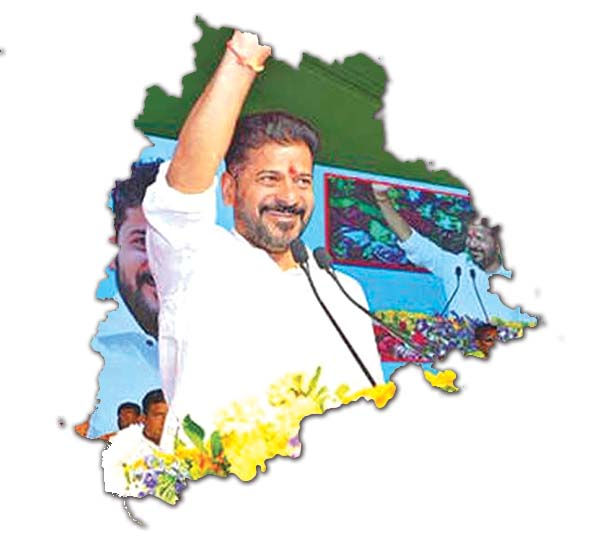
Telangana

Telangana’s Bharat Rashtra Samithi (BRS), led by its scion KT Rama Rao, has found itself at the nexus of a simmering storm following the Enforcement Directorate’s (ED) summons to the BRS leader over alleged financial irregularities tied to the state’s hosting of a Formula E race in 2023. Once a marquee event showcasing Telangana’s development, the race has now devolved into a political and legal quagmire, threatening to engulf KTR, the BRS’ working president and heir apparent to K Chandrashekhar Rao’s regional political dynasty.


The ED has alleged that the payment of Rs. 55 crores (some in foreign currencies) was made to organizers without proper approvals, an accusation rooted in the Prevention of Money Laundering Act (PMLA). This case, bolstered by a parallel investigation by the Telangana Anti-Corruption Bureau (ACB), has spotlighted KTR. While the ED’s charge sheet seems to be a familiar tale of money trails and foreign exchange violations, it is clear that the ongoing battle is about the future of Telangana’s polity.


Predictably, the BRS leadership has swiftly countered the allegations, painting the investigation as political vendetta orchestrated by a curious confluence of Congress and BJP, with certain BRS leaders accusing the national foes of allegedly uniting in the shared goal of dethroning a regional party.


The ACB’s newfound zeal following Telangana Chief Minister Revanth Reddy’s meetings with central BJP leaders has added grist to this narrative. Meanwhile, KTR has fervently maintained his innocence, branding the payments to Formula E Operations (FEO) as “straightforward transactions” from government accounts for urban development, well within the Hyderabad Metropolitan Development Authority’s (HMDA) remit. BRS leaders have dismissed the allegations against KTR as baseless, vowing a legal challenge against the ED.


The central government’s role, KTR asserts, mirrors his own, having championed Toll Operate Transfer (TOT) models and public-private partnerships elsewhere. The Congress, meanwhile, under its newly minted chief minister, has taken a no-holds-barred approach. Revanth Reddy has accused KTR’s administration of graft to the tune of Rs. 500 crore.


Meanwhile, the uproar in Telangana’s Assembly over this issue - replete with water bottle missiles and accusations of caste bias – is testing the endurance of democracy in the state to the limit. BRS legislator Kalvakuntla Kavitha has pointedly accused the Congress of “distracting from governance failures” through orchestrated controversies. Her claim, that investigations against KTR unfurled suspiciously after Revanth Reddy’s Delhi trip, seeks to cast this legal battle as a proxy war for regional hegemony.


While the ED’s remit centers on foreign exchange violations, the ACB has taken a wider approach, emboldened by Governor Jishnu Dev Varma’s recent green light for case registration. The ED’s probe into HMDA accounts and transactions, further complicated by Telangana High Court’s interim protections barring arrests, has created fresh tremors within the BRS ranks. Both agencies are poised to accelerate their inquiries, making this winter particularly unseasonal for the party.


In a broader context, the stakes extend far beyond alleged graft. Telangana’s Formula E affair is shaping up as a litmus test for the enduring political resilience of regional parties vis-à-vis the twin towers of Indian politics, BJP and Congress. As investigations gather momentum, the BRS leadership faces a pivotal question: will KTR’s political vehicle skid into a barricade of allegations, or will it emerge unscathed, reasserting its claim as a voice for Telangana pride?


The KTR scam allegations come at a time when the BRS political fortunes are on the wane. It just goes to show that in the heat of the Indian political theater, there is no spectacle quite as electrifying as a race - one fuelled not by electric cars but by allegations of impropriety and high-stakes posturing.

Comments


bottom of page