

Fearless, Always in Command
- Sunil D’Cruz
- 4 hours ago
- 4 min read

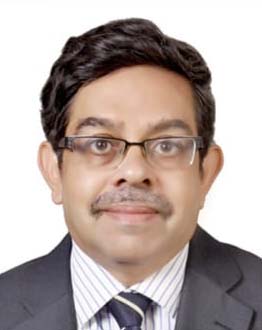
On May 6, 1929, a child was born in Cavel, between Kalbadevi and Girgaum, Mumbai, who would later inspire confidence in policing and make a difference to people's lives. He would instil fear among Mumbai's underworld, communal rioters in Gujarat and terrorists in Punjab with his strategic planning and tactics. That is Julio Francis Ribeiro for you, who will now turn 97 years.
After his studies at St Xavier's School, Mumbai, he completed B. Com at Sydenham College of Commerce and Economics and then did Law at Government Law College.
Starting his career as a Sub-Editor with National Standard, he worked there for two years. He then moved on as an Article Clerk with Crawford Bayley for one year.
Joining the Indian Police Service in 1953, Julio Ribeiro had an illustrious career. Posted out of Mumbai at the age of 24, he worked in various districts of Maharashtra and returned back to Mumbai at the age of 40.
He was on deputation to the Central Reserve Police Force for six years from 1973 to 1979 and was the Deputy Inspector General CRP in Hyderabad. Thereafter, after four- and-a-half years in Pune as Deputy Police Commissioner, he was posted in Mumbai as DCP in Zone 3 that included Shivaji Park. Thereafter, he became the Commissioner of Police, Mumbai from 1982 to 1985.
Meteoric Journey
After that, his journey and rise has been meteoric. He moved to Delhi as Director General Central Reserve Police Force in June 1985 but was soon shifted to Ahmedabad as Director General of Police Gujarat, during the communal riots. Having successfully dealt with the problem by locking up the trouble makers, he was made Special Secretary to the Government of India’s Home Department. Before he completed even six months in that position, he was personally called by the then Prime Minister and was sent to Punjab as Director General of Police at the height of terrorism in that State.
Black Thunder
As DGP, the success of Operation Black Thunder - 1 which took place on the night of 30 April 1986 and lasted till the morning of 01 May, 1986 by the National Security Guard, brought him into world focus. At least 122 suspected extremists and terrorists were apprehended at the Golden Temple, Amritsar.
In 1986, he was named India’s Man of the Year by The Telegraph of Calcutta and the fortnightly Frontline published by the Hindu of Madras. New York Times, Time and Newsweek of America also mentioned his contribution to fighting terrorism in Punjab.
He was awarded the Padma Bhushan in 1987 in recognition of his services to the nation.
Assassination Attempt
On October 3, 1986, Julio Ribeiro, the then-Director General of Punjab Police, survived an assassination attempt by Khalistan Commando Force militants at the Punjab Armed Police (PAP) headquarters in Jalandhar. Cleverly done, militants dressed in police uniforms and armed with guns arrived in a police jeep at the huge entrance gates at around 6.45 am. Ribeiro who was taking a walk with his wife in the mess compound ducked for cover. Ribeiro received minor injuries while his wife was hospitalised. Two sentries were shot dead. The assailants abandoned the police jeep and escaped in a waiting getaway truck.
Later, Ribeiro became Advisor to the Governor of Punjab when KPS Gill took over as DCP Punjab.
The second part of the operation, code named Operation Black Thunder-2 was conducted from May 10-19, 1988 by the National Security Guard. The tactic of cutting off communication and food supplies for nine days worked and extremists surrendered.
After retirement, Ribeiro served as Indian Ambassador to Romania from 1989 until 1993.
In August 1991, Ribeiro was attacked and wounded in a Bucharest assassination attempt by gunmen identified as Punjabi Sikhs.
Known for his commitment to disciplined service, wherever he was posted, he inspired confidence among the people by treating them with respect, dignity and as equal citizens of the country and getting them on his side. Always open to dialogue, he reasoned things out with his own police force, political and trade union leaders, and the judiciary with clarity and purpose in communication.
Self-Made Man
Having lost his father, Assistant Postmaster General, Mumbai, at the age of eight, Julio Ribeiro is a self-made man. Arranged by his mother, he met his wife Melba, and got engaged two months later. They married on April 25, 1959 at Gloria Church, Byculla, Mumbai. After 63 years of married life, he lost her in 31st October 2022 at the age of 84.
As a child, while residing at Colaba, Julio Ribeiro would play cricket and hockey at the Oval Maidan. After joining the Police Force, he would play various sports with the policemen until the age of 35-40. Thereafter, he would go jogging till the age of 60.
A vegetarian, Julio Ribeiro goes to Church once every week, alternates between his two daughters Anna Saldanha and Nina Engineer for Sunday lunch.
He has authored his memoir 'Bullet for Bullet: My Life as a Police Officer,' in 1998. Julio Ribeiro's second major book is ‘Hope for Sanity: Selected Writings of Julio Ribeiro 2002–2021’, published in 2023. It is a collection of his articles, columns, and reflections on policing, governance, and civic life in India.
(The writer is a resident of Mumbai. Views personal.)

Comments