top of page

By:

Abhijit Mulye

21 August 2024 at 11:29:11 am

Inside the secret power struggle behind Dhankhar’s resignation

Mumbai: The cryptic silence surrounding the abrupt resignation of former Vice President Jagdeep Dhankhar in July was shattered on the floor of the Rajya Sabha this Monday, not by a government clarification, but by the visible anguish of the Opposition. While official records continue to attribute his departure to “health reasons,” highly placed sources in the power corridors of the capital have now confirmed that a fatal misunderstanding of the shifting power dynamics between the Rashtriya...

Inside the secret power struggle behind Dhankhar’s resignation

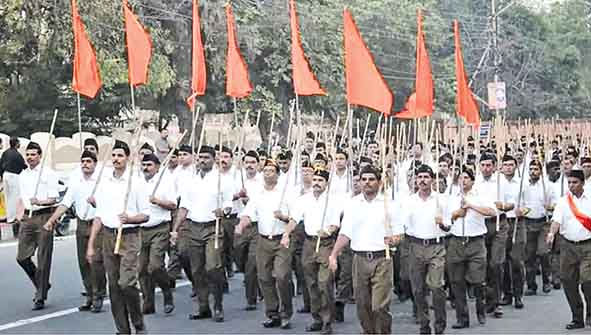
Mumbai: The cryptic silence surrounding the abrupt resignation of former Vice President Jagdeep Dhankhar in July was shattered on the floor of the Rajya Sabha this Monday, not by a government clarification, but by the visible anguish of the Opposition. While official records continue to attribute his departure to “health reasons,” highly placed sources in the power corridors of the capital have now confirmed that a fatal misunderstanding of the shifting power dynamics between the Rashtriya Swayamsevak Sangh (RSS) and the Bharatiya Janata Party (BJP) top brass was the true precipice from which the former Vice President fell. The revelations surfaced as the Winter Session of Parliament commenced on Monday, December 1, 2025. The solemnity of welcoming the new Vice President and Rajya Sabha Chairman, C.P. Radhakrishnan, was punctured by an emotional intervention from Leader of the Opposition Mallikarjun Kharge. The veteran Congress leader, hands shaking and voice trembling, shed tears on the floor of the House—a rare display of vulnerability that underscored the Opposition’s grievance over what they term an “institutional surgical strike.” The Failed Mediation Exclusive details emerging from Delhi’s political circles paint a picture of a constitutional authority who misread the winds of change. Sources reveal that tensions between Dhankhar and the government had been simmering for months, primarily over his handling of key legislative agendas and a perceived “drift” towards accommodating Opposition demands in the Upper House. As the chasm widened, a lifeline was reportedly thrown. A senior leader from a prominent alliance partner within the National Democratic Alliance (NDA) — a figure with decades of parliamentary experience and respect across the aisle — had discreetly offered to mediate. This leader recognized the growing impatience in the BJP high command and sought to bridge the gap before it became unbridgeable. However, Dhankhar declined the immediate urgency of this political mediation. “He was confident in his equations with the ideological parent,” a source familiar with the developments stated. “He is close to some of the RSS top functionaries and relied on them to mediate when his equations with the BJP top brass started going astray.” This reliance on Nagpur to manage New Delhi proved to be a critical miscalculation. Sources indicate that Dhankhar believed his deep ties with the Sangh would act as a buffer, insulating him from the political maneuvering of the ruling party’s executive leadership. He reportedly waited for the “green signal” or intervention from RSS functionaries, delaying the necessary reconciliation with the party leadership. Cost of delay The delay in mending ways was fatal. By the time the former Vice President realized that the RSS would not—or could not—overrule the BJP’s strategic decision to replace him, the die had been cast. The drift had become a gulf. The instruction, when it finally came on that fateful July 21, was absolute - he had to vacate the office immediately. The “untimely sudden resignation” that followed was officially cloaked in medical terminology, but insiders describe a chaotic exit. The former VP, who had recently moved into the lavish new Vice-President’s Enclave, was forced to vacate the premises in haste, leaving behind a tenure marked by both assertive confrontations and, ironically, a final act of silent compliance. Tears in the Upper House The ghost of this departure loomed large over Monday’s proceedings. Welcoming the new Chairman, C.P. Radhakrishnan, Mallikarjun Kharge could not hold back his emotions. Breaking away from the customary pleasantries, Kharge launched into a poignant lament for the predecessor who was denied a farewell. “I am constrained to refer to your predecessor’s completely unexpected and sudden exit from the office of the Rajya Sabha Chairman, which is unprecedented in the annals of parliamentary history,” Kharge said, his voice heavy with emotion. As Treasury benches erupted in protest, shouting slogans to drown out the discomforting truth, Kharge continued, wiping tears from his eyes. “The Chairman, being the custodian of the entire House, belongs as much to the Opposition as to the government. I was disheartened that the House did not get an opportunity to bid him a farewell. Regardless, we wish him, on behalf of the entire Opposition, a very healthy life.” The sight of the Leader of the Opposition shedding tears for a presiding officer with whom he had frequently clashed was a striking paradox. It highlighted the Opposition’s narrative that Dhankhar’s removal was not just a personnel change, but an assertion of executive dominance over the legislature. New chapter with old scars The government, represented by Parliamentary Affairs Minister Kiren Rijiju, sharply countered Kharge’s remarks, accusing the Opposition of shedding “crocodile tears” after having moved impeachment notices against Dhankhar in the past. “You are insulting the Chair by raising this now,” Rijiju argued amidst the din. Yet, outside the House, the whispers persisted. The narrative of a Vice President who waited for a call from Nagpur that came too late has firmly taken root. As C.P. Radhakrishnan takes the Chair, he does so not just as a new presiding officer, but as the successor to a man who learned the hard way that in the current dispensation, political alignment with the executive supersedes even the oldest of ideological ties.

Feminism Redefined: The Empowering Voices of Muslim Women

Updated: Oct 22, 2024

A few months ago, I stumbled upon a social media post where radical feminists criticised a Muslim woman for claiming that Islam liberates women more than any Islamic community. Her perspective brought her peace against claims that religion oppresses women. This opened a new perspective for me as a Muslim: no matter how much Western feminism liberates women regardless of gender or religion, it often alienates women with different colours and religions.


This dynamic is evident in Indian media, where Muslim women are marginalised under the politics of ‘saving’ them. Recently, in discussions with Muslim and non-Muslim women about politics, I asked their views on external forces of liberation and how majoritarian media alters narratives about Muslim communities to spread hate and doubt. One woman said, ‘Muslim society needs religious knowledge. Islam does not oppress women, and both men and women should understand this. Women should also gain religious knowledge just as men do. Muslim women should show that Islam does not oppress women and they can achieve as much as a non-muslim woman can.” Another young woman pointed out how there are Muslim men who are patriarchal and highly misogynist, further adding, “These men are monsters and are not true Muslims who treat his wife, daughter, mother, or any other woman incorrectly.”


I understand that feminists can sometimes narrow down their understanding, especially towards Muslim women, but islamophobia, often disguised in ‘isms’, will always prevail and preach to others as rescuing women from oppression, even though it is a fact that some women practice hijab in devotion to their God. One woman said, ‘Muslim society needs religious knowledge. Islam does not oppress women, and both men and women should understand this. When I asked these women about the Waqf Bill, revealed fear and anger. One woman remarked, “The Indian government is trying to steal Muslim waqf lands for their own benefit, as they do not like the fact that in Islam Muslims have the choice of donating their property for public welfare.” Another woman added, “To leave us stranded in our own country.”


These women, much like those who protested for CAA in 2019, are prepared to resist the Waqf bill. However, they call for inclusivity from others and adherence to Islamic values in their protest. “We, as Muslim women, can protest as much as we can in ways possible, but it is important that we should do it in an Islamic way,” one woman explained. I got to know that as much as these women were aware of the news and were firm in their ideologies, there was something else that was leading their existence. The ongoing islamophobia and marginalisation of Muslim women in India, while also confronting patriarchy within their communities, need to be studied. It is just as Irene Oh, in her essay, ‘Theoretical Construction of Muslim Motherhood,’ pointed out that we need to examine how women continue to suffer in Muslim communities due to their gender and patriarchy.


Indian Muslim women do not need liberation from any external saviours. They need to be heard and empowered within their contexts. When I asked these women what they think and where else the focus should be apart from islamophobia, all of the responses were pointing towards one thing, and that is “be more knowledgeable.” One woman pointed out, “Muslim women should also try to learn about their religion so that they can know what is right and wrong instead of blindly following what some people say.”


Indian Muslim women’s liberation requires space, identity, faith, and autonomy. “Islam does not restrict women from going out of the house, from gaining education, getting employment, or , other things for that matter. And to stand up for this, one should not be called a feminist,” said a woman when I asked her about where the line blurs when it comes to feminism for Indian Muslim women. It is not uncommon to find islamophobia in any place, regardless of how modern or liberal the environment or people are. My last question to these women was whether they have faced discrimination towards their gender, especially because of their Muslim identity; every response was positive. A young woman said, “Well, it happened rarely, which I cannot recall, but I did face it, and if we don’t raise our voice(s), maybe I might face it every day in the coming future,” which made me think, Is this the feminism that oppresses Muslim women? Then I remembered why Muslim feminists exist like Asma Barlas professes Islamic feminism.


Feminism or the nationalist Hindu government should leave a need to save Muslim women from oppression to the colonialists. I think we should understand how colonial Western feminism is especially for women of different faiths and colours and normalise women with faith to liberate themselves through expression.


(The author is a student of Maharashtra College, Mumbai. Views personal.)

Comments


bottom of page