top of page

By:

Quaid Najmi

4 January 2025 at 8:56:24 pm

Accused trio get 10-day remand

Mumbai: A Mumbai Court has given 10 days police custody to three arrested accused in the firing on Bollywood action star Tiger Shroff in a crowded public place as the investigators attempt to unravel the conspiracy, motives, involvement of other players and related aspects of the sensational case, on Wednesday. The accused trio Rehan alias Sukka, and Phool Singh both from Sonipat in Haryana and Rhitik Kurmi alias Roshan, originally from Begusarai in Bihar but currently residing in Mumbai,...

Accused trio get 10-day remand

Mumbai: A Mumbai Court has given 10 days police custody to three arrested accused in the firing on Bollywood action star Tiger Shroff in a crowded public place as the investigators attempt to unravel the conspiracy, motives, involvement of other players and related aspects of the sensational case, on Wednesday. The accused trio Rehan alias Sukka, and Phool Singh both from Sonipat in Haryana and Rhitik Kurmi alias Roshan, originally from Begusarai in Bihar but currently residing in Mumbai, were brought here from Kota in separate vehicles early today. They were produced before the Chief Metropolitan Magistrate at Esplanade Court where the police sought 14 days’ custody for the accused who are allegedly acting at the behest of the jailed mafia chief Lawrence Bishnoi’s gang. Pleading for the remand, the police lawyers argued that sustained custodial interrogation was necessary to recover the weapons used in the shooting – which the accused had thrown away while fleeing, retrieve two mobile phones which were reportedly destroyed by the accused, besides digging out the entire conspiracy, pinpoint the exact motives and identify other persons involved in the brazen attack. Opposing the plea, the accused’s lawyers Ajinkya Mirgal and Satyabrat Joshi argued that police custody was unnecessary, particularly for recovering the weapons. Mirgal and Joshi later told mediapersons that the accused had already been interrogated at a railway colony during their transit-remand period and were produced before the CMM Court just minutes before the transit remand expired this afternoon. After hearing both sides, the CMM remanded them to police custody for 10 days till October 31. It may be recalled that Shroff, 36, was targeted on the evening of October 18 near Pushpa Narsee Park in Juhu. Despite being a heavily crowded area, the assailants were seen firing at least 5-6 rounds at the actor’s car before fleeing on a motorcycle. A shaken Shroff escaped relatively unhurt, sustaining minor bruises, but his driver and a bystander suffered injuries. Following the incident, the Mumbai Police registered a case of attempted murder and offences under the Arms Act, and launched an interstate investigation involving Maharashtra, Haryana, Rajasthan, and later Gujarat and Delhi. The Mumbai Police formed 20 teams to hunt down the attackers, recovered the second-hand motorcycle outside Andheri station where it was abandoned and tracked their journey through different modes of transport from Mumbai to Surat and Kota. Acting on a tech-intel alert from Mumbai Police, the Kota Police lay in wait for them and apprehended them from the general coach of the Pune-Jaipur Superfast Express on Monday morning. Initial probe revealed that the assailants were planning to flee the country after travelling to the borders via Jaipur and Delhi. They were lured by the promise of sneaking them out of India to a foreign country, possibly Canada and rehabilitating them. Three key accused brought to Mumbai from Kota Three key accused apprehended in connection with the firing at actor Tiger Shroff’s car were brought to Mumbai from Kota in Rajasthan early on Wednesday, police said. Police brought them by road from Kota to Mumbai and, upon arrival, immediately took them to GT Hospital for a mandatory medical examination, an official said. Following the medical check-up, the accused were escorted to the Mumbai Crime Branch’s Anti-Extortion Cell (AEC) office for interrogation. The accused have been identified as Rehan alias Sukka, from Sonipat in Haryana; Ritik Kurmi alias Roshan, originally from Begusarai in Bihar and living in Mumbai; and Phool Singh from Haryana, the official said. The Kota city police had handed them over to Mumbai Police, which formally arrested them and produced them before a magistrate there. The court granted transit remand to take them to Mumbai. Meanwhile, advocate Ajinkya Mirgal arrived at the AEC office in Mumbai on Wednesday morning, informing officials that he would represent the accused as their defence counsel in the case. At least two men fired gunshots at Shroff’s car in Mumbai’s Juhu area on Sunday evening before speeding away on a motorcycle. The actor escaped relatively unhurt, while his driver and a bystander were injured. According to Mumbai Police, five to six rounds were fired at the car. A motorcycle, allegedly used by the shooters, was found abandoned in Andheri. The accused fled to Surat and once there, boarded a Jaipur-bound train. The three were supposed to go to Delhi on a bus and then flee to Nepal. The Mumbai Police have registered a case under the provisions of attempt to murder and the Arms Act. According to the police, Rehan was in touch with Anil Pandit, an alleged associate of the Lawrence Bishnoi gang, which claimed responsibility for the attack in an unverified social media post. On Tuesday, the Delhi Police Special Cell arrested four more persons, including two women, in connection with the firing case. Police suspect they were acting on the directions of Anil Pandit, a gangster operating from abroad, an official earlier said. The four accused, identified as Kunal (21), Sumit (19), Radha (23), and Babita (23), were apprehended from Delhi and Haryana. According to police, Kunal allegedly collected a pistol and 20 rounds from Amritsar on the instructions of Anil Pandit, with Sumit accompanying him. Radha and Babita allegedly travelled to Mumbai with the weapon. Following the arrest, the police said the motive of the shooting was being ascertained, while the way Shroff was attacked, the assailants planned to kill him.

From Fighter Jets to Faith

Sep 4
3 min read

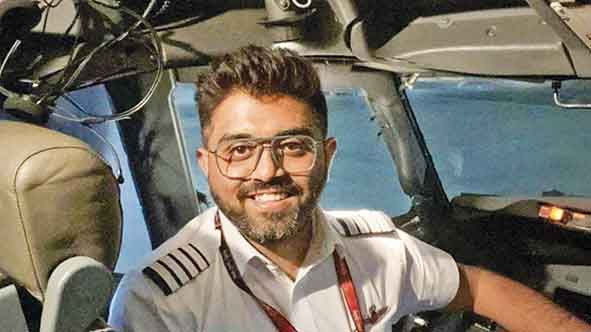
Air Marshal (retd.) Jeetendra Mishra brings discipline, integrity and command experience to the Ram Mandir Trust as it seeks to rebuild faith shaken by the donation scandal.

The biggest challenge facing Air Marshal (retd.) Jeetendra Mishra, who was recently appointed first chief executive officer of the Shri Ram Janmabhoomi Teerth Kshetra in Ayodhya, can be articulated in a single word. It is not security or the vast machinery that keeps the Ram Mandir functioning. It is trust.


Mishra takes over the management of the Shri Ram Janmabhoomi Teerth Kshetra Trust takes charge at an awkward moment for an institution that derives much of its moral authority from the faith of millions of devotees.


Till date, allegations of theft and irregularities involving temple donations have resulted in criminal investigations, eight arrests, changes in the Trust’s composition and the resignation of its general secretary, Champat Rai. The scandal has raised uncomfortable questions about whether offerings made in faith are being handled with the seriousness that faith demands.


Mishra’s appointment suggests that the Trust understands the scale of that challenge.


Known for his key role in Operation Sindoor, his CV is almost an advertisement for disciplined institutional management. It certainly sends out a reassuring message at a time when the scam-battered Trust is in danger of losing faith among devotees.


A fighter combat leader, experimental test pilot and veteran commander, Mishra retired in April this year as Air Officer Commanding-in-Chief of the Western Air Command. He has held a succession of demanding operational and organisational appointments, including Deputy Chief of Integrated Defence Staff (Operations), commander of a fighter squadron, Chief Test Pilot at the Aircraft and Systems Testing Establishment and commander of two frontline air bases.


These are qualities that are needed to steer the Ram Mandir Temple Trust out of its present quagmire.


Notable in Mishra’s military record is that the Western Air Command was at the centre of Operation Sindoor, India’s robust and swift response to Pakistan and the terror bases lodged in that country. He was among its top planners and received a medal for distinguished service of exceptional order for his role. His other honours include the Sarvottam Yudh Seva Medal, Ati Vishisht Seva Medal and Vishisht Seva Medal.


No one perhaps is more suitable to hand the Trust’s current crisis as he. Asked about his strategy as CEO, Mishra, in interviews, has stressed that it would have to be developed under the guidance of the Trust and with his team. By this, Mishra appears to suggest that the CEO is being brought in not simply to impose military-style discipline on a religious institution but to make an existing institution work better.


After all, the donation controversy cannot be repaired merely through arrests or administrative reshuffling. Those actions may establish accountability for alleged wrongdoing. They do not automatically restore confidence among devotees.


A devotee dropping money into a donation box does so with an expectation that the offering will be handled honestly, efficiently and transparently. Once that assumption is disturbed, even an impeccably managed ledger cannot immediately restore what has been lost.


When asked how his Air Force background would help, Mishra unassumingly pointed not to some special military formula but to qualities such as discipline, hard work and integrity.


That selection process to the top job itself was unusually competitive. The Trust received 5,585 applications for the CEO’s post. A search panel headed by retired judge Pramod Kohli, with retired Lieutenant General Vishnukant Chaturvedi and former scientist Suresh Haware, assessed candidates through a 600-mark framework before interviewing 16 finalists in Ayodhya on August 11 and 12.


Mishra has emerged from that field at a moment when the Trust needed more than another administrator. It needs someone capable of signalling that the institution takes stewardship seriously.

“Lord Ram does not require my service,” Mishra has said. “It’s the nation and the people who require my service.”


This attitude may be his greatest asset. The Ram Mandir is not short of devotees. What its management now needs is to convince those devotees that their faith is being matched by institutional integrity.


Mishra has spent a career dealing with systems in which mistakes can carry enormous consequences. His real mission in his new assignment is to make devotees confident that when they give donations, their faith is not being misplaced.

Comments


bottom of page