

‘Gen Z connects with humanity more than tradition’

Updated: Aug 3
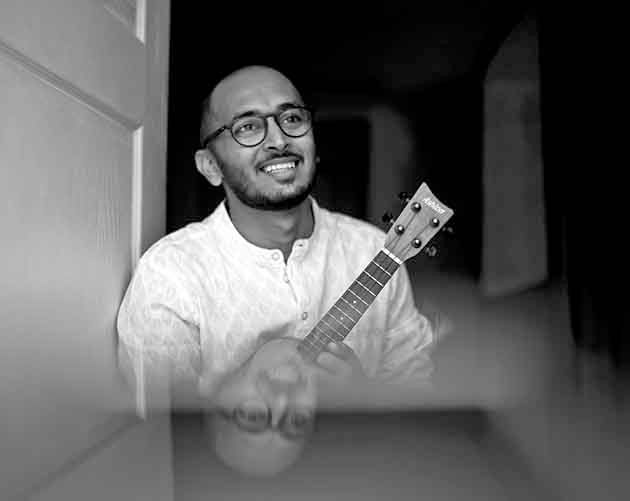
Every generation discovers its own way of listening to tradition. For Abhang Repost, that journey begins with the timeless verses of Maharashtra’s saint-poets, but unfolds through melodies and arrangements that speak the language of the present. The band that has total six members makes music that does not seek to replace tradition; it gently reimagines it, inviting younger listeners to rediscover the spiritual depth and poetic beauty of abhangas without diluting their soul. At the centre of this endeavour is Viraj Acharya, whose vision is to build a bridge between centuries-old devotional poetry and contemporary musical expression. In this conversation with Ruddhi Phadke, Acharya reflects on the birth of Abhang Repost and his mission to ensure that the voices of the saints continue to echo across generations. Excerpts…

Tell us something about your most recently released album.
We released our third album called ‘The Last Row’ on July 17. It is all about unheard voices, or the strata of society that don’t get the appreciation and recognition they deserve. From sweepers to gardeners to domestic help, some sections of the society are doing work that is more important than sending a rocket to the moon. However, they don’t get the respect they deserve. Our great saints have not ignored the efforts of these people. There are poetries on them too. We have composed these poetries and created a platform for the voices of these people to be heard. Example- “Zohar” by Chokha mela Maharaj. The album has another song- “kalu de” which is the first song written and composed by Abhang Report. It means “Let the world know what we are going through”. It's a hip-hop and rap based song. The album is released on all popular music apps. The most important idea of Abhang Repost is to make people happy, and encourage them to live their life to the fullest.
What was the defining moment that led to the formation of Abhanga Repost?
Our first performance was at Girgaon Gudhi Padwa shobha yatra. All of us were in junior college. We were performing with various rock bands and participating in different inter college competitions. We all met each other at such platforms. We composed 10-12 abhangas that we performed then at various platforms and we got a tremendous response. That was our defining moment.
Why did a group of young musicians decide to work with abhangas instead of composing contemporary Marathi songs?
Honestly, it was very casual and subtle. Nothing was planned. As part of some college competitions, we had to choose Marathi poetry for the performance. We were inspired by - Indian Ocean, Raghu Dikshit, Kabir Café and Swaratma. While drawing inspiration from them, we all realized that Marathi abhangas which were written and made by our own saints were underutilized. We felt the urge to inform masses that some great work is lying ignored.
Did you ever worry that young audiences would dismiss abhangas as “music for the older generation”?
It is not about worrying about the young generations dismissing abhangas branding it old style. We were born with it and we grew up listening to it. Challenge comes in future. The coming generation is different. They may not grow up listening to these abhangas. They may not be naturally introduced to them. Hence we feel we are late. However, as it's said, better late than never. We have a huge responsibility to carry forward what our parents introduced us with, and it won’t be as easy as it was before. These poems are not just a form of art. They actually teach you a way of life and the coming generations should not be devoid of such an interesting way to seek lessons of life.
Looking back over the last decade, what has been the biggest milestone for the band?
We have performed more than 600 gigs. We are a Marathi contemporary folk fusion independent band. We are not marketed or presented by a particular label. Whatever we have achieved is so far through our own you tube channel, social media and our live performances. The biggest milestone I can say is that we performed in 20 shows in Goa alone with a power pack audience of 15,000 plus. Goa has given a tremendous response for this experiment.
How do you choose which abhang to reinterpret?
Every poetry has something to say. It has something for the people to understand. Poetry connects with peoples’ day to day life. Especially all abhangas are extremely relatable to people as they can connect with it in some way or the other. We make a choice depending upon the situation and the message an abhanga has to give.
Where do you draw the line between innovation and preserving the sanctity of the original composition?
The point is that we do not take those compositions that are already composed or performed by popular artists like Pt. Bhimsen Joshi or Lata Mageshkar. We choose those poetries that have not been performed yet. We recompose it in our way. However, while doing that we ensure that whatever we are performing is a correct rendition that in no way kills the meaning of the poetry. We ensure that the message that the poetry intends to give remains the same.
What makes an abhang timeless enough to connect with Gen Z?
Gen Z is connected to AI. Gen Z believes in action. So many movements are going on for various causes from environment to education. Now take this abhanga of Tukaram Maharaj--- “Tuka mhane hoy manashi samvad, apulachi waad aapanasi”- New generation is going through a lot of mental issues like anxiety, depression etc. We are developed, we have technology however, Gen Z is facing a challenge to overcome mental stress. To overcome that, it is important to face yourself, face your own thoughts. Gen Z appreciated content that is driven by humanity more than tradition. Take the example of this abhanga- Hari mukhe mhana, Hari mukhe mhana, punyachi ganana kon kari”- which means, you have to keep doing what you believe in. That’s what Abhanga Repost follows. These Abhangas are very useful for Gen Z for the challenges that they face in day to day life.
Have you ever faced criticism from traditionalists for experimenting with devotional music? How did you respond?
Of course we have faced criticism. So many traditionalists have come and tried to stop our performance or have left no stone unturned in saying things that have potential to demoralize us. In response, we have always invited them for our shows and insisted that they attend our performance and then pass a judgement. All those who have accepted our invitations have changed their perspective positively.
What have you learnt about today’s youth through your concerts?
Today’s youth is very fast. They are going to be faster in the future. They have become wise at a very early age. They know what they want and they know where to look for it. There is one thing I would like to highlight that I have understood through our Goa concerts. A lot of young children come for our concerts and they sing our songs. What I have realised is that the hearts of today’s children are very pure. Even as we call them Gen Z, when you try to connect with them emotionally, they are extremely beautiful souls. We have regular visitors who are children that age between one year to 15 years. I respect the parents who are bringing the children to our concerts.
Has social media become as important as live performances in reviving Marathi devotional music?
Whether you like it or not, social media has become as important as live performances. That’s the only way to connect with millions in the shortest span of time. It is an important part of being an artist. No development is or was wrong. From TV to fridge to AC we have seen a lot of technological development that has come with a flip side. The most important thing here is, we must make wise and appropriate use of it.
What misconceptions do young people have about Marathi bhakti music?
The biggest misunderstanding is that these abhangas are about praising some god or the other. Actually the poetries talk about way of life. For example- the abhanga by Dnyaneshwar Maharaj which says – “Devachi ye dwari, ubha kshan bhari, tene mukti chari sadhiyela”- In that era, he had written something very modern. He has spoken about patience. He has spoken about meditation. It is not religious, it is about simple way of life tips.
Maharashtra has a rich musical heritage. Do you think younger generations are reconnecting with it?
Maharashtra has a beautiful and artistic history and rich musical heritage. The Younger generation is definitely re-connecting with it and I can proudly say that Gen Z will definitely take it forward.


Comments