

Rooted, Reverent, Reinvented
- Ruddhi Phadke

- 1 hour ago
- 6 min read
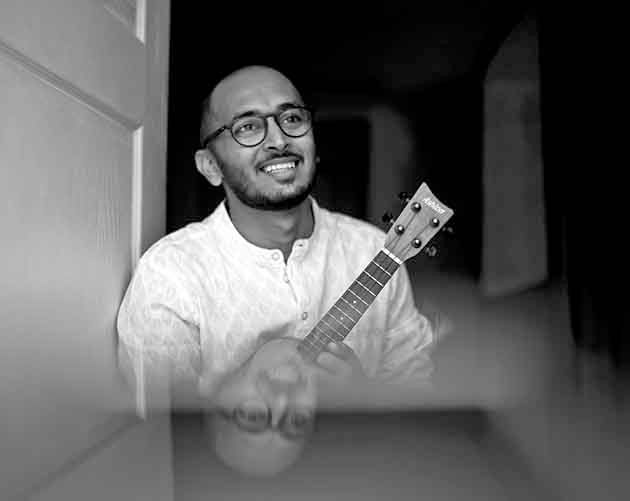
Nihar Shembekar reimagines Marathi bhajans and Abhangas for the new generation. Born into one of Maharashtra’s most celebrated musical families, Nihar Shembekar has travelled a remarkable path—from singing as a child artiste in the Bollywood blockbuster Gadar: Ek Prem Katha to emerging as one of the most innovative voices in contemporary Marathi music. The grandson of legendary singer Jaywant Kulkarni, Shembekar has chosen not to merely inherit a legacy but to reinterpret it for a new generation. Through his musical collective Folk.Us, he is blending the timeless poetry of Marathi saints with contemporary arrangements, introducing bhajans and abhangas to audiences far beyond their traditional listeners. In this candid conversation with Ruddhi Phadke, he reflects on growing up in a musical household, the lessons he inherited from his grandfather, his early years in playback singing, his evolution as a composer, and his mission to make devotional music resonate with young listeners without compromising its spiritual essence. Excerpts…
How much did your musical environment shape you as a child?
Music was never introduced to me as a subject. It was simply the atmosphere at home. My grandfather, Jaywant Kulkarni, was one of Marathi music’s most loved voices, and both my parents were singers. I began performing with my grandfather when I was around four. At that age, he was simply my grandfather and singing was something our family naturally did. That environment gave me an instinctive relationship with music long before I understood theory or technique.
When did you realise music would become your life’s calling?
There was no single dramatic moment. The realisation happened gradually. As I grew older, I began experiencing the connection that happens during a live performance, when hundreds of people respond to the same emotion. Later, when I started composing, creating my own shows and building Folk.Us, I realised I did not only want to sing songs. I wanted to create a musical world of my own.
Did you feel pressure carrying forward your grandfather’s legacy?
As with everything, there were pros and cons. The legacy gave me pride, inspiration and a rich musical environment, but it also naturally brought expectations and comparisons. What helped was that my family never made me overly conscious of it. The focus was always on enjoying the process, following curiosity and discovering things for myself rather than adhering to fixed theories. That gave me the freedom to experiment and slowly develop my own relationship with music.
What are your memories of singing for Gadar?
I was around ten when I sang the childhood portion of “Ud Ja Kale Kawan” for Gadar: Ek Prem Katha. At that age, I had no understanding of how iconic the film and its music would become. What I remember most fondly is Uttam Singh ji. He handheld me through the entire recording process with immense love and patience. He made the studio feel safe and explained the melody and emotion without placing the pressure of the situation on a child. I also worked on projects such as Jajantaram Mamantaram. Those experiences showed me very early that behind the glamour of the film industry lies discipline, patience, long hours and the ability to deliver when required.
How different was the industry then compared to today?
The biggest difference is access. Earlier, an artist needed a film, label, television channel or established composer to reach a large audience. Today, musicians can release independently and reach millions directly. The earlier system, however, gave songs more time to breathe. Today, everything moves rapidly and artists are expected to understand content, algorithms and constant visibility. Digital platforms have democratised opportunity, but they have also created enormous noise.
What inspired your journey into bhajans and abhangas?
It began as a personal journey rather than a musical strategy. My association with Sadhguru and the spiritual processes I experienced helped me understand myself more deeply. Spiritual ideas can remain information for a long time. When some of that information became a lived experience, my music transformed very quietly. I began hearing bhajans and abhangas differently. I saw philosophy, rebellion, surrender, longing and joy within them. That journey became closely connected with Folk.Us, my Marathi folk and devotional collective. The ensemble combines Indian rhythm, melody, chorus, guitars, keyboards and contemporary production. The vision is to give this music grandeur and scale while retaining its earthiness. The response has been deeply encouraging. Young audiences dance to abhangas, chant together and also become completely silent during reflective moments. Our releases such as “Aanandu” and “Yei Ho Vitthale” are extensions of this journey.

Was connecting younger audiences with devotional music a conscious objective?
It became conscious after I recognised the gap. Young people are not disconnected from devotion. They are sometimes disconnected from how it is presented. I do not want to make devotion artificially “cool.” I simply want to reduce the sonic and visual distance that prevents younger listeners from approaching it. Once they experience the power of the poetry, rhythm and collective singing, they realise this music is not old. It is timeless.
How do you respond to purists who oppose fusion?
I respect the concern because tradition must not be handled carelessly. At the same time, tradition has never been completely static. Abhangas survived because every generation sang them in its own surroundings and with its available instruments. The real question is whether the work is treated with understanding and respect. I am not changing the philosophy or turning devotion into a gimmick. I am preserving its emotional core while allowing the sound to speak to the present generation.
How do non-Marathi audiences respond to abhangas?
Their response has strengthened my belief that emotion reaches people before language does. They may not understand every word, but they respond to the rhythm, melody, collective singing and emotional intensity. Many later ask about the meaning, which is beautiful because music creates curiosity instead of language becoming a barrier.
Are younger Indians becoming more curious about devotional music?
Yes. We seem to be rediscovering our roots and reconsidering what it means to be Indian. Young people are exploring regional languages, saint poetry, festivals, the Wari and traditional music without feeling that it makes them less modern or global. They may first encounter an abhanga through a reel or contemporary performance and later explore the tradition behind it. I also think people are exhausted by constant stimulation. Devotional music offers intensity without emptiness.
Do you want Marathi devotional music to enter the mainstream?
Absolutely. Marathi devotional music has powerful poetry, memorable melodies, complex rhythms and a living spiritual tradition. It should not remain confined to one region, season or age group. My vision is for Folk.Us and my independent music to connect Maharashtra’s heritage with audiences across India and eventually internationally, without compromising its identity.
How have social media and streaming helped you?
They have transformed my journey. I can share not only finished songs but also rehearsals, live moments and the thinking behind the music. “Ved Laavala” reached millions digitally, while Folk.Us performances travelled far beyond the venues where they were recorded. Crossing 100,000 followers on Instagram felt meaningful because it represented a community built around Marathi music, performance and experimentation.
Does the pressure to go viral conflict with devotional music?
Yes, because digital platforms reward immediacy while devotional music asks for patience, repetition and surrender.
As an independent artist, I cannot ignore the digital ecosystem, but I try not to let it dictate the soul of the composition. Virality may bring someone to a song, but only depth can make them return to it during celebration, difficulty, prayer or solitude.
What would your grandfather think of your fusion interpretations?
He might initially be surprised by the scale, electronic elements and the volume of the rhythm section! But I believe he would recognise the sincerity.
He would see that the poetry, language and emotional integrity remain central. I hope he would feel that I did not copy his path, but carried forward his values. And knowing him, he would probably offer one precise musical correction after the show. That may have been his way of saying he was proud.
What can audiences expect next?
I am developing more original devotional and folk-rooted music connected with Vitthal, saint poetry and the experience of Guru darshan. Folk.Us is also expanding through larger theatrical productions and plans to reach audiences outside Maharashtra and internationally, including a proposed UK and Ireland tour.
At the same time, I want to keep exploring Marathi pop, film composition and collaborations across languages. The central thread will remain music that is rooted but not restricted, contemporary but not disposable, and capable of making people dance while also touching something deeper.


Comments