

Guardian of the Ballot

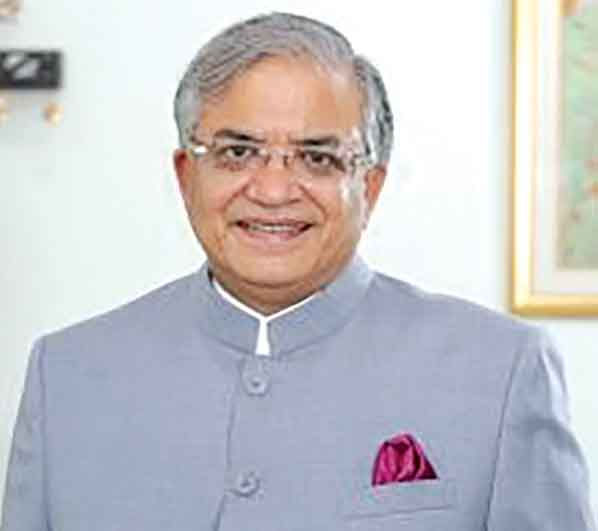
In India’s political imagination, the Election Commission occupies a curious space. It is one of the republic’s most powerful constitutional bodies, yet it often behaves like a nervous clerk caught between warring political factions. That is partly why Gyanesh Kumar has become such a consequential figure, especially after his recent triumphal conduct of key Assembly polls, particularly that in the volatile eastern state of West Bengal.
At a time when institutions are routinely accused of timidity, Kumar has cultivated the image of an election chief (CEC) willing to stare down political pressure rather than accommodate it. His stewardship of the recent assembly elections, especially West Bengal, Tamil Nadu and Kerala has transformed him into one of the most discussed bureaucratic figures in the country.
A defining moment came on April 8 when Kumar dismissed a TMC delegation to protest alleged irregularities in the electoral process. Such meetings are usually elaborate performances in which political parties seek to intimidate constitutional authorities into signalling caution or sympathy. Kumar, however, refused to indulge the spectacle, abruptly asked the delegation to leave his office.
For decades, elections in West Bengal have been accompanied by allegations of cadre intimidation, local strongmen, crude political violence and systematic voter coercion. This time, however, Kumar appeared determined to challenge precisely that culture. Looking back, the terse showdown with the Trinamool delegation may well have marked the psychological turning point of the election.
On May 4, the Bharatiya Janata Party swept aside Mamata Banerjee in a stunning landslide. Yet beyond the result itself, what stood out was the relative absence of the large-scale terror and electoral disorder that many had feared besides the record voter turnout. Voters in several districts appeared more confident that the state machinery would actually protect the act of voting.
Kumar’s admirers argue that he restored something more important than administrative order: the credibility of institutional authority. In a state where political intimidation has often functioned as a parallel system of governance, the EC finally conveyed that it would not be browbeaten by partisan aggression.
The Commission’s approach elsewhere strengthened that perception. Elections in Kerala, Tamil Nadu, Assam and Puducherry were also conducted under Kumar’s supervision with unusually high voter participation and relatively smooth administration.
The Commission deployed more than 1,100 observers across the states to tighten oversight and reassure voters. Kerala’s polls were widely praised for their orderly conduct, with Kumar himself urging parties to make the election “a model for the country and the world.”
In Tamil Nadu and Bengal, voter turnout reached record levels during the first phase of polling, which Kumar described as the highest since Independence. Part of Kumar’s style lies in signalling firmness early. Under his tenure, the Election Commission has increasingly preferred criminal proceedings and FIRs over the softer, performative warnings traditionally issued for violations of the model code of conduct.
His handling of Bengal’s electoral rolls was another testament to his firmness. The EC’s scrutiny of discrepancies in voter lists triggered furious protests from opposition parties. But Kumar stood firm and took the long-standing issue of illegal immigration from Bangladesh into Bengal and forged identity documentation entering the welfare and voting system very seriously.
While critics within the opposition INDIA bloc have accused Kumar of political bias and opposition parties have even renewed attempts to initiate proceedings against him in Parliament, such attacks have only served to expose the sheer irresponsibility of such parties and the hollowness of their charges.
His immediately conduct after the Bengal results has further strengthened that image. Following reports of post-poll violence and vandalism, Kumar has directed immediate arrests, while ordering continuous patrolling in sensitive areas and instructing officials to adopt a “zero tolerance” approach. Bengal’s post-election violence has long been treated as an unfortunate inevitability. Kumar, with tough actions, has instead signalled that democratic legitimacy does not end with counting day. Even senior BJP leaders appeared conscious of the danger of revenge politics. Sukanta Majumdar publicly warned party workers not to imitate the conduct they had long criticised in the Trinamool Congress.
India’s republic survives not merely because it holds elections, but because enough citizens still believe institutions can enforce rules impartially. That faith had weakened in recent years. But Gyanesh Kumar, a soft-spoken bureaucrat with little taste for theatrical politics, has unexpectedly emerged as one of the few officials attempting to restore it. Rather than facing political vilification, he arguably deserves commendation for demonstrating that constitutional authority need not always bend before partisan fury.


Comments