top of page

By:

Uday Jogalekar

13 May 2026 at 3:25:14 pm

From Pracharak to Minister: My Memories of Dilipda

Long before he became a minister, Dilipda had already earned our respect through his simplicity, discipline, and warmth. In 2007, my job brought me to Kolkata. Once there, I began attending the local RSS shakha and gradually became involved in Sangh work. I first met Dilipda during a visit to a swayamsevak’s home. Coincidentally, that same year, he had been appointed to our division. As everyone introduced themselves, Dilipda casually asked me in Marathi, “How are you finding Bengal?” Hearing...

From Pracharak to Minister: My Memories of Dilipda

Long before he became a minister, Dilipda had already earned our respect through his simplicity, discipline, and warmth. In 2007, my job brought me to Kolkata. Once there, I began attending the local RSS shakha and gradually became involved in Sangh work. I first met Dilipda during a visit to a swayamsevak’s home. Coincidentally, that same year, he had been appointed to our division. As everyone introduced themselves, Dilipda casually asked me in Marathi, “How are you finding Bengal?” Hearing a Bengali pracharak — a full-time RSS worker devoted to organisational work — speak fluent Marathi came as a pleasant surprise to me. From that moment onwards, my interactions with Dilipda increased, and I gradually began to understand the many dimensions of his seemingly simple personality. Coming from Maharashtra, where Sangh work generally faced non-violent opposition, adapting to Bengal — where the opposition was often violent — was not easy. In that atmosphere, I learnt from Dilipda how to remain enthusiastic while also keeping fellow workers motivated and active. I often accompanied Dilipda during his visits to our area. He had a remarkable ability to blend effortlessly into any household, warmly enquire about every family member, and make everyone feel as though he were one of their own. Before being appointed to Kolkata, Dilipda had served as an RSS pracharak in the remote Andaman Islands from around 1999–2000 until 2007. Based in Port Blair, he worked under difficult conditions despite limited travel and communication facilities, diverse tribes speaking different languages, and a local mindset that often kept outsiders at a distance. He would often share positive experiences from his years in the Andamans but never once spoke about the hardships he endured. Despite working in such difficult conditions, he never mentioned his personal discomforts. This ability to remain free of complaints despite adversity is a hallmark of a pracharak, and Dilipda embodied it completely. He possessed the rare gift of finding positivity even in challenging situations. Excellent Cook In Bengal during 2007, Sangh work had not yet expanded to the scale it has reached today. At times, pracharaks had to cook their own meals, and this had made Dilipda an excellent cook. Whenever he returned to the city from his travels, our group would eagerly gather to enjoy his khichdi. Our area, Bidhannagar, was located in Salt Lake, a relatively prosperous locality. Adjacent to it were a few underprivileged settlements, and we would occasionally visit the nearby market. To reach the market from Salt Lake, one had to cross a wooden bridge, where the toll was 25 paise for pedestrians and one rupee for bicycles. Observing the difficulties faced by people in those settlements, Dilipda once suggested starting some sewa (service) activity there. That eventually led to the establishment of a homoeopathic clinic in the locality. While setting up the clinic, Dilipda effortlessly guided us through every stage of planning — what arrangements were needed, how the process should be structured, and what challenges might arise. It felt as though the entire plan was already mapped out in his mind. As the clinic became operational, we began noticing the educational difficulties faced by the local children. English, science, and mathematics were particularly challenging subjects for them, which eventually led to the start of a study centre. The idea of involving engineers from Salt Lake’s IT companies also came from Dilipda. Later, by bringing together IT professionals, an “IT Milan” initiative was started, and many of them eventually became swayamsevaks actively involved in Sangh work. Remarkable Ability At the time, the CPM government was in power in Bengal, and there were many obstacles to conducting shakha activities. Dilipda constantly guided us on overcoming these challenges. He had a remarkable ability to identify work that could bring meaningful change, plan it carefully, and execute it with determination and effectiveness. Whether it was service activities, daily shakha work, or handling sensitive cases related to “Love Jihad", Dilipda consistently displayed dedication, clarity of thought, a fighting spirit, and an unwavering readiness to work tirelessly toward the objective. What amazes me even today is that a pracharak like Dilipda — someone far ahead of us in age, experience, and accomplishments — would interact so casually and warmly with ordinary swayamsevaks like us, placing a hand on our shoulders and speaking as though he were a close friend. In 2009, I was transferred back to Mumbai, bringing my Kolkata chapter to an end. Later, in 2014, I learned that Dilipda had been given responsibility in the BJP. And now, in 2026, the BJP forming a government on its own strength speaks volumes about its contribution and leadership. Today, Dilipda has become a minister, and many titles and honours will naturally be associated with him. But to us, he will always remain simply "Dilipda". (The writer is an entrepreneur based in Kalwa, Thane.)

High-Rise Living, Low-Rise Bonds

While we have gained privacy and independence, we have lost the ease and warmth of everyday connection.
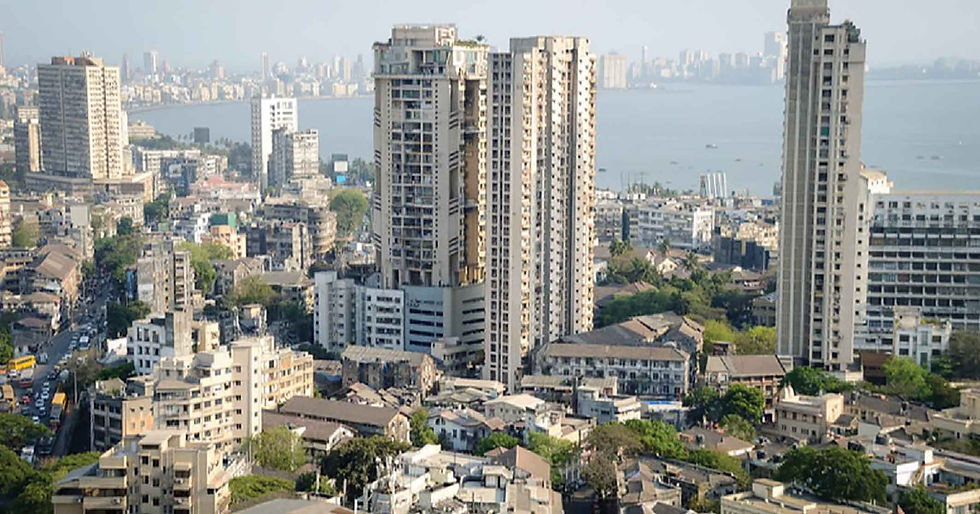
As I look around at life in today’s high-rise buildings, particularly in a dense and fast-moving city like Mumbai, one thing becomes increasingly and unmistakably clear—our homes have grown taller and more vertical, but our connections, in many ways, have grown quieter and more distant. We live stacked floor above floor, often separated not just by concrete walls and closed doors but also by an unspoken silence. We may recognise a familiar face in the elevator and exchange a courteous smile or, at most, a brief and polite "hello", but beyond that surface-level interaction, relationships rarely deepen or evolve into anything more meaningful.


This reality stands in sharp and almost poignant contrast to the world I grew up in.


I come from a small town, where everyday life unfolded in narrow, bustling lanes lined with houses that were physically attached to one another. Doors were rarely fully shut, and even when they were, they never felt closed in spirit. People would sit outside—on simple chairs, on steps, or even on the floor—talking for hours, laughing freely, and sharing stories that moved easily from one household to another. Neighbours were not just people who happened to live next door—they were, in every sense, an extension of family. There was warmth in those interactions, a sense of easy familiarity, and above all, a deep and reassuring feeling of belonging.


Of course, that kind of closeness was not without its own set of challenges and complications.


There was interference at times. There was curiosity—sometimes excessive and overwhelming. People often knew the details of each other’s lives, whether that knowledge was invited or not. Privacy, as we understand it today, was limited, and personal boundaries were frequently blurred or crossed. Yet, even within that lack of space and occasional overreach, there existed a certain kind of emotional security—a quiet but constant reassurance that someone was always around, always available, always aware.


Today, in the context of high-rise living, the situation feels almost entirely reversed.


We enjoy a greater degree of privacy, independence, and clearly defined personal space. There is no unsolicited advice offered at every turn, no constant observation from those around us, and no routine intrusion into our daily lives. We are free to live on our own terms, make our own choices, and maintain our own boundaries—and that freedom is undeniably valuable. But alongside that independence, there is also a subtle and often unspoken sense of isolation. In moments of need, urgency, or even celebration, we sometimes realise just how little we truly know about the people living around us.


Both ways of living, in their own ways, come with distinct advantages and equally notable drawbacks. The open-lane culture offers a strong sense of connection and community, but sometimes at the cost of personal privacy. High-rise living, on the other hand, offers independence, autonomy, and space but can gradually lead to emotional distance and detachment.


So the question is not really about which way of living is better or more desirable.


The more meaningful answer, perhaps, lies somewhere in the idea of balance.


We do not need to return entirely to the ways of the past, nor should we remain completely enclosed within our private, individual spaces. Even a small and conscious effort—getting to know your neighbour beyond a passing greeting, engaging in occasional conversations, or simply being available and approachable in times of need—can help bridge this growing gap. At the same time, maintaining a respectful awareness of personal boundaries ensures that connection does not unintentionally turn into intrusion.


Nothing, in reality, is entirely right, and nothing is entirely wrong.


Life, as it often does, works best when it finds a balance—where doors may not always be wide open, but they are not firmly or permanently shut either.


(The writer is a tutor based in Thane. Views personal.) 


Comments


bottom of page