top of page

By:

Bhalchandra Chorghade

11 August 2025 at 1:54:18 pm

NMIA set for commercial take-off on December 25

Long-term expansion plans take shape Mumbai: Even as long-term expansion plans gather momentum, Navi Mumbai International Airport (NMIA) is preparing to mark a defining milestone with the commencement of commercial operations from December 25, 2025. Sources familiar with the development confirmed that the first flight is scheduled to land at NMIA at around 8.30 am from Bengaluru, operated by IndiGo. The same aircraft will subsequently depart for Delhi, symbolically placing the greenfield...

NMIA set for commercial take-off on December 25

Long-term expansion plans take shape Mumbai: Even as long-term expansion plans gather momentum, Navi Mumbai International Airport (NMIA) is preparing to mark a defining milestone with the commencement of commercial operations from December 25, 2025. Sources familiar with the development confirmed that the first flight is scheduled to land at NMIA at around 8.30 am from Bengaluru, operated by IndiGo. The same aircraft will subsequently depart for Delhi, symbolically placing the greenfield airport on India’s aviation map and formally integrating it into the country’s busiest air corridors. This operational launch comes at a time when the City and Industrial Development Corporation (CIDCO), the project’s nodal planning authority, has initiated the process to appoint a consultant for conducting a geotechnical feasibility study for a proposed third runway at NMIA. The parallel movement of near-term operational readiness and long-term capacity planning underlines the strategic importance of the airport, not just as a secondary facility to Mumbai, but as a future aviation hub in its own right. The December 25 launch date carries significance beyond symbolism. NMIA has been envisioned for over two decades as a critical solution to the capacity constraints at Chhatrapati Shivaji Maharaj International Airport (CSMIA), which operates close to saturation. With limited scope for further expansion at Mumbai’s existing airport, NMIA’s entry into operations is expected to ease congestion, rationalise flight schedules and improve overall passenger experience across the Mumbai Metropolitan Region (MMR). Modest Operations Initial operations are expected to be modest, focusing on select domestic routes, with Bengaluru and Delhi being logical starting points given their high passenger volumes and strong business connectivity with Mumbai and Navi Mumbai. Aviation experts note that starting with trunk routes allows operators and airport systems to stabilise operations, fine-tune processes and gradually scale up capacity. IndiGo’s choice as the first operator also reflects the airline’s dominant market share and its strategy of early-mover advantage at new airports. While NMIA’s first phase includes two runways, the initiation of a geotechnical feasibility study for a third runway highlights planners’ expectations of robust long-term demand. CIDCO’s move to appoint a consultant at this early stage suggests that authorities are keen to future-proof the airport, learning from the capacity limitations faced by CSMIA. A third runway, if found technically and environmentally feasible, would significantly enhance NMIA’s ability to handle peak-hour traffic, support parallel operations and attract international long-haul flights over time. The feasibility study will play a critical role in determining soil conditions, land stability, construction challenges and environmental sensitivities, particularly given Navi Mumbai’s complex terrain and proximity to mangroves and water bodies. Experts point out that such studies are essential to avoid cost overruns and execution delays, which have historically plagued large infrastructure projects in the region. From an economic perspective, the operationalisation of NMIA is expected to act as a catalyst for growth across Navi Mumbai and adjoining regions. Improved air connectivity is likely to boost commercial real estate, logistics parks, hospitality and tourism, while also strengthening the case for ancillary infrastructure such as metro lines, road corridors and airport-linked business districts. The timing of the airport’s opening also aligns with broader infrastructure upgrades underway in the MMR, including new highways and rail connectivity, which could amplify NMIA’s impact. However, challenges remain. Smooth coordination between airlines, ground handling agencies, security forces and air traffic control will be critical during the initial phase. Any operational hiccups could affect public perception of the new airport, making the first few weeks crucial. Additionally, the transition of flights from CSMIA to NMIA will need careful calibration to ensure passenger convenience and airline viability. As NMIA prepares to welcome its first aircraft on December 25, the simultaneous push towards planning a third runway signals a clear message: the airport is not just opening for today’s needs, but is being positioned to serve the region’s aviation demands for decades to come.

How Farmers Built a Rs 2,000 Crore Global Enterprise

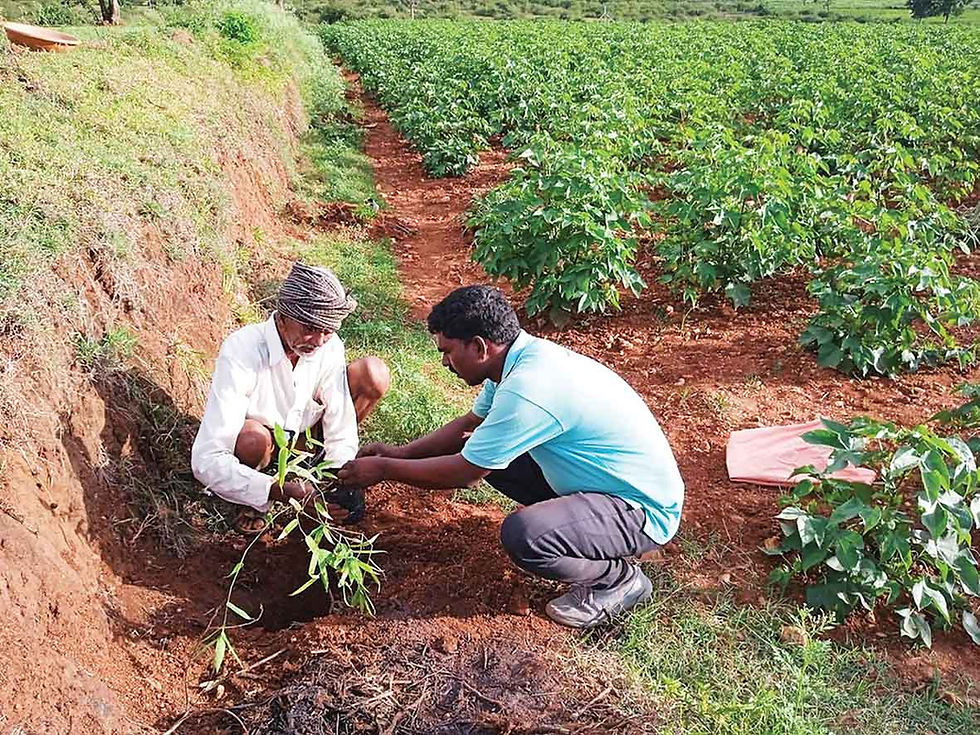
It’s not sympathy. The farmers own the company. They bring the crops; Sahyadri does the rest. This is real business—with a Rs 2,000 crore turnover.

ree

As schoolchildren, we often began essays with, ‘India is an agricultural country,’ without truly understanding what that meant. That changed for me after visiting Sahyadri Farms—a farmer-led enterprise that empowers small-scale growers to reach global markets with their produce.


In Nashik’s Mohadi village lies Sahyadri Farms—a hi-tech agricultural marvel where spirituality meets vineyards. Founded in 2013 by Mr Vilas Shinde, an agriculture engineering graduate, it reflects his choice to pursue farming over a stable job after completing his studies in 1996. Despite initial resistance from his family, who shared just 7 acres among seven brothers, his passion won them over.


Having witnessed farmers' struggles, he aimed to transform their lives. Inspired by Anna Hazare’s 'Aadarsh Gaon' model, he interned in a model village and focused on watershed management during post-graduate studies to tackle issues like water scarcity and soil erosion.


The next eight years brought repeated failures—from horticulture to mushroom and dairy farming—leaving Mr Shinde with a Rs 75 lakh debt but also hard-earned insight. He realised that big dreams alone weren’t enough; unfair pricing and market forces meant farmers barely broke even. Success requires both production and marketing skills.


In 2004, he turned to grape exports for better returns. He rallied 10 farmers, but when their shipment reached Europe, prices crashed, causing major losses. To understand why, he travelled to Europe, gaining a vital insight: global markets demand top-quality produce.


From 2004 to 2006, the team worked tirelessly. “Unity is strength” became their motto. The group grew from 10 to 100 farmers, adopted residue-free standards, and built a Standard Operating Procedure—from pruning to packaging. Their goal: not a single grape should fall short. This led to a full ecosystem—production, post-harvest, and marketing—geared to Europe.


By 2010, after years of trial and error, the team finally succeeded—debts were cleared, and Mr Shinde’s vision for an 'Aadarsh Gaon' and fair crop value seemed possible. But success was short-lived. European tests found chemical residue in the grapes due to a lack of proper Indian certification, leading to heavy losses. Mr Shinde sold his land to cover the farmers’ losses. This setback sparked a bigger idea—a corporate-style model to solve farmers’ challenges. In 2011, with 15 years of hard-won experience, Sahyadri Farms was founded in Mohadi, Nashik—a symbol of hope, built by farmers, for farmers.


Inspired by models like Amul and the sugar industry, Sahyadri applied focused R&D to grape farming with one goal: to reduce external dependence and build everything in-house to lead global exports. From 2011 to 2016, the team grew from 100 to 726 farmer-shareholders, becoming India’s largest grape exporter and a pioneering farmer-producer company. In 2015, Sahyadri expanded into aseptic and frozen processing, making pulps, crushes, and exports. By 2018, even Kissan outsourced its ketchup to them. Since 2016, farmers have earned above-market rates and take pride in their grapes reaching Europe. Today, Sahyadri exports a wide range of produce, like strawberries, bananas, mangoes, and more.


With large production units, cold storage, global supply chains, and packaging facilities, Sahyadri Farms has created nearly 4,000 jobs. By 2025, it grew from 726 to over 30,000 farmers on a 120-acre campus—a remarkable journey of scale and impact.


It also runs a Skill Development Centre with Tata STRIVE, offering expert training, infrastructure, and job placement to empower rural communities through agribusiness.


I had the chance to meet the CEO Mr Pramod Rajebhosale. He asked, “What did you learn here?” I replied, “I’m fascinated by how Sahyadri focuses on farmer welfare over profit…”


He cut in, “No! It’s not sympathy. Farmers own the company. They bring their crops; Sahyadri does the rest. This is real business—Rs 2,000 crore turnover.” I was impressed!


Sahyadri exports to over 42 countries, with 300 visitors daily. What stood out was its transparency—anyone can tour the factory. Visitors watch a powerful 35-mSinute video that moved me deeply and inspired this story.


Motivated, I researched extensively through interviews with Mr Shinde and Sahyadri’s website. It truly is a ‘Star Company’. Sahyadri should be on your bucket list—essential for anyone wanting to truly understand agriculture.


What began with 10 farmers has grown into a remarkable company, proving that ‘unity is strength’. Anyone who follows Sahyadri's journey is inspired to work hard, believing that their dreams will yield sweet fruit.


This quote perfectly captures the spirit at the heart of Sahyadri Farms.


“Kabhi haar mat mano, tumhari jeet intezaar kar rahi hai.”


(The writer is a student of CA and Law.)

Comments


bottom of page