top of page

By:

Waleed Hussain

4 March 2025 at 2:34:30 pm

Opener turned into six -hitting contest

Mumbai: The IPL 2026 opening match between Royal Challengers Bengaluru and Sunrisers Hyderabad at the M. Chinnaswamy Stadium wasn’t a cricket contest. It was a full-scale six-hitting festival, complete with bowlers serving as reluctant ball boys and the leather sphere treating the boundary ropes like an optional suggestion rather than a hard limit. SRH, batting first after being inserted, scraped together 201 for 9 in their full 20 overs. Stand-in skipper Ishan Kishan led the charge with a...

Opener turned into six -hitting contest

Mumbai: The IPL 2026 opening match between Royal Challengers Bengaluru and Sunrisers Hyderabad at the M. Chinnaswamy Stadium wasn’t a cricket contest. It was a full-scale six-hitting festival, complete with bowlers serving as reluctant ball boys and the leather sphere treating the boundary ropes like an optional suggestion rather than a hard limit. SRH, batting first after being inserted, scraped together 201 for 9 in their full 20 overs. Stand-in skipper Ishan Kishan led the charge with a fiery 80 off just 38 balls, peppering the stands with 5 sixes and eight fours. It was the kind of knock that screams “I’m the captain now, watch me launch.” Youngster Aniket Verma (or Ankit, depending on the scorecard scribbles) chipped in with a brisk 43 that included another 4 sixes in a desperate late surge. Heinrich Klaasen added his usual muscle, but the early wobble to 49/3 thanks to Jacob Duffy’s fiery 3/22 in the powerplay kept things from spiraling into total absurdity. SRH’s total sixes: a “modest” 12. How refreshingly conservative. One almost expected them to apologize to the bowlers for not clearing the stadium entirely. Then came RCB’s reply. Chasing 202, the defending champions made it look like a Sunday net session gone gloriously rogue. They polished off the target in a mere 15.4 overs, losing just 4 wickets and winning by 6 wickets with 26 balls to spare. Devdutt Padikkal went ballistic with 61 off 26 balls — a strike rate that would embarrass a missile. He smashed 4 sixes and seven fours, treating SRH spinners like they owed him money. The middle overs turned into a personal highlight reel as he dispatched deliveries into the second and third tiers with contemptuous ease. Elder Statesman Virat Kohli, ever the composed elder statesman at 69 not out off 38, casually added 5 sixes of his own. King Kohli didn’t just bat; he conducted a masterclass in timed aggression, finishing the game with a flourish of boundaries that had the Chinnaswamy crowd in absolute delirium. Rajat Patidar and a quick cameo from Tim David ensured there were no unnecessary heart attacks for the home faithful. RCB’s six tally: a cheeky 13. Combined across both innings? A staggering 25 sixes in one high-octane evening. That’s not T20 cricket anymore. That’s aerial warfare with a red leather projectile. The ball spent more time orbiting the stadium than rolling on the turf. Ground staff probably clocked more kilometers chasing it into the stands than the batsmen ran between wickets. Spectators got an unexpected workout fielding souvenirs, while bowlers stared skyward like astronomers discovering new constellations every over. “Where did that one go?” became the unofficial match commentary.
Collective Hug The bowlers deserve a collective group hug — or perhaps therapy. Jacob Duffy’s impressive debut haul was the lone bright spot for the attack, but even he must have questioned his career choices every time a length ball disappeared into the night. Short balls? Met with the same disdain. Full tosses? Please, they were practically gift-wrapped invitations to the parking lot. Harshal Patel and the SRH death bowlers leaked runs like a sieve in the final stages, watching six after six sail over their heads while fielders sprinted futilely, arms outstretched in vain hope. The spinners fared even worse. One over from a hapless SRH tweaker disappeared for multiple maximums, turning what should have been a containing spell into a public humiliation. Krunal Pandya and Harsh Dubey were taken to the cleaners with such regularity that you half-expected the umpires to intervene on humanitarian grounds. Why bowl when the batsmen treat your best deliveries like practice balls for a batting cage? It’s almost insulting how nonchalantly these sixes were dispatched. No drama, no buildup — just clean, brutal connection followed by polite applause from the crowd and another sprint for the ball boys. Traditionalists mourning the death of “proper” cricket could only clutch their Test whites tighter and mutter about the good old days when a six was an event, not the default setting. At Chinnaswamy, the pitch played like a trampoline on steroids, and the boundaries shrank with every lusty swing. Group Therapy By the 15th over of the chase, the match had lost all pretense of competition. It became a group therapy session in power-hitting, where everyone took turns launching the ball into orbit. The six-count on the giant screen must have broken some internal software trying to keep up. If this is the tone for IPL 2026, buckle up, folks. Expect every subsequent game to threaten world records for most maximums, highest strike rates, and most exhausted retrieval staff. The real MVP? Not Kohli’s classy anchor, not Padikkal’s blitz, not even Duffy’s early breakthroughs. It was the six itself — that glorious, crowd-pleasing projectile that turned a cricket match into prime-time entertainment. Bowlers might as well start their run-ups from the sightscreen next time; at least give the ball a fighting chance. Bravo to both teams for kicking off the season with such unapologetic carnage. You’ve reminded us why we love this format: raw power, minimal fuss, and maximum entertainment. Just don’t be surprised when future matches come with a mandatory “six insurance” clause for nearby residents. The ropes are trembling, the stands are full, and the bowlers are already booking appointments with sports psychologists. Long live the six. May the aerial assault continue unabated.

Indosphere: What Indians Should Know?
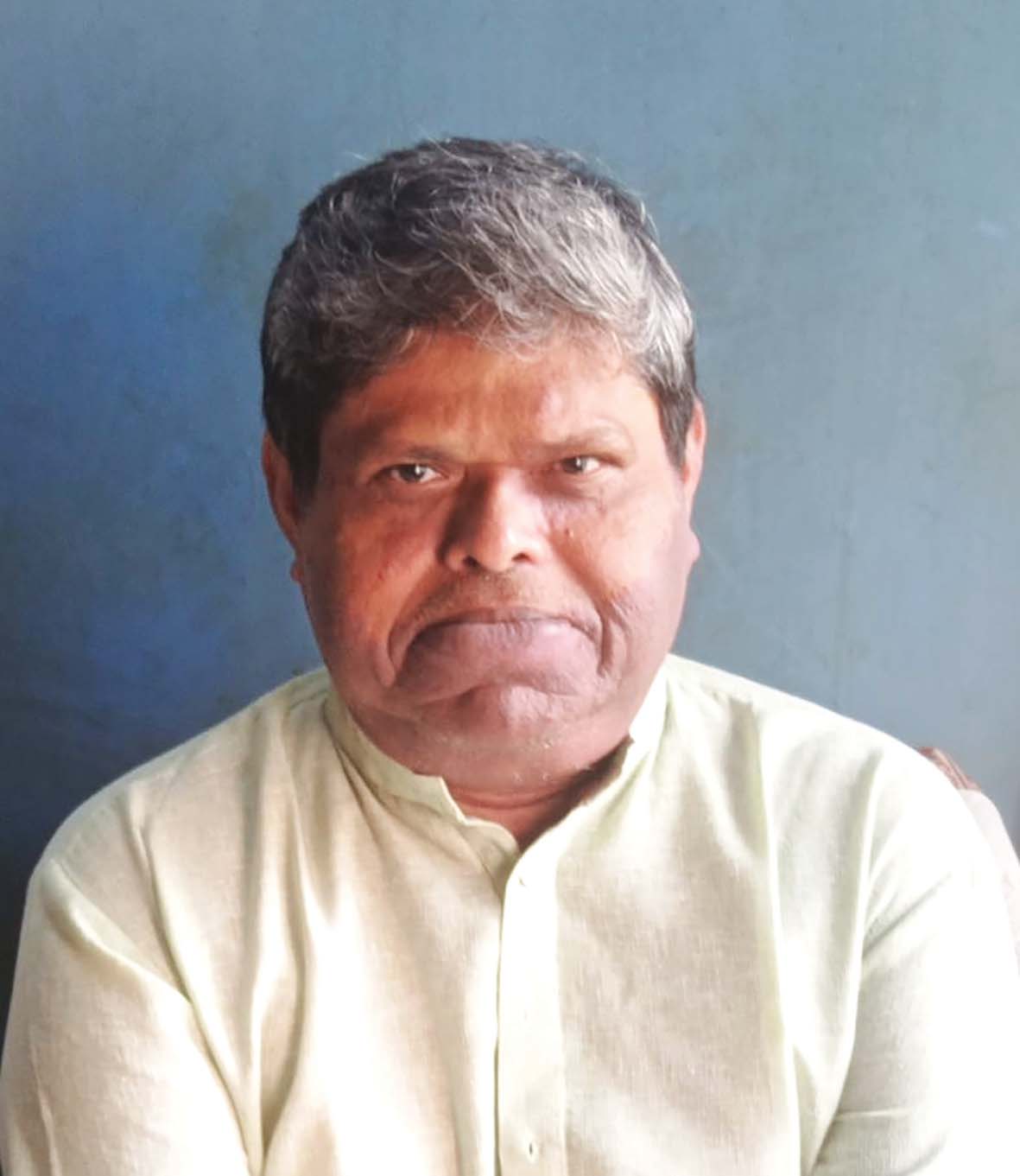
It was seen in the last article as to how the Southeast Asian region or its parts were perceived as ‘further’ or ‘farther’ or ‘greater’ India by various European scholars and travelers, based on their observations of those territories’ cultural congruence with India. The most significant coinage in that journey of insights and nomenclatures was ‘Indosphere’, which not only did away with the possibility of allegations of Indians harbouring expansionist or revisionist ideas of ‘Greater India’ which never was, but also provided an acceptably clean term of reference to all. It was however strange to notice that this term, so potent in meaning and meaningful usage for the India-centric or rather Indic view-point in the global affairs, does not appear to have been used or even taken cognizance of for last eight decades, by either Indian scholars or policy-makers. This author, feeling the urgency for bringing the term in currency of the Indian discourse, published his title ‘Recasting the Indosphere: Indic Strategy for Sinic Challenge’ in March 2024. By coincidence, William Dalrymple, a well-known author, published his title ‘The Golden Road: How Ancient India Transformed the World’ in the same year, where he has used this term sometimes. However, his crediting one of his contemporaries back in England for its coinage in the acknowledgement section of the book is not justifiable; American James Matisoff was undoubtedly the term’s creator and first user.


Strategic Void

Potential of the term Indosphere lies in the fact that it can be put to good use in the realm of international relations for certain activities of gain for India and its civilizational family-member countries. Ideally, it can be programmed to operate in the manner of the Anglosphere – the Anglo-Saxon kinship of nations, viz. the UK, the US, Canada, Australia and New Zealand. A case in point is of its ‘Five Eyes’, the well-coordinated and networked across the continents system for gathering and sharing intelligence that caters mainly to protection of the overall Ango-Saxon interests globally. It would certainly not be out of place to recall here as to how Justin Trudeau, the last prime minister of Canada had placed serious allegations of interference on India, in the context of the Khalistan-supporters’ network operating from its near-permanent base in Canada, by quoting and relying on the intelligence shared by the ‘Five Eyes’. An echo of it rising from neighbouring USA, providing a protective cover to a dreaded Khalistan ideologue and terrorist operating from there was not a coincidence either.


Can the state of India think and really work in the direction of strengthening and actively maintaining an Indosphere, as a strategy for protecting own legitimate and long-term interests as well as those of the ‘family-members’? Sub-questions – when and how – follow only logically. It is beyond doubt that a near herculean effort will need to be invested in a project like that, provided the vision is set in the first place. With due respect for the state of India’s decade-long effort at fortifying the nation’s overall position in the ever-evolving global order, and also positioning it appropriately to face situational challenges from time to time, it has to be noted that there is no vision as such in place with regard to the idea of Indosphere as on date. While there is no denying of the fact of the existence of the Indosphere on one hand, there is no discussion nor official recognition or even acknowledgement at the state’s level on the other hand. Can India think of rising, beyond the current point of being recognized as a ‘middle’ or ‘emerging’ power, and reach somewhere close to China’s position by bridging the huge present gap in between? And can it simultaneously dream to pose at least a limited challenge to the hegemony of the Anglosphere? The answer to both these questions would be in the negative, in the absence of India growing its committed sphere of influence in its neighbourhood, among other things of relevance.


Missed Opportunity

Caring Indians should hope for or even expect the state if not lobby with it, for the said vision to be placed on the table as early as may be possible, which, in retrospect, should be seen actually as the most logical way forward, post passage of overall a fairly successful decade and more of unveiling and pursuing the Act East policy of 2014. When done, a plethora of activities would stare the concerned in their face – redefining the term so as to update it suitably, in order to make it comprehensive by being responsive to the circumstantial updates; forming a formal block or confederation on the global canvas that is expected to operate as a close-knit family, real-time anchoring of the said entity, in the manner of a responsible and watchful family elder; being vigilant enough so as to thwart possible attempts of mis-propaganda that it is likely to attract, and so on.


As the world has tolerated quietly the racially rooted and informally active Anglosphere for centuries, and has accepted perfectly the religion-based global league of Muslim nations called ‘Organization of Islamic Cooperation’ since last over half a century, it should not bother about the formal existence of a culturally or rather civilizationally bonded Indosphere. India has always been compared to an elephant, thanks mainly to an observed pattern of its slow and time-consuming actions. But since so much of precious time has already been lost so far, it would be in India’s true and lasting interests that it must not take more time in declaring and acting on its intentions about the Indosphere. 


(The writer is a research scholar in international relations. Views personal.)


Comments


bottom of page