top of page

By:

Bhalchandra Chorghade

11 August 2025 at 1:54:18 pm

NMIA set for commercial take-off on December 25

Long-term expansion plans take shape Mumbai: Even as long-term expansion plans gather momentum, Navi Mumbai International Airport (NMIA) is preparing to mark a defining milestone with the commencement of commercial operations from December 25, 2025. Sources familiar with the development confirmed that the first flight is scheduled to land at NMIA at around 8.30 am from Bengaluru, operated by IndiGo. The same aircraft will subsequently depart for Delhi, symbolically placing the greenfield...

NMIA set for commercial take-off on December 25

Long-term expansion plans take shape Mumbai: Even as long-term expansion plans gather momentum, Navi Mumbai International Airport (NMIA) is preparing to mark a defining milestone with the commencement of commercial operations from December 25, 2025. Sources familiar with the development confirmed that the first flight is scheduled to land at NMIA at around 8.30 am from Bengaluru, operated by IndiGo. The same aircraft will subsequently depart for Delhi, symbolically placing the greenfield airport on India’s aviation map and formally integrating it into the country’s busiest air corridors. This operational launch comes at a time when the City and Industrial Development Corporation (CIDCO), the project’s nodal planning authority, has initiated the process to appoint a consultant for conducting a geotechnical feasibility study for a proposed third runway at NMIA. The parallel movement of near-term operational readiness and long-term capacity planning underlines the strategic importance of the airport, not just as a secondary facility to Mumbai, but as a future aviation hub in its own right. The December 25 launch date carries significance beyond symbolism. NMIA has been envisioned for over two decades as a critical solution to the capacity constraints at Chhatrapati Shivaji Maharaj International Airport (CSMIA), which operates close to saturation. With limited scope for further expansion at Mumbai’s existing airport, NMIA’s entry into operations is expected to ease congestion, rationalise flight schedules and improve overall passenger experience across the Mumbai Metropolitan Region (MMR). Modest Operations Initial operations are expected to be modest, focusing on select domestic routes, with Bengaluru and Delhi being logical starting points given their high passenger volumes and strong business connectivity with Mumbai and Navi Mumbai. Aviation experts note that starting with trunk routes allows operators and airport systems to stabilise operations, fine-tune processes and gradually scale up capacity. IndiGo’s choice as the first operator also reflects the airline’s dominant market share and its strategy of early-mover advantage at new airports. While NMIA’s first phase includes two runways, the initiation of a geotechnical feasibility study for a third runway highlights planners’ expectations of robust long-term demand. CIDCO’s move to appoint a consultant at this early stage suggests that authorities are keen to future-proof the airport, learning from the capacity limitations faced by CSMIA. A third runway, if found technically and environmentally feasible, would significantly enhance NMIA’s ability to handle peak-hour traffic, support parallel operations and attract international long-haul flights over time. The feasibility study will play a critical role in determining soil conditions, land stability, construction challenges and environmental sensitivities, particularly given Navi Mumbai’s complex terrain and proximity to mangroves and water bodies. Experts point out that such studies are essential to avoid cost overruns and execution delays, which have historically plagued large infrastructure projects in the region. From an economic perspective, the operationalisation of NMIA is expected to act as a catalyst for growth across Navi Mumbai and adjoining regions. Improved air connectivity is likely to boost commercial real estate, logistics parks, hospitality and tourism, while also strengthening the case for ancillary infrastructure such as metro lines, road corridors and airport-linked business districts. The timing of the airport’s opening also aligns with broader infrastructure upgrades underway in the MMR, including new highways and rail connectivity, which could amplify NMIA’s impact. However, challenges remain. Smooth coordination between airlines, ground handling agencies, security forces and air traffic control will be critical during the initial phase. Any operational hiccups could affect public perception of the new airport, making the first few weeks crucial. Additionally, the transition of flights from CSMIA to NMIA will need careful calibration to ensure passenger convenience and airline viability. As NMIA prepares to welcome its first aircraft on December 25, the simultaneous push towards planning a third runway signals a clear message: the airport is not just opening for today’s needs, but is being positioned to serve the region’s aviation demands for decades to come.

Kolhapur roads need a ‘third eye’ to ensure quality

With civic polls approaching, fresh road works must be put under independent technical scrutiny to prevent a repeat of past failures
ree

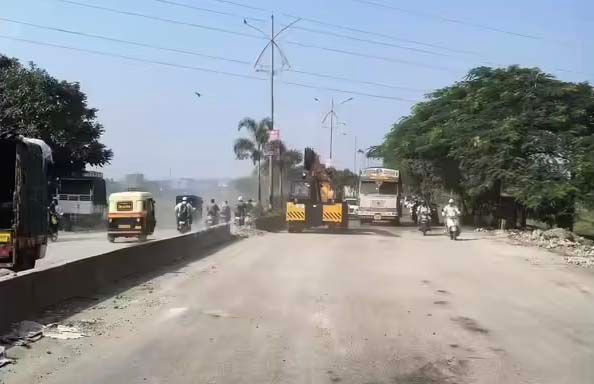
Kolhapur: With the drumbeat of the Kolhapur Municipal Corporation (KMC) elections growing louder, the city is once again awash with digital hoardings of aspirants and announcements of fresh development funds. As is customary on the eve of civic polls, political parties are making lofty promises, while boards announcing allocations for asphalted roads have mushroomed across neighbourhoods. The ceremonial breaking of coconuts for these works is imminent.


However, given Kolhapur’s long and bitter experience with substandard road works, citizens must insist on a “third eye” — an independent and impartial oversight mechanism — even before the projects begin. Without this, there is a real danger that the asphalt being laid today will be washed away in the very next monsoon.


Bad roads have been a chronic affliction for Kolhapur. Over the past three decades, hundreds of crores of rupees have been spent on asphalting roughly 65 km of city roads. Yet, despite this massive public expenditure, the city has been left with roads of consistently poor quality, many of which fail to survive even a single rainy season. While public money has been splurged, and in many cases allegedly siphoned off, Kolhapur’s residents have borne the cost — in damaged vehicles, daily inconvenience and long-term health problems.


Road construction has effectively become a political game in the city. Funds collected through citizens’ taxes are openly plundered, and the lure of these lucrative contracts is one of the reasons many are keen to enter the municipal council. Only a few months ago, Kolhapur witnessed controversy surrounding road projects worth nearly Rs 100 crore. This makes it imperative that before any fresh funds are spent, road works are subjected to independent quality control and technical supervision.


There was a time when quality mattered. In 1980, during the tenure of the first general body of the KMC, protests were held demanding better roads, including a gherao of the corporation by auto-rickshaw drivers during the mayoral election. Some of the roads constructed then lasted for decades. Today, by contrast, roads barely last a year. There is neither the use of modern technology nor on-site supervision. A contractor-friendly system ensured that officials rarely visited work sites. The pattern has been depressingly familiar: roads deteriorate, citizens protest, inquiry committees are appointed — and nothing comes of it.


Generations suffered

Although legal guarantees are taken on paper for road works, the administration has consistently failed to enforce them or blacklist errant contractors. The result is that generations of Kolhapur’s citizens have suffered, quite literally, from back-breaking roads. With elections around the corner, it is time to demand accountability.


There are practical solutions. New roads in Kolhapur can adopt plastic-mix technology on the lines of national highways. For quality monitoring, reputed engineering institutions such as IITs, Walchand College of Engineering and KIT could be invited to take on an independent supervisory role through their civil engineering departments. Citizens should also demand display boards at work sites detailing the materials to be used, their quantities and construction methods.


Additionally, engineering graduates living in various localities can play a watchdog role by closely monitoring works and reporting deviations to the municipal commissioner. Ideally, the KMC should create an open web portal for real-time reporting and transparency.


If such measures are implemented, Kolhapur could replicate the transformation seen in cities like Nagpur and Thane, where sustained improvement in road quality earned then municipal commissioners widespread public acclaim. In fact, Kolhapur’s citizens may not hesitate to accord their civic chief a similar honour — provided the city finally gets roads worthy of a modern urban centre.


Comments


bottom of page