

Maharashtra positions itself as nuclear energy capital

Mumbai: Maharashtra has embarked on a highly ambitious journey to establish itself as the premier nuclear energy hub of the nation, driven by the escalating power demands of next-generation industries. As the global push for artificial intelligence, massive data centers, semiconductor manufacturing, green hydrogen production, and advanced electric mobility accelerates, the need for stable, uninterrupted, and clean base-load electricity has become paramount.
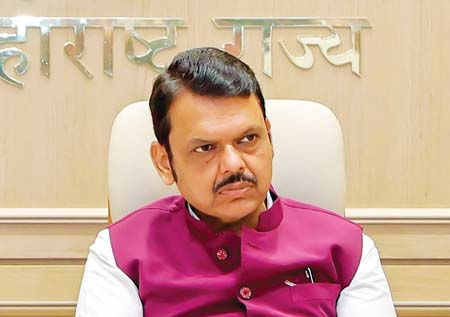
The Maharashtra government is aggressively championing nuclear energy as the cornerstone of its future industrial economy. This strategic pivot was forcefully articulated by Chief Minister Devendra Fadnavis during a high-profile meeting with top American nuclear executives in Mumbai, an engagement that comes immediately on the heels of the state signing historic domestic nuclear energy pacts.
Fadnavis addressed the US Nuclear Executive Mission in India, an event organised by the Nuclear Energy Institute and the US-India Strategic Partnership Forum. He presented a compelling case for American companies to actively invest and partner in Maharashtra’s nuclear renaissance. Fadnavis highlighted a significant shift in the global energy transition narrative. For years, the prevailing consensus heavily favoured renewable sources like solar and wind as the ultimate solutions to future energy crises. However, the realities of rapid industrialisation and an exploding digital economy have underscored the critical necessity for consistent, round-the-clock base-load power generation. While Maharashtra continues to invest heavily in renewables, Fadnavis stressed that carbon-free, industrial-scale energy supply fundamentally requires a robust nuclear backbone.
Industrial Engine
The CM noted that Maharashtra commands a USD 660 billion economy, standing as India’s leading industrial engine and capturing more than forty percent of the country’s total foreign direct investment. Crucially, the Mumbai and Navi Mumbai metropolitan regions currently host nearly sixty percent of India’s entire data center capacity. With the imminent expansion of artificial intelligence infrastructure and semiconductor fabrication plants, the state’s power demand is projected to multiply exponentially. Fadnavis envisions Maharashtra not merely as a passive consumer of imported nuclear reactors, but as a dynamic global hub for nuclear manufacturing, technological partnership, and international export.
Fadnavis assured potential investors that the government is prepared to provide comprehensive support, encompassing prime industrial land, state-of-the-art infrastructure, specialised skill development programs, and collaborative research ecosystems to build dedicated production clusters. He further committed to offering substantial initial-stage subsidies and customised concessions to expedite project setups. A particular area of focus is the deployment of Small Modular Reactors (SMRs).
The American delegation responded with notable optimism to the pitch. Maria Korsnick, President and Chief Executive Officer of the Nuclear Energy Institute, acknowledged the monumental opportunities present within the Indian market. She specifically commended Maharashtra’s robust ecosystem, which boasts a highly skilled engineering workforce, advanced industrial technology, and a sophisticated supply chain network, making it an exceptionally fertile ground for foreign investment.
“Maharashtra will lead the next phase of nuclear energy expansion in India. India’s energy requirement is growing rapidly. Renewable energy sources like solar and wind provide power, but they are not available 24x7 in a reliable manner. Therefore, India needs nuclear energy for base-load power.”
Devendra Fadnavis, Chief Minister


Comments