top of page

By:

Bhalchandra Chorghade

11 August 2025 at 1:54:18 pm

Micro-Zoning, RR proposal: A reform opportunity

Mumbai: The government’s proposed introduction of micro-zoning and differentiated Ready Reckoner (RR) rates marks a significant shift in the way property valuations are determined across the state. The initiative, which seeks to assign distinct RR rates to high-rise buildings, slums, chawls and redeveloped properties within the same locality, has largely been welcomed by the real estate sector. Industry stakeholders, however, caution that the reform’s effectiveness will depend less on its...

Micro-Zoning, RR proposal: A reform opportunity

Mumbai: The government’s proposed introduction of micro-zoning and differentiated Ready Reckoner (RR) rates marks a significant shift in the way property valuations are determined across the state. The initiative, which seeks to assign distinct RR rates to high-rise buildings, slums, chawls and redeveloped properties within the same locality, has largely been welcomed by the real estate sector. Industry stakeholders, however, caution that the reform’s effectiveness will depend less on its intent and more on the framework governing its implementation. The proposal comes at a time when property markets in major urban centres, particularly Mumbai Metropolitan Region (MMR), are witnessing increasingly diverse development patterns within the same neighbourhoods. Experts argue that uniform RR rates often fail to capture the substantial variations in infrastructure quality, redevelopment status, accessibility and market demand that exist even within small geographical pockets. Real estate professionals believe that a micro-zoning approach could help bridge the gap between official property valuations and actual market realities. More accurate valuation mechanisms can improve transparency in transactions, provide a fairer basis for stamp duty calculations and create a more nuanced framework for urban planning. Experts’ Comments Kamlesh Thakur, President, NAREDCO Maharashtra and Co-Founder & Managing Director, Srishti Group, believes the concept has merit but warns that the execution framework will determine whether the reform succeeds or creates fresh challenges. “The concept of micro-zoning and differentiated Ready Reckoner rates has the potential to make property valuation more reflective of local market realities and development potential. However, its success will depend entirely on the framework adopted for implementation. Unless there is a clear, transparent and objective policy with well-defined parameters, the introduction of micro-zoning could lead to increased discretion at the administrative level, resulting in uncertainty and inconsistent outcomes,” he said. According to Thakur, valuation systems that allow excessive room for subjective interpretation can generate disputes, create inconsistencies in assessments and undermine business confidence. His concerns reflect a broader industry apprehension that redevelopment projects—already burdened by lengthy approval processes and rising costs—could face additional uncertainty if valuation criteria vary across administrative jurisdictions. Kaushal Agarwal, Chairman, The Guardians Real Estate Advisory, views the proposal as a logical evolution of property valuation practices, particularly in rapidly transforming urban markets. “The move towards differentiated Ready Reckoner rates through micro-zoning is a progressive step, as property values can vary significantly within the same locality depending on factors such as infrastructure, accessibility, building quality and surrounding development. If implemented effectively, it has the potential to make property valuations more realistic and aligned with actual market dynamics,” he said. Transparency, Methodology At the same time, Agarwal emphasized that transparency and data quality will be critical to ensuring credibility. “However, the success of this initiative will depend on the transparency of the methodology, the quality of data used, and the consistency of its application across micro-markets. Buyers, investors, and developers value clarity and predictability in valuation mechanisms. A well-defined and publicly accessible framework will be essential to avoid ambiguity, strengthen market confidence, and ensure that the new system delivers greater accuracy without creating uncertainty in transaction pricing or investment decisions,” he noted. Uniformly Implemented Echoing similar concerns, Dhruman Shah, Promoter, Ariha Group, said the government must ensure that the system remains easy to understand and uniformly implemented. “The move towards micro-zoning reflects an effort to modernize property valuation and make it more representative of actual market conditions. However, it is important that the system remains simple, transparent and uniformly enforced across regions. If multiple layers of interpretation emerge during implementation, it could lead to disputes and delays, particularly for redevelopment projects that already involve complex approval processes. Industry consultation at every stage will help create a practical and effective framework,” Shah said. As the state explores one of the most significant changes to its property valuation mechanism in recent years, the industry appears broadly supportive of the objective. Yet the consensus remains clear: the success of micro-zoning will depend on transparency, consistency and stakeholder consultation. Without these safeguards, a reform intended to improve valuation accuracy could inadvertently introduce new layers of uncertainty into an already complex real estate ecosystem.

Power struggle in NCP intensifies

Mumbai: The Zero FIR lodged in Bengaluru by NCP (SP) leader Rohit Pawar has become the news flashpoint for a larger battle over the party’s future, exposing deep divisions within the Pawar family and the Nationalist Congress Party. Rohit’s accusations against state president Sunil Tatkare and working president Praful Patel, Tatkare’s sharp counterattack, and DCM Sunetra Pawar’s intervention have laid bare a bitter struggle for control in the aftermath of Ajit Pawar’s death.


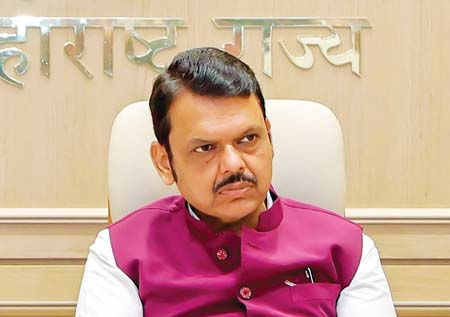
Chief Minister Devendra Fadnavis, meanwhile, dismissed the FIR as politically motivated, calling it “an attempt by the Karnataka government to malign Maharashtra’s image.”


The controversy began on Tuesday when Rohit Pawar filed a Zero FIR in Bengaluru, alleging irregularities and conspiracies within the party. Zero FIRs are typically registered when victims cannot reach the jurisdictional police station but want immediate action. Rohit today followed up with a scathing attack on Tatkare and Patel, accusing them of trying to hijack the party after Ajit Pawar’s demise. He claimed the two leaders had written to the Election Commission earlier this year, seeking to vest sweeping powers in Patel as working president, sidelining the Pawar family’s leadership.


Baseless Charges

Tatkare hit back strongly, dismissing Rohit’s charges as baseless and accusing him of attempting to seize control of the party himself. In a veiled warning, Tatkare said, “We have detailed information of what happened after post-mortem in Baramati hospital. Stop the nonsense else we too have many things to speak about.” His remarks suggested that the feud was not only political but also deeply personal, rooted in the Pawar family’s legacy in Baramati.


Amid the escalating war of words, Ajit Pawar’s widow, Sunetra Pawar, stepped in to assert her authority. Recognised as the NCP’s national president, she wrote to the Election Commission asking it to disregard any correspondence from Patel and Tatkare. Her intervention underscored the Pawar family’s determination to retain control of the party and prevent parallel claims of leadership.


The issue quickly spilled into the Maharashtra legislature, where CM Fadnavis addressed the controversy. He explained that Zero FIRs are meant to help victims register complaints when they cannot reach the local police station, but insisted that the FIR in this case was politically motivated. “This is the Karnataka state government’s attempt to malign Maharashtra’s image,” Fadnavis said.

Comments


bottom of page