top of page

By:

Bhalchandra Chorghade

11 August 2025 at 1:54:18 pm

Infrastructure moment in MMR

Mumbai: The Mumbai Metropolitan Region (MMR) stands at a critical inflection point as the Mahayuti alliance secured near-complete control over key municipal corporations across the region. With aligned political leadership at the state and civic levels, the long-fragmented governance architecture of India’s most complex urban agglomeration may finally see greater coherence in planning and execution. For a region grappling with mobility stress, water insecurity and uneven urban expansion, the...

Infrastructure moment in MMR

Mumbai: The Mumbai Metropolitan Region (MMR) stands at a critical inflection point as the Mahayuti alliance secured near-complete control over key municipal corporations across the region. With aligned political leadership at the state and civic levels, the long-fragmented governance architecture of India’s most complex urban agglomeration may finally see greater coherence in planning and execution. For a region grappling with mobility stress, water insecurity and uneven urban expansion, the question now is not what to build—but how quickly and seamlessly projects can be delivered. Urban mobility remains the backbone of MMR’s infrastructure agenda. Several metro corridors are at advanced stages, including the Andheri West–Vikhroli Metro Line 6 and extensions of the Colaba–Bandra–SEEPZ Metro Line 3. While construction has progressed steadily, coordination issues with municipal agencies—particularly related to road restoration, utilities shifting and traffic management—have often slowed execution. With elected civic bodies now politically aligned with the state government and agencies like MMRDA and MMRC, these bottlenecks are expected to ease. Decision-making on road closures, permissions for casting yards and last-mile integration with buses and footpaths could see faster turnarounds. Suburban rail projects such as the Panvel–Karjat corridor and additional railway lines on the Central and Western routes are also likely to benefit from smoother land acquisition and rehabilitation approvals, traditionally the most contentious municipal functions. Regional Connectivity MMR’s road infrastructure has expanded rapidly in recent years, but execution has often been uneven across municipal boundaries. Projects such as the Mumbai Coastal Road, the Goregaon–Mulund Link Road, the Thane–Borivali tunnel and the Airoli–Katai connector have regional significance but require constant coordination with local bodies for utilities, encroachments and traffic planning. Under a unified civic dispensation, authorities expect fewer inter-agency delays and greater willingness at the municipal level to prioritise regionally critical projects over hyper-local political considerations. The next phase of the Coastal Road, suburban creek bridges, and arterial road widening projects in fast-growing nodes like Vasai-Virar, Kalyan-Dombivli and Panvel could be streamlined as municipal corporations align their development plans with state transport objectives. Water Security Water supply remains one of the most politically sensitive infrastructure issues in MMR, particularly in peripheral urban zones. Projects such as the Surya Regional Water Supply Scheme and proposed dam developments in the Karjat region are designed to address chronic shortages in Mira-Bhayandar, Vasai-Virar and parts of Navi Mumbai. While these projects are state-driven, municipal cooperation is critical for distribution networks, billing systems and sewerage integration. With elected bodies replacing administrators, local governments are expected to accelerate last-mile pipelines, treatment plants and sewage networks that often lag behind bulk water infrastructure. Unified political control may also reduce resistance to tariff rationalisation and long-delayed sewage treatment upgrades mandated under environmental norms. Housing Integration One area where political alignment could have an outsized impact is redevelopment—particularly slum rehabilitation and transit-oriented development. Many large housing projects have stalled due to disputes between civic officials, state agencies and local political interests. A cohesive governance structure could fast-track approvals for cluster redevelopment near metro corridors, unlocking both housing supply and ridership potential. Municipal corporations are also likely to align their development control regulations more closely with state urban policy, enabling higher density near transport nodes and more predictable redevelopment timelines. This could be transformative for older suburbs and industrial belts awaiting regeneration. The return of elected municipal councils after years of administrative rule introduces political accountability but also sharper alignment with state priorities. Budget approvals, tendering processes and policy decisions that earlier faced delays due to political uncertainty are expected to move faster. Capital expenditure plans could increasingly reflect regional priorities rather than fragmented ward-level demands. However, challenges remain. Faster execution will depend not only on political control but on institutional capacity, contractor performance and financial discipline. Public scrutiny is also likely to intensify as elected representatives seek visible results within fixed tenures.

Return of the Prodigal Son

Tarique Rahman’s return is less a democratic revival than a portent of harder politics for Bangladesh and for India.
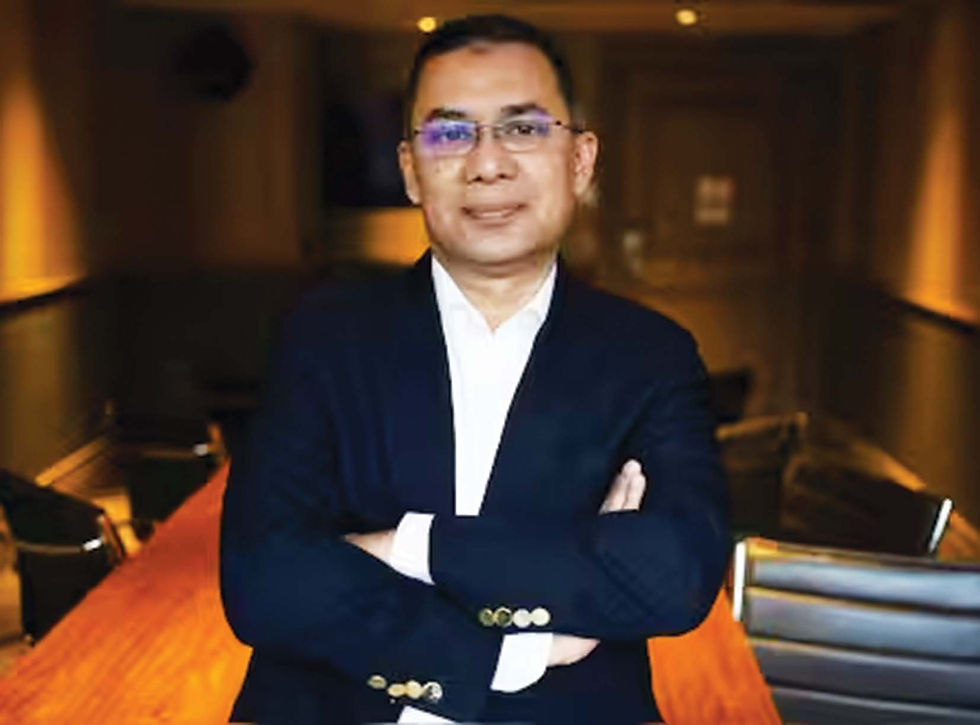
Bangladesh has a habit of mistaking movement for progress. When Tarique Rahman, the acting chairman of the Bangladesh Nationalist Party (BNP), returned after 17 years abroad to much fanfare, his supporters hailed it as the homecoming of democracy. Perceptive observers in India and elsewhere, however, saw the re-entry of a man whose long absence had burnished his myth more than his record ever could.


Rahman is the son of the late Khaleda Zia, the country’s first female prime minister who passed away recently. Until her death, Zia was one half of the bitter duopoly (Zia and Sheikh Hasina) that defined Bangladeshi politics for three decades. Rahman’s return days before his mother’s death merely confirmed that there would be no inheritance dispute. If the BNP wins the next election, he is its presumptive prime minister.


The Awami League is barred from the electoral arena while the interim government under Muhammad Yunus presides over a brittle calm. Islamist forces in form of the Jamaat-e-Islami and newer fundamentalist outfits are jostling for space. Into this vacuum steps Rahman, who is being sold as a ‘democratic saviour,’ despite having spent nearly two decades in London with no record of governance at home.


Rahman’s biography resists such laundering. As the BNP’s strongman-in-waiting during his mother’s second term, he presided over sprawling patronage networks and a culture of impunity that hollowed out institutions. Courts later convicted him in absentia in the 2004 grenade attack on an Awami League rally.


The BNP itself was born in rupture. General Ziaur Rahman tore Bangladesh’s ideological compass away from the secular. The Bangali nationalism forged by Sheikh Mujibur Rahman in 1971 was pointed it toward political Islam. Mujib’s vision that was rooted pluralism and a strategic partnership with India was methodically dismantled. War-time collaborators were rehabilitated, their crimes bleached from public memory. Jamaat-e-Islami, disgraced by its alliance with Pakistan’s army during the Liberation War, was hauled back from infamy and folded into mainstream politics. The republic born of a secular rebellion was slowly recast as a faith-tinged state where piety became power and historical amnesia a governing doctrine.


Under Khaleda Zia, this ideological turn hardened into habit. Secularists were marginalised, minorities intimidated and Islamist street muscle indulged as a political asset rather than a threat. Where Mujib and later his daughter, Sheikh Hasina, anchored Bangladesh’s foreign policy in cooperation with India, the BNP cultivated a firm anti-India sentiment which became useful for mobilising anger, excusing economic drift and binding together an otherwise awkward alliance of nationalists, clerics and conspirators.


The son has been more explicit, and more reckless. From the safety of exile, Tarique Rahman has dressed this inheritance in the language of sovereignty, advertising a “Bangladesh First” doctrine that to Delhi reads less like prudence than repudiation. India is cast as a hegemon to be resisted while Pakistan is quietly rehabilitated. Islamist actors are treated not as extremists but as legitimate partners in the national project.


The consequences are already visible. Since 2023 Bangladesh has been scarred by waves of arson, mob violence and intimidation that scarcely bother with the pretence of protest. Islamist street power has grown louder and more violent. Cultural life has been throttled by mobs shouting religious slogans and demanding submission.


Rahman disowns the violence and speaks fluently of democracy. But the coalition arithmetic that props him up hands leverage to precisely the forces driving the disorder. His return does not dismantle the Islamist power matrix that metastasised during the Yunus interregnum; it jolts it, sharpening rivalries between BNP factions, Jamaat-backed zealots and newly emboldened radicals.


For India, the risks are acute. Sheikh Mujib’s Bangladesh, for all its flaws, saw India as a partner in survival. A Bangladesh shaped by Tarique Rahman’s instincts would be different: inwardly consumed by identity politics and outwardly defined by grievance, suspicion and strategic flirtation with forces hostile to India. Rahman promises to pull Bangladesh back from an abyss of hate and radicalism even as his ascent depends on those who thrive on both. He invokes his mother’s democratic legacy while inheriting a party that normalised street violence and sanctified religious majoritarianism.


Bangladesh’s tragedy is not simply bad leadership but vanishing choice. With the Awami League forced off the field, voters confront a stark binary: accept a dynastic strongman stained by corruption and Islamist compromise, or watch the state slide further toward a harder clerical axis.

Comments


bottom of page