top of page

By:

Correspondent

21 August 2024 at 10:20:16 am

Fee Signal

The government’s decision to create a legal framework for levying charges on UPI transactions has understandably triggered concern, even though it insists that ordinary users and small merchants will continue to enjoy free payments. The proposed amendment does not impose a fee on UPI today. But it removes the statutory barrier to one being imposed in the future, making the government’s reassurance less than the final word. The government argues that this is a measure for UPI’s long-term...

Fee Signal

The government’s decision to create a legal framework for levying charges on UPI transactions has understandably triggered concern, even though it insists that ordinary users and small merchants will continue to enjoy free payments. The proposed amendment does not impose a fee on UPI today. But it removes the statutory barrier to one being imposed in the future, making the government’s reassurance less than the final word. The government argues that this is a measure for UPI’s long-term sustainability. The world’s largest real-time payments system, which processed 2,366 crore transactions worth Rs. 29.9 lakh crore in July alone, cannot indefinitely depend on subsidies as transaction volumes, cybersecurity requirements and infrastructure costs rise. A nominal Merchant Discount Rate on larger merchant transactions, it says, would help create a more sustainable ecosystem without burdening ordinary users. That argument has merit. But so does the concern that a payment system which became a national habit precisely because it was cheap and frictionless should not slowly acquire a price tag. Once the legal machinery for charging exists, there is no guarantee that the boundary between large merchants and small ones, or between merchants and consumers, will remain permanently fixed. The Finance Minister has clarified that any Merchant Discount Rate will apply only to a limited set of merchant transactions above a threshold and will be nominal, well below card-payment rates. The details will eventually be decided by the UPI and Services Steering Committee headed by the National Payments Corporation of India. In other words, there is no charge on the table for the ordinary UPI user today. But there is now a legal mechanism for charges to be introduced tomorrow. That is precisely why any alarm, though exaggerated, cannot simply be dismissed. The government, through its clarification, has reassured that UPI’s free-to-consumer model remains intact. The important issue is whether its financing model can evolve without undermining the habits that made it revolutionary. UPI succeeded partly because it made digital payments cheaper and simpler than alternatives. There is also a larger principle at stake. UPI is not merely another commercial payments platform. It is the product of public investment, regulatory architecture and private innovation. The state should therefore be wary of treating its sustainability as an ordinary market problem. The sensible answer lies between free-for-all subsidies and indiscriminate fees: transparent thresholds, genuinely low MDRs, strong protection for small merchants and an absolute firewall around ordinary consumers. The government should publish the economic case for any future charge, including its effect on merchants and consumers. UPI was built on trust as much as technology. The government is right to protect its remarkable achievement. It should remember that keeping UPI free is not merely a political promise. It is part of the product.

Shinde hauls up Shirsat as BJP fumes over controversial visit

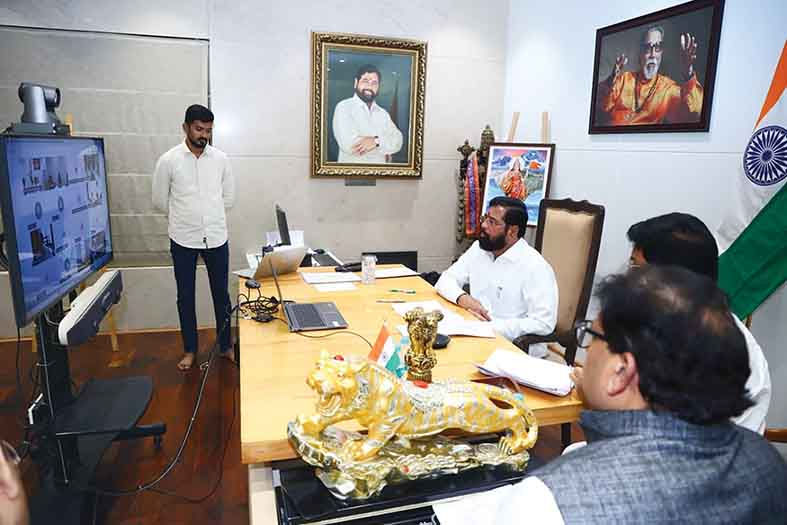
Mumbai: In a glaring display of internal friction within Maharashtra’s ruling Mahayuti alliance, Deputy Chief Minister Eknath Shinde has reportedly issued a stern reprimand to Shiv Sena leader and social justice minister Sanjay Shirsat. The dressing-down comes in the wake of Shirsat’s highly controversial visit to the family of Abhijeet Dipke, the founder of the newly floated Cockroach Janta Party. The meeting has touched a raw nerve within the Bharatiya Janata Party, turning into a major flashpoint between the alliance partners and raising serious questions about their internal coordination.


The political storm began brewing when Shirsat called upon Dipke’s residence in Chhatrapati Sambhajinagar on July 26. The visit immediately raised eyebrows in the BJP camp, given that Dipke’s recent agitations have been squarely aimed at the saffron party, with direct rhetorical attacks on Prime Minister Narendra Modi and Union Home Minister Amit Shah. The simmering anger boiled over during Shah’s visit to Pune on August 1, where the Union Home Minister is said to have expressed his profound displeasure over the Sena minister’s diplomatic faux pas. Taking immediate cognizance of the BJP’s mounting outrage, Shinde reportedly summoned Shirsat over a phone call, demanding a swift explanation and firmly reprimanding him for the political indiscretion. However, neither the government nor party officials have issued an on-the-record confirmation of these developments.


Political Battle

Despite the fierce political backlash, Shirsat has stubbornly stood his ground, offering a personal justification for the contentious rendezvous. Defending his actions, the minister clarified that his ties with the Dipke family go back a long way and that he firmly believes in keeping political battles separate from personal relationships. He further noted that Abhijeet Dipke was in Delhi during the time of the visit, and the meeting was strictly limited to Dipke’s parents. Shirsat also pointed out that he had deliberately avoided visiting the family earlier to steer clear of the ongoing political controversies, though his belated visit seems to have done little to prevent a political firestorm.


For the BJP, the visit is not just a matter of poor optics but a glaring breach of alliance protocol. Senior BJP leaders are reportedly furious that they were kept completely in the dark, insisting that the party leadership should have been informed in advance before a sitting Mahayuti minister extended an olive branch to a vocal critic. This lack of communication has once again brought the fragile issue of coordination within the Mahayuti alliance to the forefront, prompting the BJP to officially register its objection.


Disciplinary Action

The controversy has now sparked intense speculation about whether Shinde will wield the same disciplinary stick against MLC Bachchu Kadu. Kadu recently stirred the pot by not only meeting Dipke but doing so in the company of Shiv Sena (UBT) leader Chandrakant Khaire. The BJP has already been nursing a grievance against Shinde for generously accommodating Kadu with a legislative council seat from his party’s own quota. As the dust refuses to settle on these controversial meetings, political circles in Maharashtra are watching with bated breath to see if this episode will further vitiate the atmosphere within the Mahayuti or trigger a fresh set of consequential political realignments.

Comments


bottom of page