top of page

By:

Ruddhi Phadke

22 September 2024 at 10:17:54 am

Gudhi Padwa draws world to Girgaum

Mumbai: It was the 24 th  celebration of Gudhi Padwa in Girgaum on Thursday, and as usual, the festivities were grand, picturesque and saw humongous response not just from the local residents. This year, the celebration saw huge participation of enthusiasts from beyond the borders. While some coincidentally bumped into the event, some others actually typed ‘Gudhi Padwa 2026 schedule’ in their google search bar to ensure they did not miss this ‘must do’ event while planning their holiday...

Gudhi Padwa draws world to Girgaum

Mumbai: It was the 24 th  celebration of Gudhi Padwa in Girgaum on Thursday, and as usual, the festivities were grand, picturesque and saw humongous response not just from the local residents. This year, the celebration saw huge participation of enthusiasts from beyond the borders. While some coincidentally bumped into the event, some others actually typed ‘Gudhi Padwa 2026 schedule’ in their google search bar to ensure they did not miss this ‘must do’ event while planning their holiday travel in India. It is indeed a big moment for a Mumbaikar to know that an international traveler has Girgaon listed as one of the ‘must do’ destinations for an India trip in their diary; Gudhi Padwa being the cause is even more interesting. Tana, who lives in the Netherlands embarked on a long duration trip to India earlier this month, visited Mumbai specifically to enjoy the festivities. She told ‘The Perfect Voice’ , “I came here to celebrate Gudhi Padwa with you. I am here to experience everything that I see, all the beautiful outfits, beautiful people. I did a lot of research. I knew that today is the day New Year is celebrated in Maharashtra. I am a tourist. I am alone. I am indulging in everything here from food, festivals, dresses. I adore India. I actually typed Gudhi Padwa in the search bar to ensure I did not miss this must-do event during my trip to India.” Shivani Dopavkar, a Hula Hoop artist who is a regular and active participant had made an interesting statement when she had spoken to ‘The Perfect Voice’  during last year’s Shobha Yaatra. She had said, “I quit my IT profession to take up Hula Hoop as my full-time art. I wish to take Girgaum to a level where it is recognised globally. I have chosen Hula Hoop to accomplish this dream for which Gudhi Padwa Shobha Yatra is a perfect platform.” The dream doesn’t seem to be far from success as a lot of foreign participants dressed up in traditional Indian attire were seen enjoying the activities Annie, from Berlin who came to India as a tourist co-incidentally got introduced to the festivities. “It is really colourful. I have come from Berlin with my Indian friend. German culture is very different. Everything is colourful and vibrant here. The women on the bikes, the flowers, everything that we see around is very eventful,” said Annie. Early Preparations Girgaum woke up to busy preparations right from six am, as participants and volunteers geared up for the day ahead. The action began at around nine am, with people from different walks of life wounding their happiness around different themes from Hindu mythology to ancient Marathi traditions. From Children to elderly, to differently abled individuals, all enthusiastically navigated through densely crowded tiny lanes that whole-heartedly accommodated hundreds of visitors. Kamini Darji, a Gujarathi speaking Girgaum resident was present in the middle of the action with her differently abled son. Darji said, “I get my son every year to witness the festivities. The environment gives a very united and positive vibe. We never miss the event.” From Lejhim to Dhol Tasha Pathak, from bike borne Navvari saree clad women to Hula hoop artists; from live bhajan singing to Mardani Khel to children dressed up based on different themes from Chandrayaan to ‘Vithoba-Rakhmai’; the celebration gave a perfect introduction of India’s cultural wealth to all the international visitors. Jennifer from Germany who participated in Mardani Khel wearing a traditional nine-yard saree said, “We play Mardani khel every year for Gudhi Padwa. I have been to Maharashtra many times. This is the first time that I have come to Mumbai. I learnt this art at Shivaji Raje Mardani Akhada in Pune. I have been visiting India for nine years. Earlier I used to live in Bengaluru.” Vande Mataram Theme While it was a beautiful blend of all the aspects that define India, the cherry on the top was – the ‘Vandya Vande Mataram’ – theme. To commemorate 150 th  anniversary of India’s national song Vande Mataram, most of the Tableaus and art work revolved around patriotic sentiment. While Shobha yatra 2024 was all about Lord Shri Ram and 2025 about pride for Marathi language, the year 2026 was all about freedom struggle and love for India. The most interesting highlight was the 25-foot-tall paper statue of freedom fighter Swatantryaveer Savarkar that was carried past to the thunderous beats of drums filling the air with exuberance. A 31-year-old sculptor Gaurav Pawar made the statue along with his brother Gitesh and other volunteers. Gaurav said, “Last year we made a statue of Dnyaneshwar. This year we got an opportunity to make a statue of Savarkar Ji. We took 10 days to make the statue out of paper and bamboo material. It was completely eco-friendly. We got to learn a lot about Savarkar ji during the process and it was a very very sensitive experience.” The Statue was prepared in Bedekar Sadan which is one of the buildings located in Shantaram Chawl Complex which was the hotbed of freedom movement. The residents unknowingly carry forward the legacy of the enclosed structure, a place where prominent freedom fighters like Lokmanya Tilak, Annie Basant, Mahatma Gandhi, Mohammad Ali Jinnah and Lala Lajpat Rai used to gather to lead historic movements.

Stranded, Yet Deeply Cared For

Thailand showed hospitality at its finest — even in the midst of national upheaval, stranded tourists were met not with chaos, but with food, shelter and quiet dignity.

In the first part of this account, I shared how a routine Thailand tour in November 2006 turned into a crisis when political unrest shut down Bangkok’s airports, leaving my group of 26 stranded far from home. Just when anxiety was mounting, the Thailand Tourism Office arranged hotel stays and meals for stranded tourists.


That brought immediate relief — but one painful uncertainty remained: when would we be able to return to India?


We returned to Pattaya carrying that official letter, almost like a lifeline. When we presented it at a 4-star hotel, we were received with warmth and quiet efficiency. True to the assurance given by the tourism office, every member of our group was allotted a separate room. There was no crowding, no compromise, no discomfort. Breakfast and meals were included every day.


That evening, for the first time since the airports had shut down, I slept a little easier.


A major burden had lifted—my group was safe, comfortable, and cared for. Yet one question lingered in the background like an unfinished sentence: When would we go home?


No one had an answer. There was no official timeline, no clarity on when the airports would reopen. Pattaya did have a small airport, but it could not accommodate large international aircraft. We were secure—but suspended in a state of uncertainty.


During those days, I found myself reflecting deeply. Often, travellers return from foreign trips comparing and criticising our own country. But in that moment, I realised something important. If such a situation had occurred in India, we have multiple international airports that could serve as alternatives in emergencies. Every nation has its strengths. Sometimes, it takes a crisis to remind us to value our own.


It was 24th November 2006.


While accommodation and food were no longer concerns, emotional tension lingered. Our families back home were anxious. Phone calls became emotional check-ins rather than casual conversations. We reassured them repeatedly—“We are safe, don’t worry”—even when uncertainty quietly lived within us.


Still, somewhere inside me, there was a firm belief.


Thailand celebrates the king's birthday on 6th December as a day of national pride and unity. I felt strongly that the country would restore normalcy before that day. It wasn’t based on any official information—it was simply faith.


And sometimes, faith is enough.


On 3rd December, the long-awaited news arrived—the airport had reopened. The relief that swept through our group is difficult to describe. We secured confirmed tickets for 6th December. And on that day, exactly as I had hoped, we finally flew back home.


Those fourteen days were unusual in their own way. We were safe. We were well cared for. We even found moments of laughter and calm. Yet beneath it all was a quiet ache—the longing for home, for familiarity, for certainty.


Looking back, one thing stands out with clarity and respect.


Despite the massive chaos and nearly seven lakh tourists stranded across Thailand, there was no exploitation. No artificial shortages. No sudden price hikes. Taxi drivers did not overcharge. Restaurants did not inflate prices. In fact, many places offered free water and snacks to tourists. Ordinary Thai citizens extended help with genuine kindness.


There was discipline. There was dignity. There was responsibility.


Later, we learned that nearly 700,000 tourists had been stranded during that period—yet the system did not collapse into greed or panic. That lesson remains etched in my heart.


Around the same time, India was going through the tragic 26/11 terrorist attacks in Mumbai. Naturally, the Indian media focused on that heartbreaking event. The crisis in Thailand received little attention back home. But for us—for that group of 26 travellers—those fourteen days became a memory that refuses to fade.


Even today, whenever someone from that group calls me, the conversation almost always begins the same way:


“Do you remember those 14 days in Thailand…?”


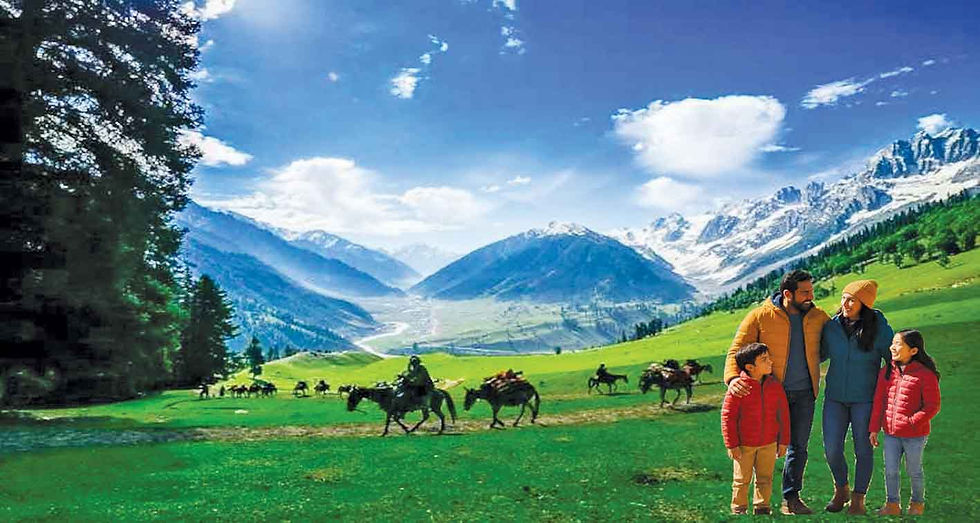
Tourism has gifted me countless experiences—joyful, challenging, and unpredictable. Some have tested my patience. Some have strengthened my faith. Another deeply intense chapter of my life was during the Kargil War, when I spent three months in Kashmir. Those months carried stories of courage, fear, resilience, and humanity—I will share them someday.


Because travel is never just about destinations. It is about people. It is about responsibility. It is about the unexpected lessons life places in your path.


As beautifully said:

“The world is a book, and those who do not travel read only a page.”


(The writer is a travel professional with an experience of more than 25 years. Views personal.)

Comments


bottom of page