

Talisman Sabre 2025: Military Signals from the Indo-Pacific
- Sumant Vidwans

- Aug 3, 2025
- 3 min read
What happens when 35,000 troops from 19 nations train across land, sea, air, cyber, and space? It’s a glimpse into warfare’s future.
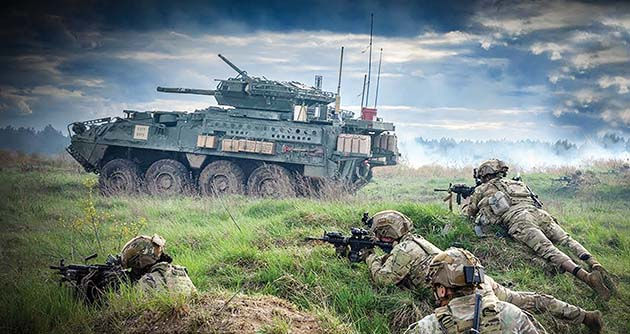
The Indo-Pacific remains the centre of 21st-century strategic rivalry, and few events showcase its military choreography better than the ongoing Talisman Sabre 2025 exercise. Running from 13 July to 4 August, this is the largest and most complex edition since the drills began in 2005. With over 35,000 personnel from 19 nations—including first-time host Papua New Guinea—its scale reflects mounting regional security concerns and a pressing need to display allied coordination amid rising geopolitical tensions.
The inclusion of Papua New Guinea is notable. As China expands its Pacific influence via infrastructure, aid, and security deals, the US and allies are deepening defence ties. PNG’s role as participant and host adds a key node to the Indo-Pacific security network.
Launched in 2005 as a US-Australia drill, Talisman Sabre has grown into a vast, multilateral exercise spanning air, land, sea, cyber, and space. Each edition has tracked shifting strategic priorities—from counterinsurgency to great-power rivalry. The 2025 version focuses on joint command, digital battlefields, and long-range precision strikes, reflecting a maturing coalition readying for complex, multi-domain operations.
What sets 2025 apart
The 2025 edition marks several firsts. HMS Prince of Wales and USS George Washington are participating together for the first time, highlighting expanded maritime reach and NATO–Pacific alignment. The debut overseas deployment of the US Army’s Typhon missile system, with a live SM-6 launch, signals a shift towards distributed, mobile firepower.
For the first time, a joint HIMARS battery from the US, Australia, and Singapore conducted live-fire drills, showcasing deep interoperability. A new US-Australia Combined Air and Missile Defence HQ marked progress in integrated theatre planning. Most forward-looking was the launch of the Multinational Information Operations Centre, coordinating joint cyber, electromagnetic, and narrative operations.
India’s role, though not frontline, is noteworthy. Six Indian officers are embedded in the planning structure, marking a shift from past observer-only roles. Their integration signals growing defence diplomacy, competence, and strategic intent.
Though officially non-targeted and defensive, Talisman Sabre 2025 is widely seen as preparation for Taiwan Strait and South China Sea contingencies. Long-range strikes, amphibious landings, and contested-domain drills point to planning for high-intensity conflict in those theatres.
The timing and lineup send a message to both adversaries and regional partners. Participation by France, Japan, India, the UK, and PNG alongside core allies underscores a commitment to a rules-based Indo-Pacific. It signals a shift from bilateral defence to multilateral cooperation and visible readiness.
China has not stayed silent. Officially downplayed, the exercise has been labelled by Chinese military commentators as having “provocative proximity” and “targeted symbolism.” Whether this is mere rhetoric or signals a measured response remains unclear.
India’s quiet calculus
For India, participation in Talisman Sabre represents more than symbolic alignment. The visit of Air Marshal Ashutosh Dixit, Chief of Integrated Defence Staff, and his high-level meetings with Australian and US counterparts reflect India’s desire to deepen operational familiarity without formal alliance entanglements.
This aligns with India’s doctrine of being an "autonomous strategic actor" and a "net security provider" in the Indian Ocean and beyond. Participation in a planning capacity allows India to both contribute to and learn from joint operations without diluting its strategic autonomy. It also enables India to strengthen bilateral and trilateral ties—particularly with Australia and Japan—beyond the Quad framework.
Talisman Sabre reflects the rise of "coalitions of the willing"—flexible, mission-specific alignments without formal treaties. The US, UK, Australia, Japan, and India increasingly act in coordination without NATO-style structures.
This model suits countries like India, which favour strategic flexibility over fixed alliances. However, it poses challenges for ASEAN, whose members must balance new security ties with a preference for neutrality amid US-China rivalry.
AUKUS, though not formally linked, casts a shadow. Shared themes—missile defence, cyber integration, and joint command—signal deeper Indo-Pacific military integration.
Talisman Sabre 2025 may be less about any single headline event and more about its cumulative impact on regional security perceptions. In a contested Indo-Pacific, these drills sharpen capabilities and shape the geopolitical mindset of friends and rivals alike.
The real impact is the clear demonstration of intent: to deter aggression, uphold freedom of navigation, and offer smaller states an alternative security framework. Exercises like Talisman Sabre are not war rehearsals but acts of deterrence, where coordination, complexity, and continuity speak louder than words.
As the exercise nears its close, one message is clear: readiness is not an act but a habit, and in the Indo-Pacific, that habit is becoming shared.
(The writer is a foreign affairs expert. Views personal.)


Comments