

The Beautiful Chaos of Indian Fashion

India's traditional clothing offers more than heritage—it offers a blueprint for a sustainable and inclusive fashion future.
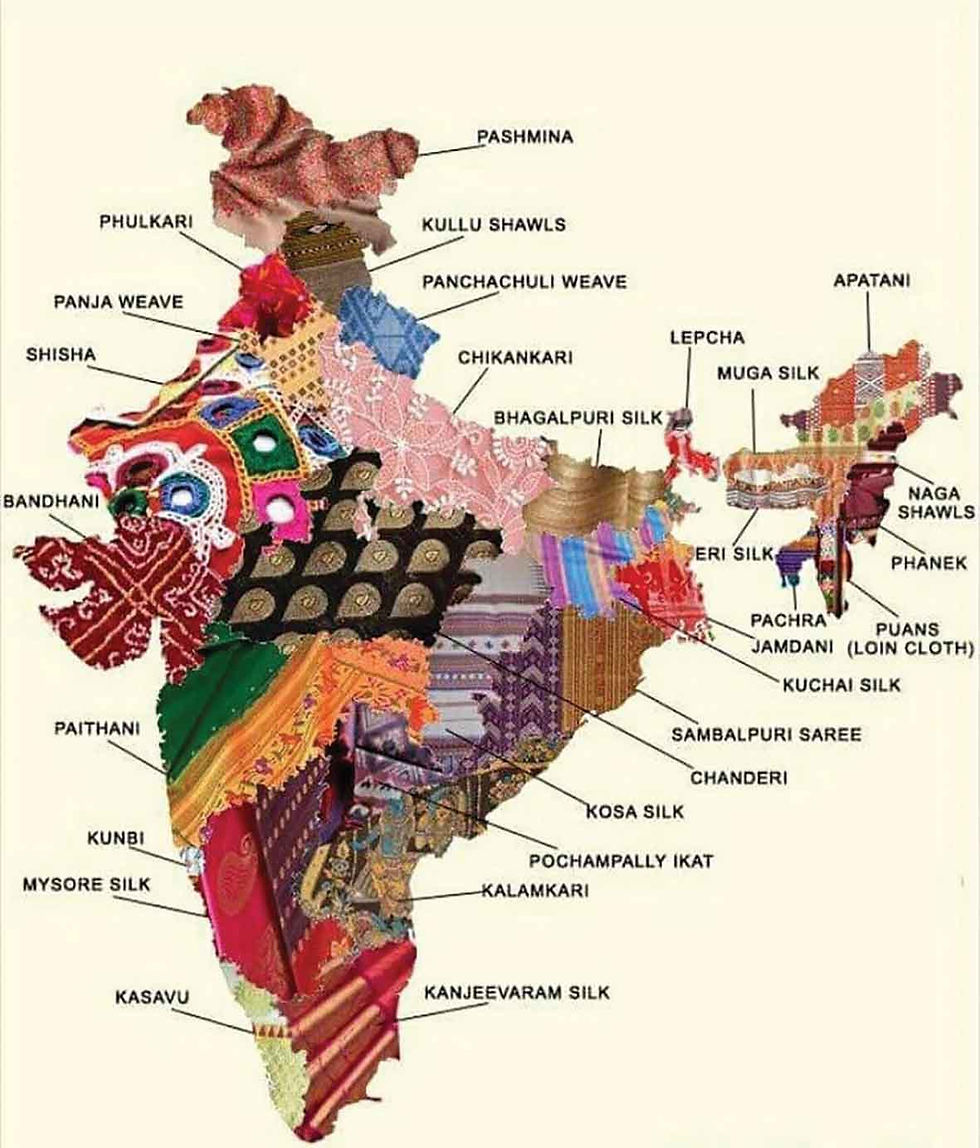
Fashion is a universal medium of human expression, stretching far beyond mere clothing. It is a living intersection of art and culture. For India, a nation with thousands of years of rich textile history, the modern fashion journey has been both profoundly beautiful and chaotic. As a society navigating a post-colonial identity, India holds the ancestral answers to modern fashion’s greatest crises, inclusivity and sustainability, yet it continuously fights for its own narrative.
Colonial Shadows
The mindset of modern India remains deeply influenced by Western standards of style. Following centuries of colonial rule, traditional attire was long stereotyped as ceremonial or outdated, forcing indigenous garments into the shadows of everyday life.
India boasts an unparalleled geography of textiles, from the regal Pashmina of Kashmir to the intricate Kanjivaram of Tamil Nadu, alongside Banarasi silk, Sambalpuri ikat, and Patola weaves.
Despite this vast heritage, these regional masterpieces often remain unseen by the masses. They rarely become the face of mainstream fashion until a red-carpet celebrity showcases them at a global event.
This reliance on celebrity endorsement creates an unstable ecosystem. Traditional crafts are often treated as temporary trends rather than permanently valued art forms, leaving artisans vulnerable when the spotlight shifts.
Fashion Without Labels
Long before the global fashion industry popularised terms like “gender-neutral” or "androgynous", Indian fashion was inherently fluid. Ancient Indian attire relied primarily on unstitched, draped fabrics that defied rigid gender binaries.
This fluidity is reflected across India's classical artistic traditions. For generations, legendary Kathak masters, such as Pandit Birju Maharaj, performed in flowing panels of fabric that transcended gender categorisation.
Garments like the saree, dhoti, and kurta were originally designed around the human form, prioritising body positivity, individual comfort, and ease of movement.
Modern life relies heavily on structured Western clothing, leading many people away from the comfort and inclusivity of traditional draped garments.
Sustainable Blueprint
The rise of the global fast fashion industry has introduced a rapid, throwaway consumer culture that is neither economically stable nor environmentally safe. Traditional Indian fashion still holds an ancestral blueprint for a zero-waste and circular economy.
A traditional saree or veshti requires no cutting or tailoring. Because the fabric remains whole, there is zero textile waste during production.
Indian clothing was never disposable. Luxury handloom pieces were passed down as family heirlooms. When worn out, they were systematically repurposed into household quilts (kantha) or even cleaning items such as pochas (cloth mops), cushion covers, or patches for new garments.
As the world struggles with the ecological destruction of synthetic microfibres, India’s natural handlooms offer a sustainable alternative.
Khadi is more than just hand-spun, handwoven cotton; it is a philosophy of self-reliance and environmental harmony. It naturally breathes, keeping the wearer cool in summer and warm in winter. Utilising organic cotton, natural fibres, and plant-based dyes such as indigo and madder root, traditional Indian textile production leaves a near-zero carbon footprint. By prioritising these indigenous materials, the global fashion industry can sustain both its cultural value and the health of the planet.
The modern fashion industry is trapped by rigid standards and fast-fashion habits dictated by the West. Yet, the blueprint to break this cycle has survived centuries of colonial chaos, quietly preserved across India’s history. Traditional Indian attire was never bound by strict gender binaries or size restrictions; it was built for individual comfort and body positivity. By blending these deeply inclusive philosophies with India’s vast world of indigenous fabrics, prints, and zero-waste drapes, we can do more than just celebrate heritage; we can change the future of clothing. Looking inward allows us to turn fashion on its head, proving that style doesn’t have to contribute to global waste. Instead, it can return to what it was always meant to be: a sustainable medium of living art, comfort, and true human expression.


Comments