

The Buffalo Billion

India’s vast dairy economy has turned ageing livestock into a $5-billion export engine and a new instrument of South-South trade.
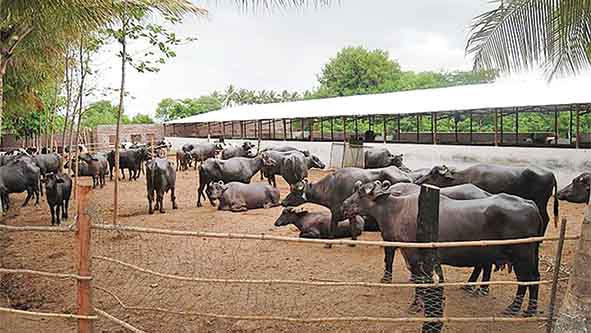
India’s enormous livestock economy is capable of sustaining both large-scale domestic consumption and a substantial international protein trade. According to livestock census data, the country has roughly 74.26 million sheep, 148.88 million goats and 9.06 million pigs, alongside vast standing populations of bovines and poultry. Together, these animal resources provide the raw material for domestic consumption as well as export-oriented meat production.
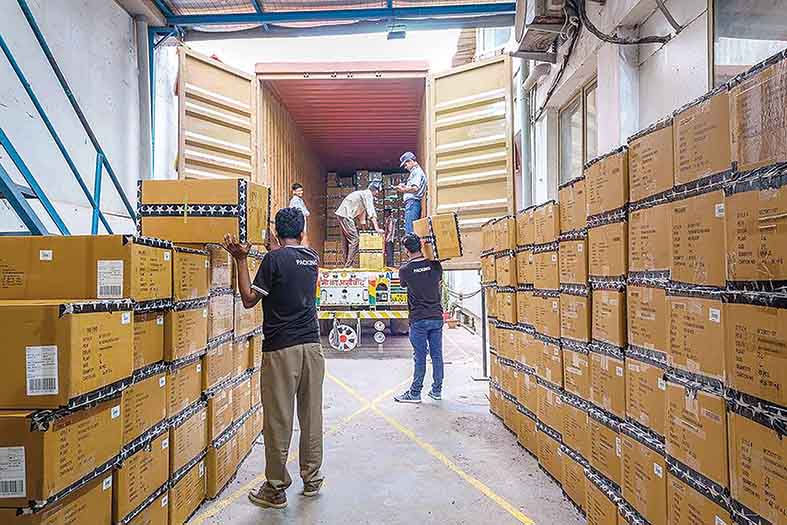
The scale of the underlying livestock economy is matched by a sizeable processing infrastructure. Thousands of registered slaughterhouses and modern, export-oriented integrated meat-processing units operate under the regulatory framework of the Agricultural and Processed Food Products Export Development Authority (APEDA). National processing capacity exceeds 1 million tonnes annually, although utilisation remains relatively modest at around 40 to 50 percent. Major surplus-producing regions and export-processing hubs are concentrated in Uttar Pradesh, Andhra Pradesh, Maharashtra and Punjab.
India’s buffalo meat, commonly known as carabeef, has established a durable presence in international markets. Its appeal rests on a combination of lean texture, grass-fed characteristics and price competitiveness. Export volumes have recently reached approximately 1.42 million metric tonnes, generating more than $5.09 billion in international revenue.
The geography of this trade is revealing. Vietnam functions as the principal logistical entry corridor and re-export gateway into wider East Asian markets. Malaysia provides consistent demand, supported by bilateral commercial ties and structured halal-certified import requirements. Egypt serves as an important intersection between North African and Middle Eastern markets, where both state and private-sector demand for protein remains substantial.
Indonesia is another significant destination, although its import volumes fluctuate according to regulatory quotas and domestic food-security policies. In West Asia, Iraq and Saudi Arabia remain strategically important markets, driven by widespread demand for relatively affordable red meat.
The Tariff Wall
India’s competitiveness, however, does not translate automatically into market access. Global agricultural geopolitics continues to shape the buffalo-meat trade through preferential trade agreements, sanitary and phytosanitary regulations and persistent differences in tariff treatment.
In the European Union and the United Kingdom, competitors such as the United States, Australia, Brazil and Argentina, as well as European producers including the Netherlands, Poland and Ireland, frequently benefit from duty-free or highly preferential tariff arrangements. Indian exporters, by contrast, face structural tariff disadvantages and stringent compliance requirements, limiting their ability to penetrate high-value Western markets more deeply.
The competitive picture is similarly complicated in Asia. China’s extensive free-trade arrangements with ASEAN countries give producers such as Thailand preferential, including zero-duty, access for certain meat products. Other regional suppliers can face considerably higher duties, including tariffs of around 20 percent on selected classifications. Such disparities can erode India’s underlying cost advantage.
Latin America presents another challenge. Trading blocs such as MERCOSUR provide preferential treatment to producers within the bloc, while countries such as Brazil enjoy lower tariffs in selected emerging markets. For India, operating outside these preferential networks creates another layer of competitive pressure.
Two indicators underline the structural competitiveness of India’s meat exports.
The Nominal Protection Coefficient (NPC) stands at 0.21, suggesting that domestic meat prices remain substantially below international reference prices. This gives Indian buffalo meat a powerful price advantage in overseas markets.
The Revealed Comparative Advantage (RCA) index stands at 1.07, indicating that India possesses a revealed comparative advantage in the international meat trade. The figure points to a sector whose export competitiveness is supported by a relatively low domestic price base and an established presence in global markets.
Yet price competitiveness alone cannot guarantee expansion. India must contend with tariff disadvantages across China, ASEAN and European markets, as well as the increasingly important non-tariff barriers created by sanitary and phytosanitary requirements.
Meat as Statecraft
Much of India’s buffalo-meat economy is effectively a downstream extension of its enormous dairy industry. The monetisation of ageing or economically less productive livestock can provide value to farmers while reducing pressure on scarce feed and fodder resources. What might otherwise represent a declining agricultural asset can therefore be converted into an exportable commodity.
That dynamic has also acquired a geopolitical dimension. India has effectively transformed an internal agricultural cycle into a commercial bridge with developing economies across Southeast Asia, West Asia and Africa.
India’s position in the global protein trade nevertheless remains vulnerable to sanitary gatekeeping, changing trade alignments and preferential regional blocs that favour competitors such as Brazil and Australia. India could strengthen bilateral veterinary cooperation, improve traceability and certification systems, and pursue targeted agreements that reduce non-tariff barriers.
(The writer is a member of Maharashtra Agriculture Price Commission. Views personal.)


Comments