

The Early Whisper

While Vaibhav Suryavanshi’s precocious rise stirs wonder, it tests how gently a nation can nurture its next cricketing hope.
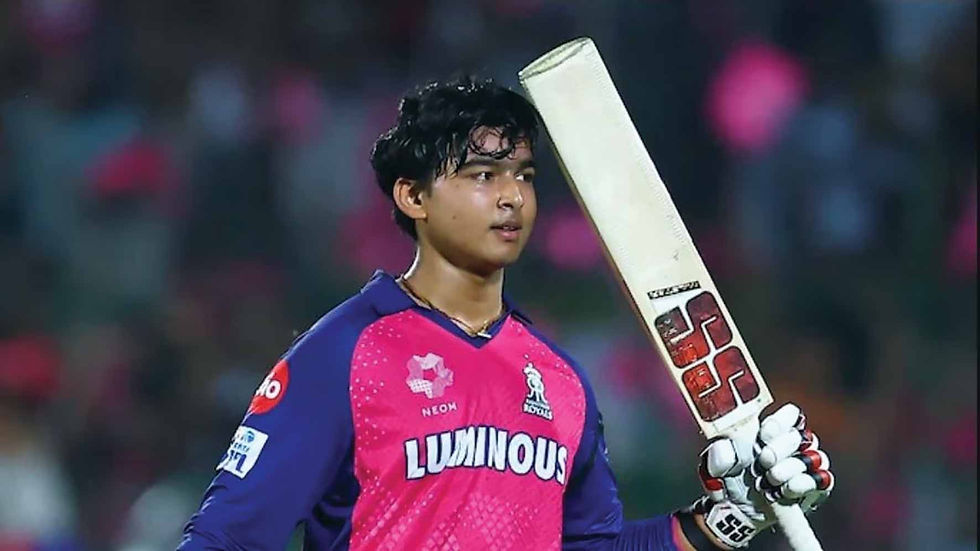
What does a 15-year-old carry in his kit bag. A bat, a pair of gloves, perhaps a water bottle. Or something heavier: dreams, pressure, and the quiet weight of a nation that never stops searching for its next cricketing marvel. In the case of Vaibhav Suryavanshi, the question lingers with unusual urgency.
At first glance, he appears like any other teenager. Slight frame, unassuming presence, a face that still belongs more in a classroom than under floodlights. But the transformation begins the moment he takes guard. The boy recedes. The cricketer emerges.
Quiet Beginnings
India’s cricket story has always begun in modest spaces. Dusty gullies, improvised pitches, borrowed bats. It is here that instinct is born before it is refined. For Vaibhav, the journey seems to echo that familiar rhythm. Yet, not every promising child finds a pathway. In a country where millions play, only a fraction enter structured systems, and fewer still rise to national attention. And that is what makes his ascent noteworthy.
There is something poetic about his stroke play. Vaibhav’s bat does not merely strike the ball, it appears to script intent. Observers have noted his balance at the crease, a still head, measured footwork, and a rare composure that defies his age. He blends aggression with restraint, suggesting not just flair but awareness. It is this equilibrium that often separates promise from longevity.
His early exploits in the Indian Premier League have amplified the intrigue. A fearless 78 off 26 balls against RCB, audacious strokes against seasoned bowlers, and the confidence to launch established names like Jasprit Bumrah and Josh Hazlewood have signalled not just talent, but temperament.
Rising Expectations
At fifteen, most teenagers negotiate homework and hobbies. Vaibhav negotiates expectations. A good innings is no longer a delight, it becomes a benchmark. A failure is not merely a bad day, it invites scrutiny.
Voices from the cricketing world have been quick to respond. Mohammad Kaif and Piyush Chawla see in him a match-winner ready for bigger stages. Ravichandran Ashwin, while acknowledging the brilliance, has urged patience, reminding us that time is as crucial as talent. Even global icons like AB de Villiers have described him as mature beyond his years.
This divergence of opinion reflects a larger dilemma. How early is too early? Sports psychology offers a telling insight. Managed pressure can elevate performance significantly. Excessive expectation, however, can erode clarity and decision-making. For a young mind, this balance is delicate.
And then there is the modern amplifier in form of social media and instant recognition. Overnight, a teenager becomes a public figure.
Yet, glimpses of Suryavanshi’s innocence persist. A fleeting smile after a boundary. A momentary glance skyward after dismissal. These are reminders that beneath the rising star, there is still a boy learning his way.
Beyond the boundary, the ecosystem of coaches, family and mentors form the invisible scaffolding. Their role is not merely to train, but to protect and ensure that his growth is steady.
India’s cricket infrastructure has evolved significantly. Academies, leagues, and scouting systems have widened access. But opportunity remains uneven. For every Vaibhav who rises, countless others remain unseen.
So, what defines success for someone who has not yet finished school? Is it numbers on a scoreboard? A rising strike rate?
It all boils down to an ability to recover after failure. The discipline to remain grounded amid applause.
Vaibhav stands at a fascinating intersection of carefree gully cricket and structured professionalism. Between adolescence and accountability. Between playing for joy and performing for validation.
His journey, therefore, is a study in contrasts. It is a reflection of how early brilliance meets evolving responsibility.
The future will bring its own tests. His short bursts of brilliance will need to evolve into sustained performance. Suryavanshi’s promise and his prodigious talent will have to coexist with endurance.
Yet, perhaps the most important question lies elsewhere. Can we allow him time?
For all his runs that he will record, Vaibhav’s real story will unfold in quieter spaces – whether the unseen practice session or the many moments of doubt that an ace sportsman is besotted with.
At this stage, perhaps the most important thing India can offer young Vaibhav Suryavanshi is not heightened expectation or frenzied adulation, but time.
(The writer is a retired banker and author. Views personal.)

Comments