top of page

By:

Archita Gaur

13 June 2026 at 3:25:13 pm

The Economics of Next-Generation FTAs

While India is rewriting its trade strategy, market access will matter only if domestic industry can turn it into investment, jobs and deeper global value-chain integration. After years of cautiously pursuing Free Trade Agreements (FTAs), India has signed landmark deals with the United Kingdom and the European Free Trade Association (EFTA), while talks continue with several other major economies. The move reflects a broader strategy to deepen integration with global markets, attract...

The Economics of Next-Generation FTAs

While India is rewriting its trade strategy, market access will matter only if domestic industry can turn it into investment, jobs and deeper global value-chain integration. After years of cautiously pursuing Free Trade Agreements (FTAs), India has signed landmark deals with the United Kingdom and the European Free Trade Association (EFTA), while talks continue with several other major economies. The move reflects a broader strategy to deepen integration with global markets, attract investment, strengthen manufacturing, and diversify supply chains amid growing geopolitical and economic fragmentation. However, the success of these agreements cannot be measured in the number of deals signed or tariffs reduced. Their true value lies in strengthening export competitiveness, increasing participation in global value chains, generating quality employment, and enhancing long-run productivity. This article analyses the economic implications of India’s recent FTAs, the challenges to their effective implementation, and measures needed to maximize their benefits New Strategy India’s recent push towards FTAs marks a shift from its earlier cautious stance to trade liberalization. Concerns over widening trade deficits and impact of imports on domestic industries had earlier made India reluctant to pursue comprehensive FTAs, which was evident from its decision to remain outside the Regional Comprehensive Economic Partnership (RCEP). However, changing global dynamics, including supply chain disruptions, geopolitical realignments, and the “China+1” strategy, have prompted India to adopt a more proactive trade policy. Recent agreements with the United Kingdom and the European Free Trade Association (EFTA) emphasize expanding market access, attracting investment, and integrating more deeply into global value chains. Unlike traditional FTAs, which focus primarily on tariff reductions, India's recent agreements aim to promote deeper economic integration. The India–UK FTA expands market access for goods and services while including provisions on digital trade, intellectual property, government procurement, and mobility of professionals. Similarly, the India–EFTA Trade and Economic Partnership Agreement (TEPA) go beyond trade liberalization by combining tariff concessions with a landmark investment commitment of USD 100 billion over 15 years to support industrial growth and employment generation. These agreements reflect a shift in India’s trade strategy, focusing not just on expanding exports but also on attracting investment, facilitating technology transfer, bolstering supply chains and enhancing competitiveness of local industry. Their success, however, will hinge on strong implementation and competitiveness of domestic industries. Economic Impact Free trade agreements can promote economic growth by reducing trade barriers, expanding market access, and facilitating greater participation in global value chains. For India, recent FTAs are expected to boost exports in textile, pharmaceuticals, engineering goods and services while attracting greater foreign direct investment (FDI) through improved market access and investment provisions. Greater competition can also encourage domestic firms to innovate, improve productivity and achieve economies of scale. However, these gains are not automatic. Labour-intensive industries and MSMEs may struggle to compete with cheaper imports without adequate policy support. Tariff reductions may also lead to short-term revenue losses, while restrictive rules of origin and non-tariff measures may limit the full utilization of trade preferences. Moreover, Indian firms may be unable to fully capitalize on expanded market access without improvements in logistics, infrastructure, and the ease of doing business. Ultimately, the economic success of India’s FTAs will depend not only on the agreements themselves but also on complementary domestic reforms that enhance export competitiveness and strengthen industrial capacity. Although India’s recent FTAs offer significant economic opportunities, realizing their full benefits will depend on effective implementation and complementary domestic reforms. Several structural challenges could constrain the ability of Indian firms to fully capitalize on these agreements. MSMEs are particularly exposed. Many lack the technological capabilities, access to finance and compliance infrastructure required to meet international quality, environmental and sustainability standards. Export-readiness programmes, easier access to credit, technology upgradation and stronger institutional support can therefore be as important as the tariff concessions negotiated abroad. Rules of origin deserve particular attention. They are necessary to prevent trade diversion and ensure that preferential access benefits genuine producers, but excessive complexity can turn an FTA preference into an administrative burden. Simplifying procedures, strengthening customs coordination and making compliance easier for smaller exporters will be essential to improving utilisation. High logistics costs and infrastructure bottlenecks have long weakened India’s export competitiveness. A product that receives zero or low tariffs in a foreign market can still be uncompetitive if it is expensive or slow to move from an Indian factory to a foreign customer. This makes investments in multimodal transport, port modernisation, warehousing, customs digitisation and initiatives such as PM Gati Shakti central to the success of the new trade strategy. Faster clearances and more predictable logistics can effectively create a second layer of competitiveness alongside tariff preferences. The same applies to the broader ease of doing business. Reliable power, faster approvals, access to finance, skilled labour and predictable regulations are not peripheral issues in an FTA strategy. India’s next-generation FTAs represent a strategic shift from tariff-focused liberalisation towards deeper economic integration. They offer an opportunity to expand exports, attract investment, diversify supply chains and strengthen India’s position in global value chains. But the signing of an agreement should be seen as the beginning of the process, not its culmination. The more meaningful measure of success will be whether Indian firms increase their exports, whether new investment creates productive capacity, whether MSMEs enter global supply chains and whether workers gain access to better and more productive employment. (The writer is an economics postgraduate from Jawaharlal Nehru University with research interests in economic policy, trade and global governance. Views personal.)

The forgotten music of water

Every civilization has a sound. We hear it every day.  Perhaps that is why we have forgotten to listen. Some announce themselves with the clang of industry, the whistle of trains, the restless murmur of cities that never seem to sleep. Some are remembered through the songs they sang or the monuments they left behind. Yet beneath every anthem composed by human hands flows an older music that is quieter, gentler, eternal. It is the music of water.


It begins as rain, knocking softly upon waiting roofs, each drop carrying the scent of a thirsty earth and the promise of another season. It laughs through mountain streams with the impatience of childhood, gathers dignity as rivers widen, and then slips beneath the soil like an old sage choosing silence over speech. Before a single drop reaches the tap in our homes, it has wandered through wandering clouds, embraced forests, carved valleys, filled lakes, rested in reservoirs, surrendered itself to treatment plants, and travelled patiently through miles of unseen pipelines. By the time it reaches our hands, it has already lived an entire lifetime. The tap is not its beginning. It is merely the last note of a song that began in the sky.


But every melody carries the shadow of a discord. A leaking tap keeps singing like, drop... drop... drop... not as water escaping, but as time dissolving. An overflowing tank hums no hymn of abundance; it whispers of abundance mistaken for entitlement. Beneath the asphalt, forgotten pipelines breathe their tired breath until, one day, they simply give way. And then arrives the most haunting music of all, the music that contains no sound.


The silence of a dry hand pump. Its handle rises. Its handle fails , and again, and again, and again. Few silences weigh as heavily as that one. It is the silence of rivers shrinking into memories, of aquifers emptied one unnoticed season at a time, of monsoons growing uncertain, of promises postponed until tomorrow becomes too late. Sometimes the loudest warning a civilization receives is not a crashing flood, nor a roaring storm, but the unbearable absence of a single drop.


We must not merely use water. We need to listen to it as well. Somewhere, amid the speed of progress and the comfort of convenience, we stopped listening. We began hearing only the click of a tap, forgetting the symphony that preceded it.


Today, as rivers rewrite their courses, glaciers retreat, cities stretch beyond their thirst, and every summer grows a little longer than the last, listening is no longer an act of poetry. It is an act of survival. The future will not belong to those who extract the most water. It will belong to those who understand its rhythm, honour its journey, and protect its music. Perhaps, years from now, history will ask us only this ” What did water sound like in your time?


The answer will never live entirely in reports, budgets or speeches. It will live in the music we chose to preserve. Like rivers still singing beneath ancient bridges...,like monsoon rain welcomed with open palms...,like every child turning a tap with quiet certainty Or like relentless leaks...forgotten lakes... or wells that answered every prayer with silence.


For when the song of water begins to fade, it is never water alone that disappears. A river loses its voice and a civilization, almost without noticing, begins to lose the rhythm of its own heartbeat.


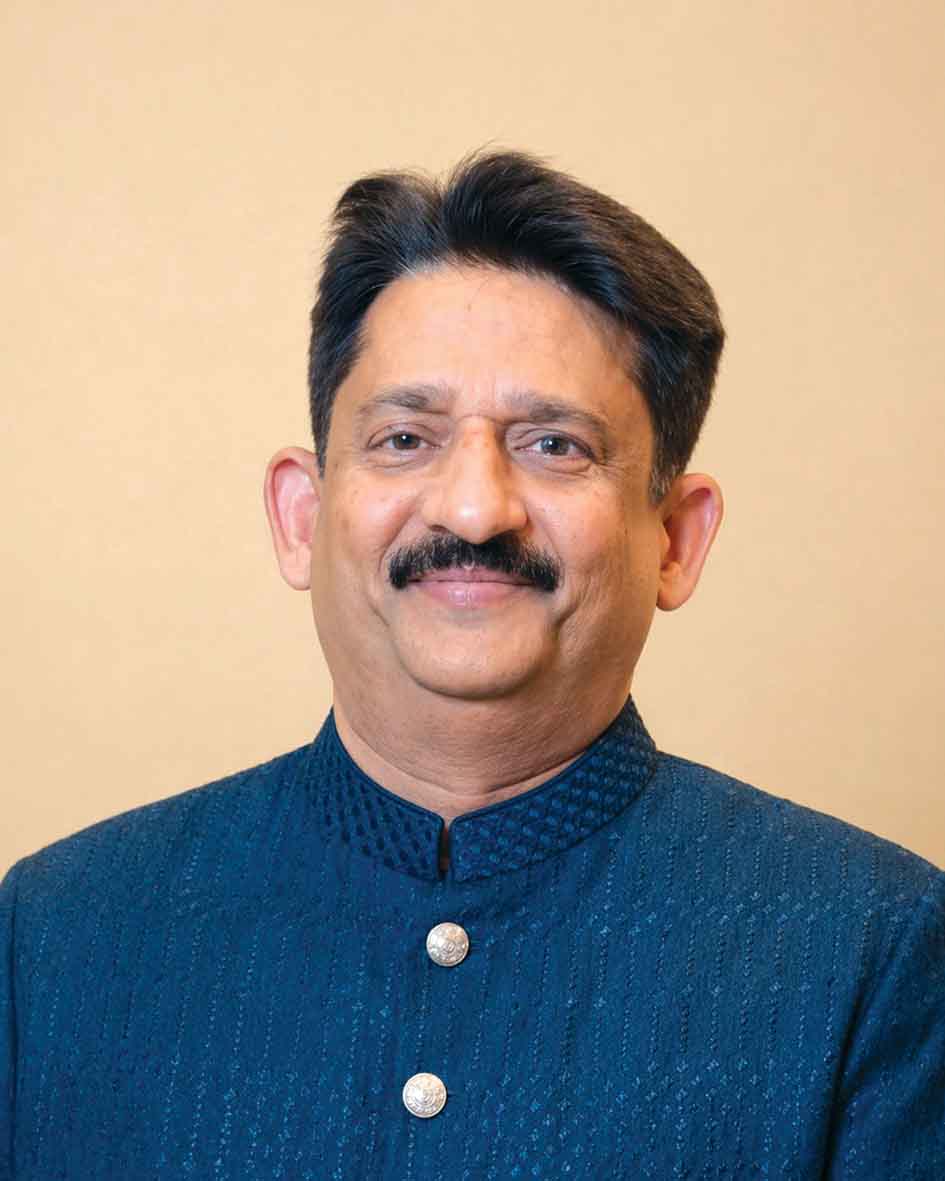
(The writer is a bilingual author with five published titles to his credit. Views personal.)

Comments


bottom of page