top of page

By:

Bhalchandra Chorghade

11 August 2025 at 1:54:18 pm

Applause for Cricket, Silence for Badminton

Mumbai: When Lakshya Sen walked off the court after the final of the All England Badminton Championships, he carried with him the disappointment of another near miss. The Indian shuttler went down in straight games to Lin Chun-Yi, who created history by becoming the first player from Chinese Taipei to lift the prestigious title. But the story of Lakshya Sen’s defeat is not merely about badminton final. It is also about the contrasting way India celebrates its sporting heroes. Had the same...

Applause for Cricket, Silence for Badminton

Mumbai: When Lakshya Sen walked off the court after the final of the All England Badminton Championships, he carried with him the disappointment of another near miss. The Indian shuttler went down in straight games to Lin Chun-Yi, who created history by becoming the first player from Chinese Taipei to lift the prestigious title. But the story of Lakshya Sen’s defeat is not merely about badminton final. It is also about the contrasting way India celebrates its sporting heroes. Had the same narrative unfolded on a cricket field, the reaction would have been dramatically different. In cricket, even defeat often becomes a story of heroism. A hard-fought loss by the Indian team can dominate television debates, fill newspaper columns and trend across social media for days. A player who narrowly misses a milestone is still hailed for his fighting spirit. The nation rallies around its cricketers not only in victory but also in defeat. The narrative quickly shifts from the result to the effort -- the resilience shown, the fight put up, the promise of future triumph. This emotional investment is one of the reasons cricket enjoys unparalleled popularity in India. It has built a culture where players become household names and their performances, good or bad, become part of the national conversation. Badminton Fights Contrast that with what happens in sports like badminton. Reaching the final of the All England Championships is a monumental achievement. The tournament is widely considered badminton’s equivalent of Wimbledon in prestige and tradition. Only the very best players manage to reach its final stages, and doing it twice speaks volumes about Lakshya Sen’s ability and consistency. Yet the reaction in India remained largely subdued. There were congratulatory posts, some headlines acknowledging the effort and brief discussions among badminton enthusiasts. But the level of national engagement never quite matched the magnitude of the achievement. In a cricketing context, reaching such a stage would have triggered days of celebration and analysis. In badminton, it often becomes just another sports update. Long Wait India’s wait for an All England champion continues. The last Indian to win the title was Pullela Gopichand in 2001. Before him, Prakash Padukone had scripted history in 1980. These victories remain among the most significant milestones in Indian badminton. And yet, unlike cricketing triumphs that are frequently revisited and celebrated, such achievements rarely stay in the mainstream sporting conversation for long. Lakshya Sen’s journey to the final should ideally have been viewed as a continuation of that legacy, a reminder that India still possesses the talent to challenge the world’s best in badminton. Instead, it risks fading quickly from public memory. Visibility Gap The difference ultimately comes down to visibility and cultural investment. Cricket in India is not merely a sport; it is an ecosystem built over decades through media attention, sponsorship, and mass emotional attachment. Individual sports, on the other hand, often rely on momentary bursts of recognition, usually during Olympic years or when a medal is won. But consistent performers like Lakshya Sen rarely receive the sustained spotlight that their achievements deserve. This disparity can also influence the next generation. Young athletes are naturally drawn to sports where success brings recognition, financial stability and national fame. When one sport monopolises the spotlight, others struggle to build similar appeal. Beyond Result Lakshya Sen may have finished runner-up again, but his performance at the All England Championship is a reminder that India continues to produce world-class athletes in disciplines beyond cricket. The real issue is not that cricket receives immense attention -- it deserves the admiration it gets. The concern is that athletes from other sports often do not receive comparable appreciation for achievements that are equally significant in their own arenas. If India aspires to become a truly global sporting nation, its applause must grow broader. Sporting pride cannot remain confined to one field. Because somewhere on a badminton court, an athlete like Lakshya Sen is fighting just as hard for the country’s colours as any cricketer on a packed stadium pitch. The only difference is how loudly the nation chooses to cheer.

The Power of Seeing the World

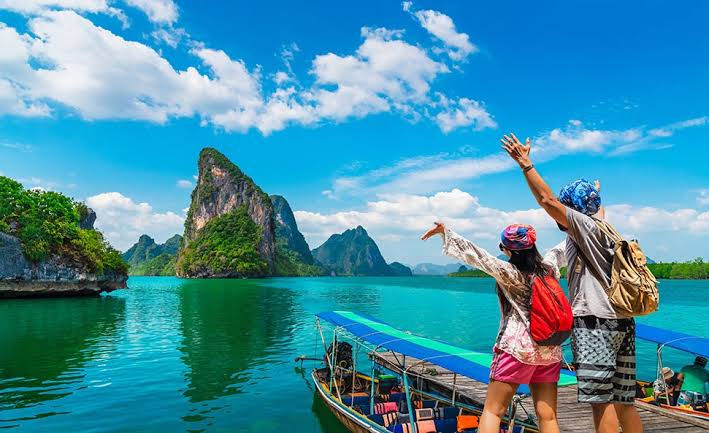
The world is more magical than any dream—and nothing builds intelligence, confidence, and emotional maturity like travel.

As St. Augustine said, “The world is a book, and those who do not travel read only one page.” Seeing the world is more magical than any dream. Giving exposure to ourselves and our children is one of the most valuable gifts we can offer in life, because nothing develops intelligence, confidence, and emotional maturity like travel. When we step outside our regular environment, we learn to see life from different angles, and that helps shape stronger thinking and emotional balance.


Taking a break from our routine and travelling to our favourite destinations — or simply spending time in nature — brings immense peace to the mind. Travel teaches us about new cultures, broadens our perspective, refreshes our spirit, renews our energy, and helps us return to our work with greater focus, positivity, and enthusiasm. Even short trips can provide meaningful learning and relaxation. Travel allows us to breathe differently, think differently, and live differently, reminding us that life is not meant to be lived only within deadlines and responsibilities.


Often, children do not have the opportunity to travel, which is truly unfortunate. With their busy school schedules, constant academic pressure, and structured routines, they rarely get their own space or time to free their minds and experience the world around them. This often limits their perspective and can make them feel insecure and under-confident. Travelling allows children to see new surroundings, interact with different kinds of people, and slowly build independence. It is extremely important for children to travel — whether with their parents or, as they grow older, even independently to nearby places. Travel helps them open their minds, build confidence, and gain a deeper understanding of life beyond textbooks. It teaches adaptability, social understanding, and real experience-based learning that classrooms alone cannot provide.


As Sir Matthew Karsten beautifully says, “Investment in travel is an investment in yourself.” Travel should not be seen only as entertainment but as self-development. Every journey adds something meaningful to personality, knowledge, and emotional strength.


As 2026 begins, with new hope and fresh energy, we can make a resolution to travel more and explore the world! This is everyone’s dream—and it can come true with good planning, financial discipline, and physical fitness. Travel is not only about international trips; even discovering our own country, nearby destinations, heritage locations, nature spots, or cultural cities can be deeply enriching.


For most people, travel resolutions are about being more intentional: planning smarter, immersing in culture, and managing finances wisely are major factors. Also packing light, trying local food and language, and balancing adventure with relaxation — without overspending. Also, some more aspects of it. It may sound theoretical, but it truly works when followed practically.


Responsible travel creates meaningful memories without unnecessary stress.


Fitness is the first key to travel. We can explore only when we keep ourselves healthy and active, so daily walking and regular exercise are essential. Good stamina helps us enjoy journeys better, participate in activities comfortably, and stay energetic throughout the trip. Financial planning is equally important. Instead of compromising with uncomfortable accommodations and unhygienic food, choose hygienic and centrally located hotels and restaurants. Even during a one-night stay, good rest and good food matter because they directly affect comfort, health, and overall travel enjoyment. So reach out to goglobalvoyages.in team for your premium travel assistance.

• Budget ahead and set savings goals for travel.

• Plan early to reduce stress and get better deals.

• Be budget-conscious — travel smart, not cheap.


As J.R.R. Tolkien said, “Not all those who wander are lost.” Travel truly has the power to broaden minds and transform lives. It helps people understand the world, respect diversity, and appreciate life in a more meaningful way.


Travel is not just something I am good at — it is something I live. I meet new people, experience new cultures, taste new cuisines, and witness moments that touch my heart deeply. Many experiences leave me speechless… and then turn me into a storyteller.


So dear friends, keep travelling!


And remember — if you wish to travel far and fast, travel light. Let go of envy, jealousy, unforgiveness, selfishness, and fear… and embrace the beautiful world waiting for you.


(The writer is a tourism professional and runs a company, Global Voyages. She could be contacted at goglobalvoyages@gmail.com. Views personal.)
Comments


bottom of page