

Turning the Law against Injustice

Part - 6
Name: Navi Pillay
Where: Durban, South Africa
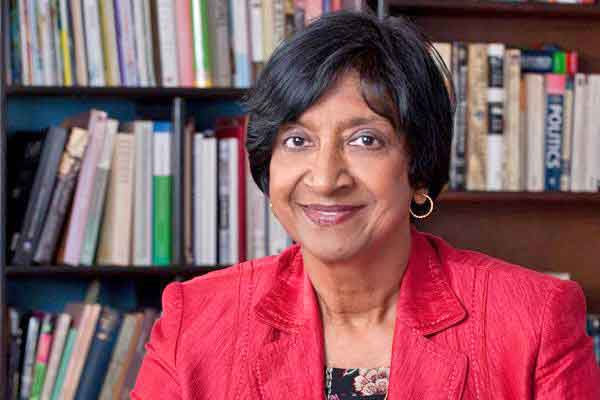
Navanethem “Navi” Pillay, the South African jurist of Indian Tamil origin who spent decades challenging racial discrimination and fighting for human dignity, recently won the 2026 Nobel Peace Prize for her efforts to promote peace and international law. Her achievement is the culmination of a remarkable journey from apartheid-era South Africa to the highest institutions of international justice.
Born on September 23, 1941, in Durban, Pillay grew up in a society where racial segregation systematically denied black South Africans equal rights and opportunities. Her parents were of Indian Tamil origin, and her early experiences of discrimination shaped her determination to use the law as an instrument of social change.
Pillay studied law at the University of Natal and established her own legal practice in 1967, becoming the first woman to do so in the province of Natal. During the apartheid years, she defended anti-apartheid activists, including political prisoners associated with Nelson Mandela, and challenged abuses against detainees.
Her legal career broke another barrier in 1995, when she became the first black woman appointed to South Africa’s High Court. That same year, she joined the International Criminal Tribunal for Rwanda, which was established to prosecute those responsible for the 1994 genocide.
Her work at the tribunal became a landmark in international criminal justice. In the 1998 Akayesu judgment, the tribunal recognised that rape and sexual violence could constitute acts of genocide when committed with the intention of destroying a protected group. The ruling helped establish an important precedent in the prosecution of sexual violence during armed conflict.
Pillay subsequently served as a judge at the International Criminal Court from 2003 to 2008. She then became United Nations High Commissioner for Human Rights, serving from 2008 to 2014. In that role, she advocated the protection of vulnerable communities, gender equality and accountability for human rights violations.
Her commitment to international justice continued beyond the United Nations. From 2021 to 2025, she chaired the UN Independent International Commission of Inquiry on the Occupied Palestinian Territory, including East Jerusalem and Israel. Since 2019, she has also served as an ad hoc judge at the International Court of Justice in the genocide case brought by The Gambia against Myanmar.
The Norwegian Nobel Committee recognised Pillay for helping strengthen international legal institutions and advance accountability for war crimes, crimes against humanity and genocide. The award also underscores the importance of the rule of law at a time when international justice faces mounting political pressure.
Beyond the courtroom, Pillay has supported efforts to advance women’s rights and equality.
Pillay’s life demonstrates that peace is not merely the absence of conflict but also requires justice, accountability and the protection of human dignity.



Comments