top of page

By:

Abhijit Mulye

21 August 2024 at 11:29:11 am

Inside the secret power struggle behind Dhankhar’s resignation

Mumbai: The cryptic silence surrounding the abrupt resignation of former Vice President Jagdeep Dhankhar in July was shattered on the floor of the Rajya Sabha this Monday, not by a government clarification, but by the visible anguish of the Opposition. While official records continue to attribute his departure to “health reasons,” highly placed sources in the power corridors of the capital have now confirmed that a fatal misunderstanding of the shifting power dynamics between the Rashtriya...

Inside the secret power struggle behind Dhankhar’s resignation

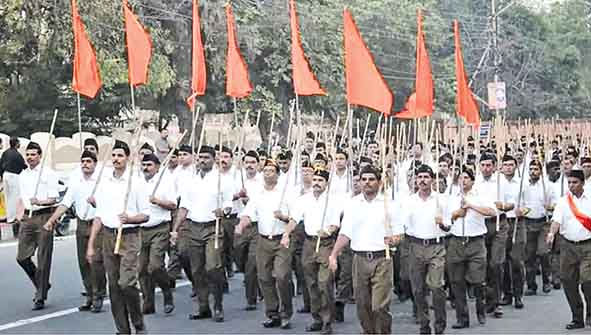
Mumbai: The cryptic silence surrounding the abrupt resignation of former Vice President Jagdeep Dhankhar in July was shattered on the floor of the Rajya Sabha this Monday, not by a government clarification, but by the visible anguish of the Opposition. While official records continue to attribute his departure to “health reasons,” highly placed sources in the power corridors of the capital have now confirmed that a fatal misunderstanding of the shifting power dynamics between the Rashtriya Swayamsevak Sangh (RSS) and the Bharatiya Janata Party (BJP) top brass was the true precipice from which the former Vice President fell. The revelations surfaced as the Winter Session of Parliament commenced on Monday, December 1, 2025. The solemnity of welcoming the new Vice President and Rajya Sabha Chairman, C.P. Radhakrishnan, was punctured by an emotional intervention from Leader of the Opposition Mallikarjun Kharge. The veteran Congress leader, hands shaking and voice trembling, shed tears on the floor of the House—a rare display of vulnerability that underscored the Opposition’s grievance over what they term an “institutional surgical strike.” The Failed Mediation Exclusive details emerging from Delhi’s political circles paint a picture of a constitutional authority who misread the winds of change. Sources reveal that tensions between Dhankhar and the government had been simmering for months, primarily over his handling of key legislative agendas and a perceived “drift” towards accommodating Opposition demands in the Upper House. As the chasm widened, a lifeline was reportedly thrown. A senior leader from a prominent alliance partner within the National Democratic Alliance (NDA) — a figure with decades of parliamentary experience and respect across the aisle — had discreetly offered to mediate. This leader recognized the growing impatience in the BJP high command and sought to bridge the gap before it became unbridgeable. However, Dhankhar declined the immediate urgency of this political mediation. “He was confident in his equations with the ideological parent,” a source familiar with the developments stated. “He is close to some of the RSS top functionaries and relied on them to mediate when his equations with the BJP top brass started going astray.” This reliance on Nagpur to manage New Delhi proved to be a critical miscalculation. Sources indicate that Dhankhar believed his deep ties with the Sangh would act as a buffer, insulating him from the political maneuvering of the ruling party’s executive leadership. He reportedly waited for the “green signal” or intervention from RSS functionaries, delaying the necessary reconciliation with the party leadership. Cost of delay The delay in mending ways was fatal. By the time the former Vice President realized that the RSS would not—or could not—overrule the BJP’s strategic decision to replace him, the die had been cast. The drift had become a gulf. The instruction, when it finally came on that fateful July 21, was absolute - he had to vacate the office immediately. The “untimely sudden resignation” that followed was officially cloaked in medical terminology, but insiders describe a chaotic exit. The former VP, who had recently moved into the lavish new Vice-President’s Enclave, was forced to vacate the premises in haste, leaving behind a tenure marked by both assertive confrontations and, ironically, a final act of silent compliance. Tears in the Upper House The ghost of this departure loomed large over Monday’s proceedings. Welcoming the new Chairman, C.P. Radhakrishnan, Mallikarjun Kharge could not hold back his emotions. Breaking away from the customary pleasantries, Kharge launched into a poignant lament for the predecessor who was denied a farewell. “I am constrained to refer to your predecessor’s completely unexpected and sudden exit from the office of the Rajya Sabha Chairman, which is unprecedented in the annals of parliamentary history,” Kharge said, his voice heavy with emotion. As Treasury benches erupted in protest, shouting slogans to drown out the discomforting truth, Kharge continued, wiping tears from his eyes. “The Chairman, being the custodian of the entire House, belongs as much to the Opposition as to the government. I was disheartened that the House did not get an opportunity to bid him a farewell. Regardless, we wish him, on behalf of the entire Opposition, a very healthy life.” The sight of the Leader of the Opposition shedding tears for a presiding officer with whom he had frequently clashed was a striking paradox. It highlighted the Opposition’s narrative that Dhankhar’s removal was not just a personnel change, but an assertion of executive dominance over the legislature. New chapter with old scars The government, represented by Parliamentary Affairs Minister Kiren Rijiju, sharply countered Kharge’s remarks, accusing the Opposition of shedding “crocodile tears” after having moved impeachment notices against Dhankhar in the past. “You are insulting the Chair by raising this now,” Rijiju argued amidst the din. Yet, outside the House, the whispers persisted. The narrative of a Vice President who waited for a call from Nagpur that came too late has firmly taken root. As C.P. Radhakrishnan takes the Chair, he does so not just as a new presiding officer, but as the successor to a man who learned the hard way that in the current dispensation, political alignment with the executive supersedes even the oldest of ideological ties.

Welcoming Ramzan, the Holy Month of Fasting, Reflection, and Devotion

Updated: Mar 6

Ramzan

The holy month of Ramzan (Ramadan) is a period of spiritual renewal, self-discipline, and devotion observed by millions of Muslims worldwide. It is a time when believers fast from dawn to sunset, engage in increased prayer, and reflect on their faith. More than just abstaining from food and drink, Ramzan serves as a month of self-purification, fostering empathy for the less fortunate and strengthening one’s connection with Allah.


The Significance of Ramzan in Islam

Ramzan is one of the Five Pillars of Islam, which are the fundamental principles guiding a Muslim’s faith and practice. Fasting, or sawm, is an obligatory act during this month for all adult Muslims who are physically able. The Quran emphasizes the importance of fasting in Surah Al-Baqarah:

“O you who have believed, fasting has been prescribed upon you as it was prescribed upon those before you, that you may attain righteousness.” (Quran 2:183)


This verse highlights that fasting is not a new practice but has been a means of spiritual purification for previous religious communities as well. The primary goal is to develop taqwa (God-consciousness), encouraging believers to reflect on their actions and grow closer to Allah.


The Revelation of the Quran

Ramzan is particularly sacred because it marks the month in which the Quran was revealed to Prophet Muhammad (peace be upon him) through Angel Jibreel (Gabriel). The Quran itself confirms this in Surah Al-Baqarah:

“The month of Ramzan [is that] in which was revealed the Qur’an, a guidance for the people and clear proofs of guidance and criterion.” (Quran 2:185)


Due to this divine connection, Muslims increase their recitation of the Quran during Ramzan. Many strive to complete its entire reading within the month, either individually or by attending Taraweeh prayers, special night prayers where long passages of the Quran are recited.


Fasting: A Test of Patience and Faith

Fasting during Ramzan extends beyond abstaining from food, drink, and physical desires. It requires Muslims to control their thoughts, words, and actions, refraining from anger, gossip, and unethical behavior. Prophet Muhammad (PBUH) emphasized this in a well-known Hadith:

“Whoever does not give up false speech and evil actions, Allah is not in need of his leaving his food and drink.” (Sahih al-Bukhari)


This Hadith underscores that the essence of fasting lies in self-restraint and moral integrity, not just physical deprivation. The ability to endure hunger and thirst fosters empathy for those less fortunate, reminding believers of the value of charity and kindness.


Acts of Worship and Charity

Ramzan is a time of intensified worship and charity. Muslims engage in extra prayers, supplications, and dhikr (remembrance of Allah), seeking forgiveness and spiritual purification. The last ten nights of the month are especially sacred, as they include Laylat al-Qadr (the Night of Decree), a night described in the Quran as “better than a thousand months” (Quran 97:3). It is believed that prayers and good deeds performed on this night are rewarded abundantly.


Charity, or Zakat, is another fundamental aspect of Ramzan. Islam mandates that able Muslims donate a portion of their wealth to those in need, known as Zakat al-Fitr, which is given before the Eid-ul-Fitr prayers. This ensures that even the less fortunate can partake in the celebrations. Prophet Muhammad (PBUH) said:

“The best charity is that given in Ramzan.” (Tirmidhi)


Many Muslims also engage in Sadaqah (voluntary charity), distributing food, clothing, and financial aid to the poor, further reinforcing the spirit of generosity and compassion.


The Breaking of Fast: Iftar and Suhoor

Each day of fasting ends with Iftar, the evening meal traditionally started with dates and water, as was the practice of the Prophet Muhammad (PBUH). A Hadith states:

“When one of you breaks his fast, let him do so with dates, for they are blessed. If he does not find dates, then with water, for it is pure.” (Sunan Abu Dawood)


Before dawn, Muslims partake in Suhoor, a pre-dawn meal that provides nourishment for the day ahead. This meal is also encouraged in Islamic teachings:

“Eat Suhoor, for in Suhoor there is blessing.” (Sahih al-Bukhari, Sahih Muslim) These meals not only provide sustenance but also create a sense of community, as families and friends gather to eat and pray together.


Eid-ul-Fitr: The Celebration After Fasting

The conclusion of Ramzan is marked by Eid-ul-Fitr, a joyous festival celebrating the completion of a month of devotion. Muslims begin the day with a special congregational prayer and express gratitude to Allah for granting them the strength to fast. It is a time of feasting, exchanging gifts, and visiting loved ones. Importantly, Muslims must give Zakat al-Fitr before Eid prayers to ensure that even the less fortunate can join in the celebrations.


The Lasting Impact of Ramzan

While Ramzan lasts for a month, its lessons extend beyond its days. The discipline, self-control, and spiritual growth cultivated during this time serve as a foundation for a righteous life. Muslims are encouraged to carry forward the values of patience, generosity, and devotion throughout the year.


Prophet Muhammad (PBUH) said:

“Whoever fasts in Ramzan with faith and seeking reward, all his past sins will be forgiven.” (Sahih al-Bukhari, Sahih Muslim)


This promise of spiritual renewal serves as a motivation for Muslims to embrace the spirit of Ramzan, not just in fasting, but in their daily actions, making it a transformative experience every year.


Ramzan is more than a ritual—it is a journey of self-improvement, devotion, and community spirit. By fasting, engaging in prayer, giving in charity, and reflecting on the teachings of the Quran, Muslims draw closer to their faith and develop a heightened sense of empathy and discipline. As believers worldwide observe this sacred month, they are reminded that the essence of Ramzan lies in purifying the heart and striving to be a better person, both spiritually and morally.


(The author is a journalist based in Mumbai. Views personal.)

Comments


bottom of page