top of page

By:

Quaid Najmi

4 January 2025 at 3:26:24 pm

Thackerays’ ‘Taandav’ for trees, tigers

AI generated image Mumbai: Maharashtra Navnirman Sena (MNS) President Raj Thackeray launched a sharp attack on the government for the systematic degradation of the state’s environment under the garb of development, even as the climate change poses a direct threat to the environment, economy, agriculture, public health and the future of both rural and urban centres. Questioning the state government’s claims of having planted millions of trees, he rued how the World Environment Day has been...

Thackerays’ ‘Taandav’ for trees, tigers

AI generated image Mumbai: Maharashtra Navnirman Sena (MNS) President Raj Thackeray launched a sharp attack on the government for the systematic degradation of the state’s environment under the garb of development, even as the climate change poses a direct threat to the environment, economy, agriculture, public health and the future of both rural and urban centres. Questioning the state government’s claims of having planted millions of trees, he rued how the World Environment Day has been reduced to an annual ritual of tree-planting drives and clicking selfies for social media, though 90 pc of the saplings don’t survive even a day. “Only the government knows where those trees really are,” said Raj sternly. He recalled a "Blueprint of Maharashtra’s Development" he had proposed in 2015, in which he advocated how development without environmental sensitivity is hollow. Justifying, he said that the consequences are visible where roads, bridges and infrastructure projects are hailed as achievements, but even a short spell of rainfall can paralyze entire cities. Referring to recent reports on farmers returning from the fields after 10 am due to the scorching heat, Raj said that the worsening climate crisis has become an everyday reality. Citing official statistics, Raj claimed that extreme heat has caused productivity losses of nearly USD 159 billion and slashing of 160 billion work-hours annually in recent years. He mentioned the World Bank estimates that India’s GDP could plummet by 2.5-4.5 pc while 57 pc of the country’s districts sheltering 76 pc of the population stare at serious climate-related crises. Taking a swipe, he said while the governments boast about growth figures and economical rankings, they are silent on the staggering costs of environmental destruction. He questioned the development model “whether flooded cities, washed-away crops and unbearable summers” genuinely indicate progress. Claiming that Maharashtra was increasingly becoming unliveable for upto 8 months in a year, he said excessive monsoon rains disrupt rural life and urban floods cripple cities, while extreme heat make normal life a torture in summers in both urban-rural areas. Targeting the Centre, Raj alleged that nearly 173,984 hectares of forest lands were diverted in the past 11 years for mining and infrastructure projects to benefit the PM’s single favourite Adani Group. He said that these lands amount to 1,730 sqkm, or equivalent to the area of 16 Sanjay Gandhi National Park (SGNP) that is spread over barely 104 sqkm. Dissolve state wildlife board: Aaditya Shiv Sena (UBT) leader Aditya Thackeray has accused the Maharashtra government for issuing a permit to carry out mining activity in the sensitive tiger corridor between the Tadoba-Andhari and Indravati sanctuaries housing the big striped cats. In a strongly-worded letter to the National Tiger Conservation Authority (NTCA) Member-Secretary Sanjay Kumar, Thackeray sought his immediate personal intervention, sacking the Maharashtra State Board for Wild-Life (SBWL), revoking the permit, and probe against the Chief Wildlife Warden & Principal Chief Conservator of Forests (PCCF) M. Srinivasa Reddy for the alleged lacunae. Aditya’s two-pager says the permit has been granted for “scientific exploration and excavation/systematic recovery of low-grade iron ore in existing mines in villages Hedri, Bande, Parsalgondi and Round Parsalgondi, in the Etapalli taluka of Gadchiroli district”. Last January, Aditya – MLA from Worli – had first raised the issue saying that the proposed mine would create only 120 jobs, including 32 permanent, and the estimated output is pegged at 1.1 million tons in a year. Referring to two letters of Reddy – on April 28 and May 21 – the SS (UBT) leader claimed that in communications to the state government, the PCCF had changed his stance on the issue. Aditya said that in the first letter, Reddy had effectively opposed the government plans for mining activity but in the second letter, he took a somersault, ostensibly due to government pressures or some commercial interests, “the U-turn is disgraceful and detrimental to India’s national interest” – and this abrupt shift in stance must be investigated thoroughly. In view of the contrary stance of the PCCF Reddy, entrusted with protecting the wildlife but failing to defend the NTCA and NBWL, point to serious malfunctioning of the SBWL, and hence it must be dissolved, besides reviewing all its decisions in the past three years, particularly those pertaining to hazardous activities in sensitive areas, demanded Aditya. 444 tigers roam in 11,000 sq.km As per the Status of Tiger Report (2002), and the Maharashtra Economic Survey 2025-2026, the state boasts of 444 tigers prowling in the wild along with other menacing creatures. The state’s total protected wildlife network of 88 Notified Areas of National Parks, Sanctuaries, and Conservation Reserves - including 6 dedicated to the striped big cats – is spread over 11,092 sq. kms as per current data.

When Integrity Becomes Institutional Strength

Institutions endure not only because of their systems but also because of officers like Dr. Shashikant Mangrulkar, whose integrity and leadership earn public trust.
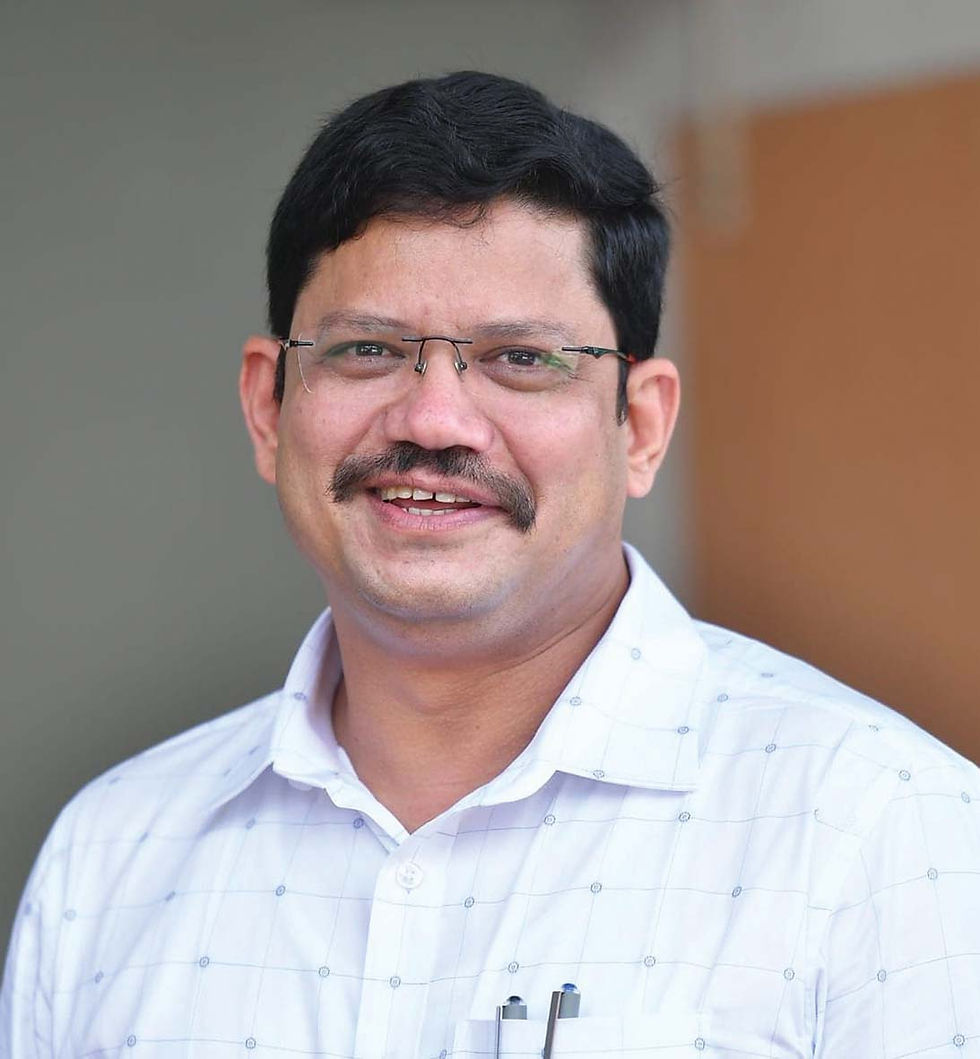

Amidst a lot of talk about the election commission and various allegations by opposition leaders of different political parties, there are a few examples of election officials who are handling the tense situations with a much more composed, calm, and balanced manner. Dr. Shashikant Mangrule is one of them. During the Municipal Corporation Elections 2025–26, I had the opportunity to interact with citizens, staff members, and officers at various administrative levels in Nashik. Throughout this process, I met many individuals; however, one officer whose company, work ethic, and perspective on governance left a deep and lasting impression on me was Dr. Shashikant Mangrule.


As an officer, his leadership qualities are immediately evident. He does not impose authority by intimidation; instead, he earns cooperation through trust. Valuing every member of his team, offering guidance at the right moment, and responding to mistakes with understanding rather than reprimand—these qualities together define him as a responsible and highly effective administrator.


Though gentle and approachable by nature, Dr. Mangrule is firm and disciplined when it comes to work. He demonstrates, through his conduct, how administration can be run by strictly adhering to rules while preserving humanity. His work consistently reflects the belief that governance need not be synonymous with rigidity alone but should balance sensitivity and accountability. This balance is rare and invaluable in public administration.


In my experience, Dr. Mangrule is not an officer confined to issuing orders or limiting himself to paperwork. He is someone who first understands the situation of the person before him, listens patiently, and only then arrives at a decision. Whether interacting with an ordinary citizen or an employee involved in the election process, he communicates calmly, with restraint and warmth. In today’s fast-paced and pressure-filled administrative environment, such a humane approach to work is exceptionally rare.


On several occasions that I personally witnessed, he did not merely listen to people’s difficulties but took the initiative to resolve them. Whether the problem was minor or serious, instead of avoiding responsibility by saying, “This is not within my authority,” his approach was always, “How can this be resolved?” This positive and responsible outlook deeply impressed me.


Experiences on Polling Day

Polling day itself brought several significant experiences. At some polling stations, there were technical issues related to EVM machines; at others, minor procedural errors by presiding officers came to light. Each time, after discussing the matter with Dr. Mangrule, he provided solutions that were calm, controlled, and crystal clear. The solutions were acceptable to the affected parties, and they ensured smooth operations during the polling.


For a presiding officer or polling agent, election duty may last only a day or two. But observing an officer who studies every stage of the entire electoral process in depth and pays attention to even the smallest details was, for me, a first-hand and close experience.


From sealing EVM machines correctly to explaining how to fill various envelopes, which forms to use, and where, he provided guidance that was comprehensive and precise. Concepts such as tendered voting and double voting were explained by him in extremely simple terms. In the event of a technical malfunction of machines, the procedures to be followed and alternative options available were explained with clarity and confidence. Because of this thorough guidance, the voting process was conducted not only in strict compliance with rules but also in a confident and stress-free environment.


In my view, it is officers like Dr. Shashikant Mangrulkar who form the true strength of any government department and create more trust between the administrative departments and the public at large. They can be a good bridge to grow belief in government functionaries. The officer I have seen and experienced is, without doubt, a positive, trustworthy, and inspiring face of public administration.



Comments


bottom of page