

When National Identity Meets Narrative Gatekeeping
A liberalism that polices cultural expression risks becoming what it once claimed to resist.

Two recent pieces of journalism - the first by eminent columnist Shobhaa De in ‘The Print’ (March 24), titled “Why Arjun Rampal saying ‘Bharat Mata Ki Jai’ should worry Bollywood audiences,” and the second by Rahul Bedi in ‘The Wire’ (March 26), titled “Deeply Problematic: Military Veterans React to Senior Army Officer’s Lecture on Bhagavad Gita” - illustrate a section of our intellectual society that appears apparently shocked by a democratic evolution of change in society. These critiques often ignore decades of a dominant ideological narrative that has been integral to Indian society, from cinema to journalism. That such expressions now provoke alarm says less about the acts themselves and more about the narrowing tolerance of those long accustomed to defining the terms of acceptability.
Recently, in an opinion piece, I had discussed how data or rather, the misinterpretation of it, is being increasingly weaponized to serve pre-conceived ideologies. We live in an era of narrative-driven inferences, where words and actions are frequently stripped of their context to fit a specific political or ideological cause.
Critique of Expression
Shobhaa De critiques, in her characteristically sharp style, Arjun Rampal’s “Bharat Mata Ki Jai” chant at a recent award ceremony, framing it as a “camouflage” for the success of his film. Simultaneously, Rahul Bedi highlights the “disbelief” of certain veterans over Lt. Gen. Neeraj Varshney’s lecture on the Bhagavad Gita and its relevance to modern leadership. Bedi frames this as a troubling “intrusion of religiosity” into the military.
These perspectives seem to overlook a long-standing Left-Socialist narrative that has historically sought to ‘sanitise’ or alter Hindu identity to fit a specific definition of secularism. Take, for example, the legendary 19th century bhajan Raghupati Raghav Raja Ram by Lakshmanacharya. Originally a prayer for Bhagwan Ram, its lyrics were modified to include “Ishwar Allah Tero Naam” for the sake of communal harmony. This altered version was featured in films as diverse as ‘Jagriti’ (1954) and ‘Kuch Kuch Hota Hai’ (1998) and even the Oscar-winning Gandhi. While the intent was noble, it represented a fundamental ‘injury’ to the original text. The fact that such alterations passed as enlightened consensus for decades, without dissent, reveals how powerfully a single narrative once set the boundaries of cultural legitimacy. Yet, this alteration passed without critique for decades. Why, then, is a simple national slogan like ‘Bharat Mata Ki Jai’ treated as a modern threat?
Secularism vs Lived Ethos
The critique of Lt. Gen. Varshney’s lecture displays a misunderstanding of how the Indian Army actually functions. Anyone familiar with the armed forces knows their secularism is inclusive, not irreligious. It is a long-held tradition for a Hindu Commanding Officer to lead Sikh troops in Gurbani, or for a unit to host an Iftar where soldiers of all faiths break bread together.
If an officer partaking in a Sikh tradition or an Iftar is celebrated as ‘secular,’ why is a lecture on the philosophical ethics of the Gita - a text centered on Dharma and Nishkama Karma (selfless action) - labelled problematic? To extract leadership lessons from such a text is a professional affirmation of duty, not an act of religious bigotry. Dragging the armed forces into divisive political narratives does a disservice to an institution that has been steadfastly secular in spirit and deed, long before the term was formally inserted into the Preamble of our Constitution via the 42nd Amendment.
For fifty years, the cinematic and intellectual goalposts were firmly planted in a narrative that often used Hindu symbols as a primary canvas for social critique. Films like ‘Mother India’ or ‘PK’ have used these symbols to frame the majority community through a specific lens, often under the banner of ‘artistic license.’ However, when modern actors or officers attempt to reclaim a culturally rooted identity, they are viewed with suspicion.
In any healthy democracy, the stance of society is not static. For decades, the dominant discourse was Euro-centric in its definition of secularism. Today, the participants of our democracy - from actors to generals - are shifting toward an identity that is more culturally grounded. As long as this shift remains within the framework of the Constitution, it is an expression of democratic growth, not a masquerade.
We must learn to distinguish between the ‘data’ (the act itself) and the ‘narrative tint’ (the interpretation). When we label a soldier’s philosophy or an actor’s patriotism as ‘imprudent,’ we aren’t necessarily protecting secularism; we are often protecting a monopoly on thought that is finally being challenged. And monopolies, once questioned, rarely concede ground without first declaring the challenge illegitimate. The goalpost has perhaps not just moved - it may have been democratised in sync with the changing times of today.
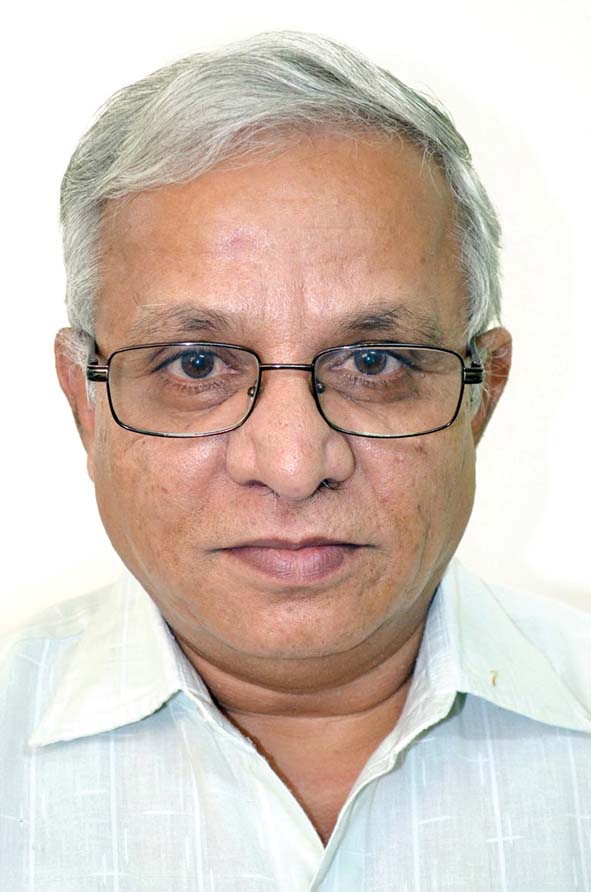
(The writer is Senior Advisor CSMVS, Mumbai and former Director of the Nehru Science Centre. Views personal.)


Comments