top of page

By:

Rajendra Pandharpure

15 April 2025 at 7:55:54 pm

The BJP’s Ganesha Gambit

Pune’s Ganeshotsav has become an enormous civic and political stage, and the ruling party has proved adept at occupying it. Pune: The city’s Ganeshotsav is entering its final phase, but the festival has already demonstrated something beyond its extraordinary crowds and familiar spectacle: the extent to which it has become a political stage. This year, the Bharatiya Janata Party (BJP) has left a particularly visible imprint on the festivities, using an event that reaches deep into the city’s...

The BJP’s Ganesha Gambit

Pune’s Ganeshotsav has become an enormous civic and political stage, and the ruling party has proved adept at occupying it. Pune: The city’s Ganeshotsav is entering its final phase, but the festival has already demonstrated something beyond its extraordinary crowds and familiar spectacle: the extent to which it has become a political stage. This year, the Bharatiya Janata Party (BJP) has left a particularly visible imprint on the festivities, using an event that reaches deep into the city’s neighbourhoods as an opportunity for public outreach. The political appropriation of the festival has not, however, been without a counter-current. Demands were raised for curbs on noise pollution, loudspeakers and the volume of dhol-tasha performances. The argument was not against Ganeshotsav itself, but for moderation - notably, a complete ban on DJ music and limits on the number of dhol and tasha instruments used by performing troupes. Familiar Troubles The festival’s reality has been rather different. Major roads have been occupied by mandaps. Processions celebrating the arrival of Lord Ganesha have unfolded amid punishing noise. DJ music, while subject to restrictions, has continued. Traffic congestion has become a familiar feature of the festival, with the movement of political leaders adding another layer to the city’s already strained roads. The Peth areas have remained crowded deep into the night. The Shrimant Dagdusheth Halwai Ganpati temple has drawn enormous crowds for darshan from the opening day. From the old city to housing societies and neighbourhood mandals, Ganeshotsav touches virtually every part of Pune. For a political party seeking a direct connection with citizens, few occasions offer such a ready-made network of people, institutions and local influencers. The BJP enters this festival with an unusually formidable organisational base. It has two MPs, seven MLAs and more than 100 corporators in Pune. Murlidhar Mohol, one of the city’s MPs, is a Union Minister of State. Chandrakant Patil is a Cabinet minister in the Maharashtra government, while Madhuri Misal is a Minister of State. The party’s presence also extends into the festival’s organisational architecture. Its influence is visible across numerous mandals, large and small. BJP MLA Hemant Rasane is General Secretary of the Shrimant Dagdusheth Halwai Sarvajanik Ganpati Trust. Kunal Tilak, a member of Lokmanya Tilak’s family, is a BJP corporator. The political and cultural histories of Pune therefore intersect in ways that are difficult to ignore. The BJP’s senior leadership has also made the most of the occasion. National President Nitin Nabin visited Pune to seek Lord Ganesha’s blessings, while Chief Minister Devendra Fadnavis visited the city before and during the festival. Such visits are about more than religious observance. In a festival watched by millions and embedded in the city’s social life, political visibility comes almost automatically. There is also talk in Pune that the BJP provided substantial financial support to Dhol-Lezim troupes and their organisers, with claims that some major mandals received financial backing as well. These claims would require independent verification, but the perception itself points to the depth of the political contest around Ganeshotsav. BJP workers, according to local observers, have also sought to make their presence more conspicuous than that of festivities organised by housing societies. Useful Expedient The festival arrives at a politically useful moment for the BJP. The party has faced disquiet on several fronts. Young people have been agitated over the paper-leak controversy. Broader public dissatisfaction has been voiced over inflation and unemployment, while government policies relating to ethanol and charges associated with UPI transactions have also generated criticism. While a political party can defend a policy in a press conference and advertise its achievements, during Ganeshotsav, its workers can be physically present in neighbourhoods, among processions, mandals, cultural groups and devotees. Politics thus becomes less about argument and more about visibility. That is the BJP’s advantage in Pune. Ganeshotsav, after all, is not simply a sequence of religious rituals. It is an elaborate civic network involving local organisers, volunteers, cultural groups, businesses, residents and political representatives. Whoever has influence over that network acquires a powerful channel of communication with the city. The BJP appears to understand this particularly well. Its strength in Pune’s electoral politics has been reinforced by a presence that extends beyond elections and into the institutions and social spaces that organise public life. The irony is that the very scale of the festival that makes it politically attractive also magnifies the civic costs. The political value of Ganeshotsav and the civic burden it creates are therefore two sides of the same phenomenon. For Pune, the larger question is not whether politics has entered Ganeshotsav. It has done so for decades. The more consequential question is whether the festival’s extraordinary social capital will remain primarily a vehicle for political outreach or whether the same influence can be used to reconcile celebration with the ordinary civic needs of the city. For the moment, the BJP seems to have understood the first proposition better than most.

Why Generation Z Refuses TO Be Silenced
Aug 3
3 min read

We often complain that today's youth are difficult to understand. Perhaps the real problem, however, is not Generation Z-it is our inability to communicate with them. Instead of learning how they think, speak, and engage with the world, we often expect them to fit into frameworks created by previous generations.


Generation Z is among the most informed, courageous, and globally connected generations in history. Born into the age of the internet and social media, they have grown up with instant access to information and diverse perspectives. They are aware not only of events in India but also of developments across the world-from Iran and the United States to Nigeria, Europe, and beyond. This global exposure has shaped a generation that is confident, informed, and willing to express its opinions. Yet they are frequently judged by outdated standards. Rather than trying to understand their aspirations, their language, and their methods of communication, many continue to measure them by the expectations of an earlier era. This is where the disconnect begins.


Generation Z has developed a new language of civic and political expression-one that traditional institutions have often struggled to understand. To engage meaningfully with this generation, we must first learn this new language instead of dismissing it. Recent events have demonstrated how a seemingly simple demand can evolve into a broader movement centred on justice, accountability, freedom, and democratic values. When young people feel unheard or misunderstood, their concerns naturally expand into deeper questions about governance and the systems that shape their lives.


This is no longer a phenomenon confined to one city or one state. Across Maharashtra and throughout India, young people are actively participating in conversations about democracy, public policy, and social change. Many who once remained indifferent to politics now believe that governance directly affects their education, employment, rights, and future. One of the greatest mistakes society can make is to underestimate this generation. They are digitally connected, socially aware, and capable of mobilising support within hours. Their movements are often driven not by political parties but by shared experiences, collective concerns, and a strong sense of justice. Unlike previous generations, Generation Z communicates through humour, satire, memes, and social media. These are not merely forms of entertainment; they have become powerful tools for political expression, civic engagement, and questioning authority. History has repeatedly shown that confident leadership welcomes criticism, while insecurity often responds with fear.


Perhaps the most striking characteristic of this generation is its refusal to be governed by fear. Earlier generations often remained silent because they feared losing their jobs, facing social consequences, or inviting trouble. Increasingly, Generation Z believes that silence is no longer an acceptable response to injustice. This generation has found its voice, forged its identity, and developed the confidence to participate in public life. It understands that individual well-being cannot be separated from the well-being of society. If injustice is ignored today because it affects someone else, it may eventually affect everyone. India has witnessed numerous social movements throughout its history. What distinguishes many contemporary youth movements is that they are largely youth-led, digitally organised, and focused not only on immediate grievances but also on broader structural reforms rooted in fairness, transparency, accountability, and equal opportunity.


Digital platforms have played a transformative role in this process. For Generation Z, social media is far more than a communication tool-it is a platform for building communities, organising campaigns, sharing information, and amplifying voices. Young people no longer feel isolated because they know that thousands of others stand with them, regardless of geographical distance. Equally inspiring is the compassion demonstrated by many young participants in public movements. Reports of volunteers organising food, supporting fellow participants, and even extending assistance to police personnel highlight that these movements are driven not only by resistance but also by empathy, solidarity, and a sense of shared responsibility. Their methods may be modern, but their values remain timeless. The future of India increasingly rests in the hands of a generation that is globally connected, socially conscious, technologically empowered, and unafraid to question injustice. Whether one agrees with every demand they raise or not, one reality is impossible to ignore: Generation Z has found its voice. Instead of attempting to silence, stereotype, or dismiss them, society must choose to listen, engage, and learn. Every generation reshapes the future in its own way. This generation has chosen courage over fear, participation over silence, and hope over indifference.


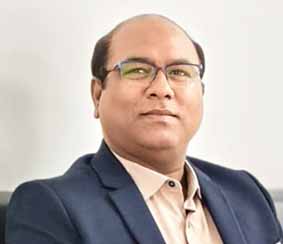
(The writer is the Principal of Podar International School, Ausa, Latur. Views personal.)

Comments


bottom of page