top of page

By:

Bhalchandra Chorghade

11 August 2025 at 7:24:18 pm

Panvel: MMR’s next economic hub

Panvel is now emerging as a multi-modal gateway linking Mumbai’s commercial economy with Navi Mumbai’s airport, JNPA’s port ecosystem and Raigad’s industrial belt Mumbai: For centuries, Panvel’s importance came from its location. The town grew around land and sea trade routes and was historically known for its rice market. Today, that same locational advantage is being recast in a dramatically different economic landscape — one shaped by an international airport, a major container port,...

Panvel: MMR’s next economic hub

Panvel is now emerging as a multi-modal gateway linking Mumbai’s commercial economy with Navi Mumbai’s airport, JNPA’s port ecosystem and Raigad’s industrial belt Mumbai: For centuries, Panvel’s importance came from its location. The town grew around land and sea trade routes and was historically known for its rice market. Today, that same locational advantage is being recast in a dramatically different economic landscape — one shaped by an international airport, a major container port, expressways, freight corridors, railways and expanding urban infrastructure. Panvel is consequently moving from being a transit point between Mumbai, Pune and the Konkan to becoming a destination in its own right. “Panvel can no longer be viewed merely as a residential extension of Mumbai and Navi Mumbai. It is fast becoming a commercial and economic destination in its own right,” said Prashant Thakur, MLA, Panvel Assembly Constituency. The transformation is not entirely new. Panvel is around 300 years old and its evolution was closely linked to trade and transportation. Its commercial DNA, therefore, predates the development of Navi Mumbai by several decades. What has changed is the scale and quality of connectivity around it. The development of Navi Mumbai from the 1970s brought planned nodes such as New Panvel, Kharghar, Kamothe, Kalamboli and Taloja into a rapidly urbanising landscape. The creation of the Panvel Municipal Corporation in 2016 further expanded the administrative footprint, bringing the old town and several rapidly developing areas within one municipal framework. That expansion is now meeting an unprecedented infrastructure build-out. Panvel’s Geography Panvel’s strongest advantage is not any single project but the convergence of several major transport systems. The Mumbai–Pune Expressway and Sion–Panvel corridor connect it with Mumbai and Pune, while the Mumbai–Goa highway provides access towards the Konkan. Close by are JNPA, the Navi Mumbai International Airport and the wider Navi Mumbai urban economy. Then came the 21.8-km Atal Bihari Vajpayee Sewri–Nhava Sheva Atal Setu. Opened to traffic in January 2024, the bridge has strengthened the physical and economic connection between Mumbai and the Navi Mumbai–Panvel–Raigad region. For Panvel, its significance extends beyond shorter travel times. It has expanded the geography within which companies can locate offices, warehouses, hotels and support businesses. “The coming decade can establish Panvel and its surrounding region as one of India’s most dynamic economic growth centres,” said Thakur. “An international airport, a world-class port ecosystem, highways, railways, Metro connectivity and Atal Setu are creating an economic ecosystem of enormous potential.” The Navi Mumbai International Airport has added another dimension to this transformation. With commercial operations commencing in December 2025 and international connectivity subsequently being added, the airport corridor has moved from being a long-term infrastructure proposition to an operating economic ecosystem. For Panvel, the airport effect could extend well beyond residential real estate. An international airport generates demand for business hotels, corporate offices, aviation-linked services, logistics, retail, hospitality, healthcare and other ancillary businesses. The emerging airport corridor is already changing the development narrative across Panvel, Ulwe, Kharghar, Taloja, Karanjade, New Panvel and Dronagiri. Perhaps the most distinctive element of Panvel’s economic proposition is its proximity to two major gateways — JNPA and NMIA. JNPA is integrated into the national freight network and is supported by road and rail connectivity, including the Dedicated Freight Corridor. The wider port ecosystem is also being strengthened through improved road links and connectivity towards Panvel and the airport. This gives the region a natural advantage in logistics, warehousing and supply-chain activity. The opportunity extends into the wider Raigad industrial belt, including Taloja, Patalganga, Roha and surrounding manufacturing clusters. For chemical and manufacturing companies, Panvel can potentially serve as a commercial and logistics gateway. Proximity to JNPA can facilitate the movement of imported raw materials, equipment and chemical feedstock, while road and freight connectivity can support distribution to domestic markets. The future opportunity could also extend beyond bulk chemicals to specialty chemicals, pharmaceuticals, advanced materials, chemical equipment and downstream manufacturing. NMIA adds another layer by improving access for high-value and time-sensitive products, corporate executives, technical specialists and international business. However, such growth would require planned industrial infrastructure — including common utilities, effluent treatment, hazardous-material handling, waste management, water recycling and emergency-response systems. Commercial Model Mumbai’s traditional commercial districts face constraints of land availability, high real-estate costs and congestion. Panvel, by contrast, can offer larger land parcels and the possibility of integrated development around multiple transport modes. This opens the door to a different commercial model — large office campuses, mixed-use developments, business parks, hotels, logistics facilities, institutional campuses and specialised industrial offices. Healthcare and education could become equally important components of this ecosystem. Thakur said the development of Medicity and Educity, along with emerging concepts such as Innovation City and Third Mumbai, could further alter the economic geography of the Panvel–Pen region. “Kharghar is also emerging as an important commercial destination, with plans for a new business centre. All these developments point towards one clear conclusion: Panvel is not merely a residential growth corridor; it is becoming a commercial and economic destination,” he said. Jobs Drive Inclusion The real test of Panvel’s transformation, however, will be the employment ecosystem it creates. The airport, logistics sector, IT and digital services, healthcare, hospitality, construction, engineering, financial services and emerging industries can generate opportunities across a broad range of skill levels. “Our youth must be the biggest beneficiaries of this transformation,” said Thakur. “I want the young people of Panvel not merely to witness this transformation, but to participate in it, benefit from it and eventually lead it.” That would require greater emphasis on technical education, industry-oriented training, skill development and employability programmes. An emerging education ecosystem could also create opportunities for specialised disciplines such as chemical engineering, biotechnology, materials science, aviation services and industrial research. The challenge is to build infrastructure ahead of demand. The scale of the opportunity also brings a significant planning challenge. As commercial activity and population increase, Panvel will need adequate water supply, electricity, roads, public transport, sewage systems, waste management, healthcare, education and other civic infrastructure. Rapid urbanisation without corresponding infrastructure capacity could undermine some of the advantages that are currently attracting investment. “Growth must be supported by quality infrastructure,” Thakur said. “Infrastructure capacity must grow ahead of demand rather than struggle to catch up with it.” The proposed Panvel Development Plan for 2024–2044 assumes a much larger urban footprint and seeks to provide a longer-term framework for managing growth. The challenge will be to ensure that infrastructure planning keeps pace with the speed at which private and public investment is reshaping the region. Panvel’s transformation is therefore not simply another real-estate story. Its significance lies in the convergence of its past and future: a centuries-old trading town is now located at the intersection of an international airport, one of India’s major container ports, national highways, the Mumbai–Pune economic corridor, freight infrastructure, suburban rail and metropolitan expansion. Economic Centre Mumbai has traditionally been the economic centre, while Navi Mumbai was developed as its planned counterpoint. Panvel is now emerging as the bridge between that established metropolitan economy and the next growth geography stretching towards Raigad. “Panvel is changing. Panvel is connecting. Panvel is creating opportunities. And Panvel is now emerging as a new commercial address on the global map,” said Thakur. The real shift is from transit to destination. If infrastructure investment is matched by integrated planning, employment generation, social amenities and sustainable industrial development, Panvel could evolve into something more significant than a residential extension of Mumbai or Navi Mumbai: a multi-modal commercial and socio-economic hub serving the entire MMR–Raigad corridor.

Why India Can’t Get Its Epics Right on Screen

Aug 13
5 min read
A still from Peter Brook's 'The Mahabharata' (1989)

Every time Hollywood drops a blockbuster movie based on one of the foundational epics of the West, a collective groan seems to arise from a significant section of Indian cinephiles and the Indian audience at large: If they can do it, why can’t we?
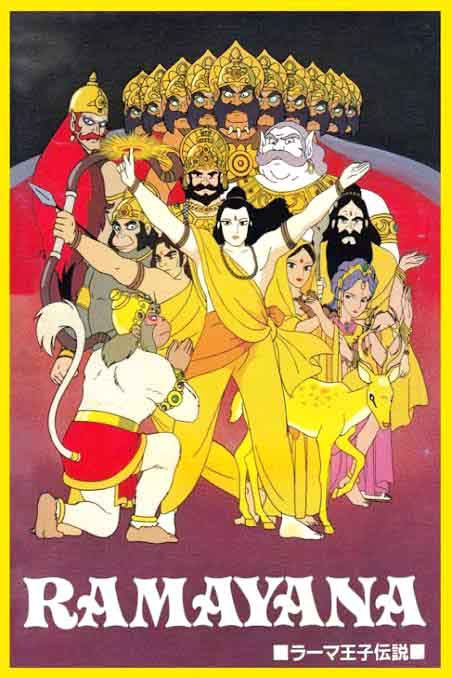

Yugo Sako’s brilliant Ramayana, the Legend of Prince Rama (1993)

Be it Wolfgang Petersen’s Troy (2004), Uberto Pasolini’s The Return (2024), or Christopher Nolan’s latest Odyssey (2026), we’ve repeatedly heard echoes of this Indian grievance over recent decades as Hollywood kept producing a steady stream of epic adaptations. To make matters worse, foreign filmmakers also worked on timeless Indian epics, creating some highly memorable films and plays, whose artistic brilliance (if not so much their commercial success) far outweighs that of the Indian attempts to recreate the Ramayana and the Mahabharata for big and small screens. Yugo Sako’s animated film Ramayana: The Legend of Prince Rama (1993) and Peter Brook’s Mahabharata (1989), adapted for both stage and screen, are well-loved productions that continue to be watched and discussed with fondness and enthusiasm by many Indians. Though both these deeply moving adaptations were made with crucial technical help from renowned Indian collaborators, the major artistic vision and creative drive came primarily from non-Indians.


On the Indian side, we have had several popular adaptations of the Ramayana and the Mahabharata for cinema and television, but unfortunately none of them can be said to have equalled the artistic vigour and sincerity of a Sako or a Brook. Perhaps Shyam Benegal’s Kalyug (1981), a brilliant contemporised take on the Mahabharata, could be counted as a happy exception to this scenario, but Benegal transposed the story and the characters of the great itihasa epic from the Dwapara Age of yore to the all-too-familiar humdrum setting of today’s high Kali Age. It’s interesting to note that the late Vanraj Bhatia, the celebrated composer who created the iconic music for Kalyug, also gave Ramayana: the Legend of Prince Rama its highly popular film score and music. 


Among Indian creators, the courage to produce adaptations of ancient Indian epics while keeping their times, space, scale and dramatis personae more or less intact has been displayed by Ramanand Sagar, B.R. Chopra and their creative successors for the small screen alone. However, even they haven’t always remained true to the older texts of Valmiki and Vyasa, often allowing themselves the freedom to borrow elements from later retellings, such as Goswami Tulsidas’s or Krittibas Ojha’s popular and revered works.


In comparison, Indian cinema adaptations of the epics have been less ambitious. In fact, they’ve sometimes ended up as mere caricatures of the exalted classics. Adipurush (2023) is a particularly illustrative case in point. In recent months, a brand-new movie based on the Ramayana has been announced amid much fanfare, with its first instalment due in the latter part of 2026. Sadly, the upcoming movie’s VFX-heavy official trailer has drawn a lot of flak from the Indian audience for its artificial-looking scenes and eyebrow-raising leading cast. Many disappointed admirers took to social media to express their dismay, making the matter trend for days on platforms such as X.


Epic Challenge

Naturally, questions arise: Why can’t today’s Indian filmmakers and creators make a satisfying and stirring modern-media adaptation of these timeless, beloved Indian classics? Are they lagging behind their Western counterparts due to technological or creative shortcomings? Do they lack imagination, training, skills – or what is it that’s really holding them back?


To my mind, the problem lies primarily with two Indian realities: a) the poor quality of general education in Indian schools, and b) the modern Indian proclivity to take offence at the drop of a hat, especially in matters of religion and culture. It must be kept in mind that, unlike the foundational epics of the Western world, both Ramayana and Mahabharata are still part of a major living tradition, namely, the Hindu tradition. The Hindu tradition has somehow managed to keep the itihasa epics alive in religion and culture alike, especially in India but also in several parts of the world where Hindu communities flourished. Therefore, unlike Homer’s Iliad and Odyssey vis-à-vis the contemporary Western culture, Ramayana and Mahabharata form a major part of India’s contemporary religious-cultural imagination.


On the other hand, the Indian education system in particular, and the Indian state in general, have tried their best to keep academic and creative engagements with these epics at arm’s length from the Indian people, on the pretext of upholding the secular nature of the Republic. This has resulted in Indians, especially younger generations, harbouring a rather poor level of acquaintance with the actual contents and styles of the texts of Valmiki and Vyasa, or of their retellers, for that matter. A couple of generations ago, the work of acquainting the Indian kid with these texts was mainly carried out at home, at the knees of grandparents and parents. This is no longer the case, except in a negligible number of Indian homes. Consequently, most kids in post-independence India grew up without direct exposure to the lore of Rama, Sita and the Pandavas as Valmiki, Vyasa, Tulsidas, Krittibas Ojha or Kamban have sung them. This has naturally left Indian kids with an imagination largely uncoloured by the grand visions, hardships, character traits and awe-inspiring acts of the epic heroes and heroines. Some would call such an imagination stunted, and others who are less forthright would describe it as simply disconnected from the Indian civilisation’s grand narrative.


This gets reflected, inter alia, in the Indian film industry. Stories having the scale and profundity of Ramayana and Mahabharata are rather difficult to handle for these generations of Indians. From them, one can hardly expect in-depth, sincere creative engagement with these epic narratives – let alone any originality in handling the material – due to systemic disconnect. It is really difficult to pick up the epics at a later stage in one’s life and still engage with them at a deeper level of emotional, moral, cultural or symbolic significance. For the younger generations, these epics supply no archetypes. Therefore, at such later stages, a great deal of dedication and motivation becomes necessary to unpack the multiple layers of their meaning. Few can be expected to devote such amounts of time and energy at an advanced stage in their professional career – even in the creative professions.


Cultural Nuances

The other factor is the rather modern Indian proclivity to take offence at contemporary adaptations and retellings of stories carrying religious, cultural or historical significance. No matter how sincerely and carefully a storyteller, writer or director may try to recreate the magic of ancient Indian epics for the screen, no matter how aware and sensitive they may be about the cultural nuances of these stories in the Indian context, they will likely end up offending the religious/cultural sensibilities of some group or the other. Even Yugo Sako’s Ramayana adaptation had to face it. This situation makes it tremendously difficult for anyone to touch these stories, and even when someone dares to, they face a lot of pressure to conform to popular expectations and/or group-specific demands in the making of the adaptation. Most succumb to these pressures, compromising their original creative visions, if ever they had one.


It is mainly for these reasons, and not technological backwardness or even creative lack as such, that the making of modern-media adaptations of ancient Indian epics is an excessively difficult task in India. One still hopes, however, that someday Indian filmmakers would rise above these unfavourable background conditions and present us with a highly refined, inspiring film adaptation of the Ramayana and the Mahabharata. If that does happen, it would be an artistic feat of great measure despite the present depressing and adverse conditions. Of course, a more robust solution would be to improve the prevailing background conditions themselves, resolving which would amount to a real service rendered to the world of Indian cinema and art. More than anything else, it would be a national service.


(The writer is a Kolkata-based educator, writer, researcher and musician. Views personal.)

Comments


bottom of page