top of page

By:

Quad Najmi and PTI

17 June 2026 at 5:11:32 pm

Uddhav faces another rebellion; decision today

Six Lok Sabha MPs trying to move away; picture may be clear at today’s Parliamentary party meeting in New Delhi AI generated image Mumbai: A cloak-and-dagger crisis engulfing the Uddhav Thackeray-led Shiv Sena has landed at the door of the Lok Sabha Speaker, with the party urging him to guard against any unlawful defection and issuing a whip directing its MPs to attend a meeting in Delhi on Thursday. Amid the escalating crisis, a group of rebel Shiv Sena (UBT) leaders is learnt to have met...

Uddhav faces another rebellion; decision today

Six Lok Sabha MPs trying to move away; picture may be clear at today’s Parliamentary party meeting in New Delhi AI generated image Mumbai: A cloak-and-dagger crisis engulfing the Uddhav Thackeray-led Shiv Sena has landed at the door of the Lok Sabha Speaker, with the party urging him to guard against any unlawful defection and issuing a whip directing its MPs to attend a meeting in Delhi on Thursday. Amid the escalating crisis, a group of rebel Shiv Sena (UBT) leaders is learnt to have met Speaker Om Birla informally on Wednesday, claiming the support of six of the party's nine MPs in the Lower House, sources said. Thursday's high-stakes meeting in Delhi will legally and physically define whether Uddhav Thackeray retains his parliamentary strength or faces another devastating party division, the third since Raj Thackeray split Shiv Sena in 2006. Sources in Sena (UBT) said the rival camp still doesn't have the support of six MPs. They claim two of the six rebels have reportedly changed their mind. In a swift counter-offensive to contain the damage, the party high command issued a mandatory three-line whip, summoning an emergency parliamentary party meeting in New Delhi on Thursday to force a physical showdown where the MPs will have to mark their presence physically. The developments triggered a day of high political drama in the national capital, marked by a furious, expletive-laden press conference by Raut, a reported counter-meeting by the rebel faction with Lok Sabha Speaker Birla, and sharp condemnation from the Congress. The internal fracture was visible at Sanjay Raut's press briefing, where only three other Lok Sabha MPs, Arvind Sawant, Anil Desai, and Rajabhau Waje, stood by him. The remaining six lawmakers were conspicuously absent; their exact whereabouts are unknown. The Sena (UBT) has nine MPs in the Lok Sabha, and at least two‑thirds of them would be required to form a separate group. Apart from Desai, Waje and Sawant, the other six MPs are Sanjay Patil, Sanjay Deshmukh, Omprakash Raje Nimbalkar, Bhausaheb Wakchaure, Nagesh Patil-Ashtikar and Sanjay Jadhav Not Reachable The six MPs stopped responding or became unavailable since Wednesday forenoon, after which the party stopped contacting them. They said when the party contacted Mumbai North East MP, Sanjay Dina Patil, he told party leaders that he was not with the rebel group. The party had asked them to submit a letter to the Lok Sabha Speaker, which he has not submitted so far. Later in the day, sources claimed that the group of six rebel lawmakers had privately met the Lok Sabha Speaker to claim a two-thirds majority in the Lower House, the precise threshold required to escape disqualification under the anti-defection law. Simultaneously, Deputy Chief Minister Eknath Shinde, who split the undivided Shiv Sena in 2022, was reportedly camping in Delhi to oversee the operational layout of the defection of MPs. He returned to his home town Thane in Wednesday night. He is reportedly studying all the legal aspects before taking a final call before the party’s foundation day on Friday. Speaker’s Role Following reports of the rebels' move, a loyalist delegation consisting of Raut, Sawant, and Desai rushed to meet Speaker Birla to file a formal representation urging him to reject any unlawful group alignment. Desai argued that the legal provisions are strictly on the side of the original organisational structure. "Under the law, a splinter group cannot simply merge with another party on its own, even if they have two-thirds support. Only the original administrative party holds that right," Desai told reporters, adding that the Speaker assured them he would thoroughly examine every legal aspect before rendering a decision. The widening panic inside the party also triggered a public, familial disconnect involving missing Hingoli MP Nagesh Patil-Ashtikar. While the MP remained unreachable, his son, Krushna Patil Ashtikar, the MVA's official candidate for Thursday's Maharashtra Legislative Council elections, released a video statement strongly defending Uddhav Thackeray. "I am a Shiv Sainik of Uddhav Thackeray. There is no room for doubt when it comes to me," the younger Ashtikar stated.

A Bold Step

Updated: Jan 30, 2025

Despite opposition from predictable quarters, the state has taken a necessary step towards legal equality.
Uttarakhand
Uttarakhand

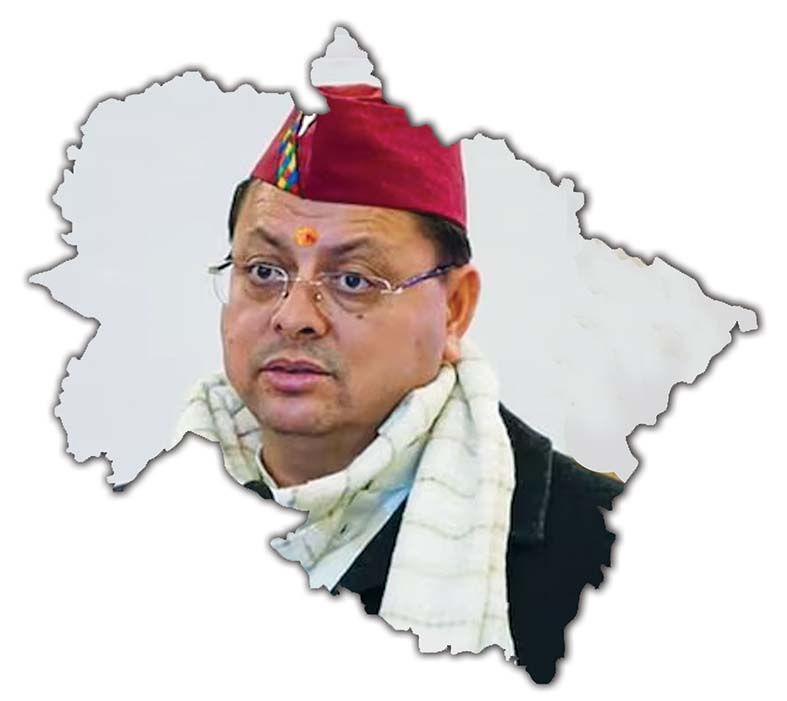
Uttarakhand has etched its name into the annals of legal history by becoming the first Indian state to implement the Uniform Civil Code (UCC). The state’s Chief Minister, Pushkar Singh Dhami, inaugurated the UCC rules manual and an online portal facilitating applications under the new legal framework. The move, long a subject of political contention, is a significant step towards ensuring legal uniformity across communities in matters of marriage, divorce, inheritance and live-in relationships. Expectedly, opposition has poured in from the Congress and certain Muslim organisations. That said, the government’s resolve in pushing ahead is commendable.


The move, which comes after decades of political hesitancy at the national level, represents a decisive moment in India’s legal evolution. The implementation of the UCC in Uttarakhand was not an overnight decision. It followed months of preparation, including the establishment of a five-member expert committee headed by retired Supreme Court judge Ranjana Prakash Desai.


The committee, tasked with drafting a comprehensive framework for the legislation, submitted its findings in October 2023. The bill was subsequently passed by the Uttarakhand Assembly on February 7, 2024, and received Presidential assent on March 12, 2024.


At its core, the UCC seeks to replace the current patchwork of religious personal laws with a uniform legal framework. While marriage and divorce laws in India have long been governed by religious statutes - the Hindu Marriage Act, the Muslim Personal Law, the Christian Marriage Act, among others - the new legislation mandates a common standard. It stipulates that marriages must be registered to have legal validity, a move that is expected to curb issues like bigamy and child marriage. The code also standardises the rules on testamentary succession, enabling citizens to register and modify wills digitally. In another progressive step, live-in relationships will require formal registration, with provisions ensuring that both partners acknowledge termination to prevent unilateral abandonment.


The state government has put in place an extensive digital infrastructure to facilitate compliance with the new law. An Aadhaar-based verification system, AI-driven translation services in 22 languages, and cloud-based data integration across multiple departments will make UCC implementation more seamless than previous reforms in personal law.


Chief Minister Dhami has positioned the UCC as a step towards gender equality and social justice. In his inaugural speech, he highlighted how the new law would empower women by ending discriminatory practices such as polygamy, halala and triple talaq - issues that have often sparked controversy in India’s legal and political landscape. Importantly, the law exempts Scheduled Tribes (STs), ensuring that their distinct customs remain protected, an approach that aligns with Article 342 of the Constitution.


Predictably, opposition parties and religious groups have condemned the move. The Congress calls it a political ploy, while the Jamiat Ulema-e-Hind plans to challenge it in court, citing religious freedom. Yet Article 44 of the Constitution explicitly recommends a Uniform Civil Code, and the Supreme Court has repeatedly endorsed legal uniformity in personal laws.


For decades, successive governments have shied away from implementing a common civil code, fearing electoral backlash. The spectre of 1986, when the Rajiv Gandhi government overturned the Supreme Court’s judgment in the Shah Bano case under pressure from conservative Muslim groups, still looms large. However, attitudes towards personal law reforms have evolved. The abrogation of Article 370 in 2019 and the Supreme Court’s 2017 ruling on triple talaq signalled a shift in the legal landscape, demonstrating that political will can prevail over religious conservatism when the larger objective is legal parity.


Uttarakhand’s initiative is a welcome step, but its success will depend on its execution. The state has set a precedent, but the real test will be how efficiently the system functions in practice.


If the Uttarakhand model proves successful, it could serve as a blueprint for broader legal unification, fulfilling a constitutional aspiration that has remained unfulfilled for over seven decades.

Comments


bottom of page