top of page

By:

Quad Najmi and PTI

17 June 2026 at 5:11:32 pm

Uddhav faces another rebellion; decision today

Six Lok Sabha MPs trying to move away; picture may be clear at today’s Parliamentary party meeting in New Delhi AI generated image Mumbai: A cloak-and-dagger crisis engulfing the Uddhav Thackeray-led Shiv Sena has landed at the door of the Lok Sabha Speaker, with the party urging him to guard against any unlawful defection and issuing a whip directing its MPs to attend a meeting in Delhi on Thursday. Amid the escalating crisis, a group of rebel Shiv Sena (UBT) leaders is learnt to have met...

Uddhav faces another rebellion; decision today

Six Lok Sabha MPs trying to move away; picture may be clear at today’s Parliamentary party meeting in New Delhi AI generated image Mumbai: A cloak-and-dagger crisis engulfing the Uddhav Thackeray-led Shiv Sena has landed at the door of the Lok Sabha Speaker, with the party urging him to guard against any unlawful defection and issuing a whip directing its MPs to attend a meeting in Delhi on Thursday. Amid the escalating crisis, a group of rebel Shiv Sena (UBT) leaders is learnt to have met Speaker Om Birla informally on Wednesday, claiming the support of six of the party's nine MPs in the Lower House, sources said. Thursday's high-stakes meeting in Delhi will legally and physically define whether Uddhav Thackeray retains his parliamentary strength or faces another devastating party division, the third since Raj Thackeray split Shiv Sena in 2006. Sources in Sena (UBT) said the rival camp still doesn't have the support of six MPs. They claim two of the six rebels have reportedly changed their mind. In a swift counter-offensive to contain the damage, the party high command issued a mandatory three-line whip, summoning an emergency parliamentary party meeting in New Delhi on Thursday to force a physical showdown where the MPs will have to mark their presence physically. The developments triggered a day of high political drama in the national capital, marked by a furious, expletive-laden press conference by Raut, a reported counter-meeting by the rebel faction with Lok Sabha Speaker Birla, and sharp condemnation from the Congress. The internal fracture was visible at Sanjay Raut's press briefing, where only three other Lok Sabha MPs, Arvind Sawant, Anil Desai, and Rajabhau Waje, stood by him. The remaining six lawmakers were conspicuously absent; their exact whereabouts are unknown. The Sena (UBT) has nine MPs in the Lok Sabha, and at least two‑thirds of them would be required to form a separate group. Apart from Desai, Waje and Sawant, the other six MPs are Sanjay Patil, Sanjay Deshmukh, Omprakash Raje Nimbalkar, Bhausaheb Wakchaure, Nagesh Patil-Ashtikar and Sanjay Jadhav Not Reachable The six MPs stopped responding or became unavailable since Wednesday forenoon, after which the party stopped contacting them. They said when the party contacted Mumbai North East MP, Sanjay Dina Patil, he told party leaders that he was not with the rebel group. The party had asked them to submit a letter to the Lok Sabha Speaker, which he has not submitted so far. Later in the day, sources claimed that the group of six rebel lawmakers had privately met the Lok Sabha Speaker to claim a two-thirds majority in the Lower House, the precise threshold required to escape disqualification under the anti-defection law. Simultaneously, Deputy Chief Minister Eknath Shinde, who split the undivided Shiv Sena in 2022, was reportedly camping in Delhi to oversee the operational layout of the defection of MPs. He returned to his home town Thane in Wednesday night. He is reportedly studying all the legal aspects before taking a final call before the party’s foundation day on Friday. Speaker’s Role Following reports of the rebels' move, a loyalist delegation consisting of Raut, Sawant, and Desai rushed to meet Speaker Birla to file a formal representation urging him to reject any unlawful group alignment. Desai argued that the legal provisions are strictly on the side of the original organisational structure. "Under the law, a splinter group cannot simply merge with another party on its own, even if they have two-thirds support. Only the original administrative party holds that right," Desai told reporters, adding that the Speaker assured them he would thoroughly examine every legal aspect before rendering a decision. The widening panic inside the party also triggered a public, familial disconnect involving missing Hingoli MP Nagesh Patil-Ashtikar. While the MP remained unreachable, his son, Krushna Patil Ashtikar, the MVA's official candidate for Thursday's Maharashtra Legislative Council elections, released a video statement strongly defending Uddhav Thackeray. "I am a Shiv Sainik of Uddhav Thackeray. There is no room for doubt when it comes to me," the younger Ashtikar stated.

A Crumbling Fort

Updated: Feb 14, 2025

Arvind Kejriwal’s Delhi debacle has set off tremors in Punjab, where his party faces mutiny, mid-term poll threats and the spectre of irrelevance.
Arvind Kejriwal
Punjab

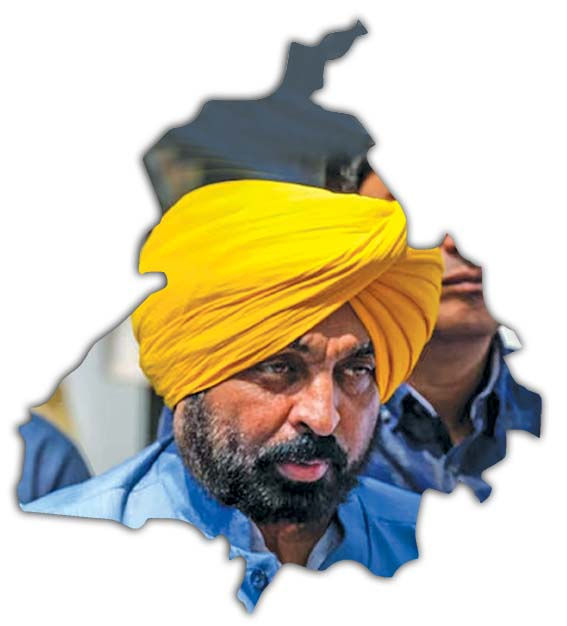
The Aam Aadmi Party (AAP), which once stormed Punjab with a landslide victory, now finds itself in a perilous state. The party’s humiliating defeat in the recent Delhi Assembly elections has triggered a domino effect, leaving Punjab Chief Minister Bhagwant Mann struggling to keep his flock together. The grand assertions of party unity from both Kejriwal and Mann have done little to quell murmurs of discontent, with opposition parties sharpening their knives and predicting a split. If AAP’s leadership does not act swiftly, the party could suffer the same fate in Punjab as it did in Delhi.


The choice of venue for the AAP’s latest crisis meeting - a gathering of Punjab MLAs at Kapurthala House, the official residence of the Punjab CM in Delhi - has triggered frenzied speculation. Critics have questioned why the party, which claims to be a paragon of transparency and good governance, would hold a state-focused meeting outside the very state it governs. The symbolism was inescapable: Punjab continues to be run from Delhi. The Shiromani Akali Dal (SAD) wasted no time in attacking Mann, accusing him of being a mere puppet, while the Congress declared that a mid-term election was imminent.


The opposition’s confidence is not without basis. The rumblings of revolt within AAP’s Punjab unit are growing louder. Congress leader Partap Singh Bajwa has claimed that more than 30 AAP MLAs are in touch with his party, while AAP’s own Rajya Sabha MP, Swati Maliwal, has painted a grim picture of corruption under Mann’s administration. Allegations of sand mining scandals, pay-for-posting schemes and bureaucratic chaos have undermined the party’s credibility. Maliwal’s scathing remarks about Kejriwal treating Punjab as his personal ATM suggest that the infighting within AAP is no longer confined to whispers in closed rooms.


Kejriwal’s conspicuous presence in the state’s affairs, coupled with rumours that he may contest from Ludhiana, has further unsettled the ranks. The speculation that he might replace Mann has rattled AAP’s Punjab unit, which was already wary of the Delhi-centric leadership.


The irony is that AAP’s crisis in Punjab is largely self-inflicted. The party came to power on the back of a massive anti-incumbency wave against traditional players like the Congress and SAD, promising governance free from dynastic politics and corruption. Instead, its tenure has been marred by allegations eerily similar to those that brought down its predecessors. The much-touted ‘Delhi model’, which AAP had hoped would be its electoral trump card, now lies in tatters, with voters in the capital delivering a resounding verdict against it. The party’s failure to implement key promises in Punjab, such as providing Rs 1,000 per month to women, has only added to the disillusionment.


AAP’s predicament is not merely a regional crisis but a cautionary tale for all political newcomers. The party’s rise was meteoric, but its governance model has struggled to adapt beyond Delhi’s municipal politics. In Punjab, where political loyalties are fluid and identity politics run deep, Kejriwal’s outsider status has become a liability.


For Mann, the road ahead is fraught with challenges. His authority is being questioned not only by the opposition but within his own party. The optics of his visibly strained demeanour after the Kapurthala House meeting did little to inspire confidence. Even his signature joviality appeared to have deserted him.


While Mann insists that AAP remains strong in Punjab, the party’s detractors see a government on borrowed time. The exodus of MLAs to the Congress, if it materializes, could spell doom. The ultimate test will be whether AAP can regain public trust before the next election.


The party’s future performance in Punjab will determine whether it can still be considered a credible national alternative or if its decline in Delhi marks the beginning of an irreversible slide into political oblivion.

Comments


bottom of page