

A Fantastic Illusion

Trump’s Beijing summit revealed less a thaw in Sino-American rivalry than a quiet acknowledgement that the balance of power is shifting eastward.
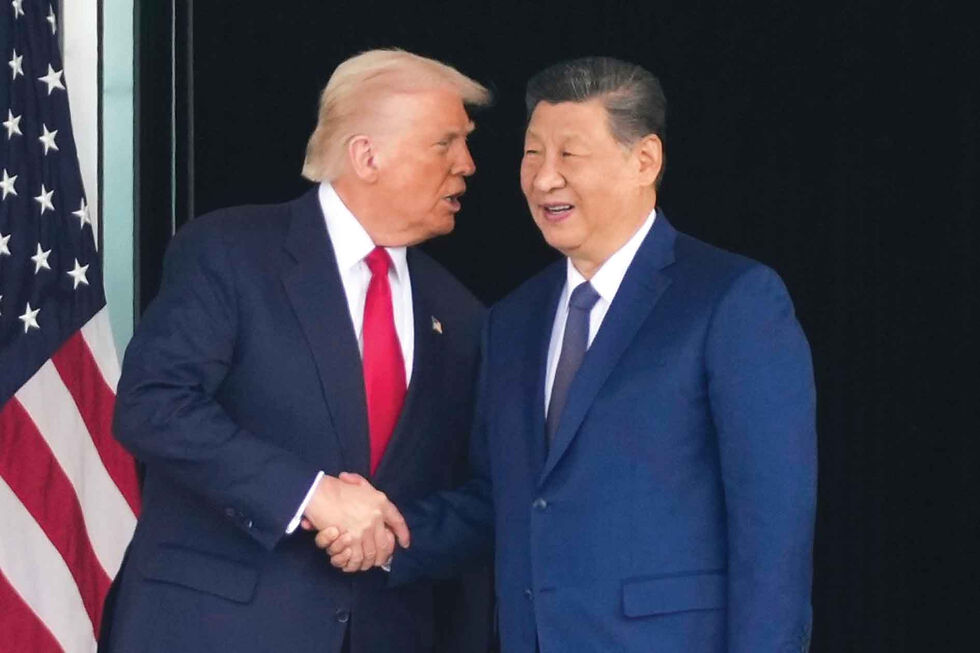
When Donald Trump recently left Beijing calling his summit with Xi Jinping “fantastic,” the pageantry suggested a diplomatic breakthrough. Yet, the summit produced few major agreements, while exposing how sharply the balance between the world’s two largest powers has changed.
For decades America approached China as the stronger power - confident that Beijing’s rise would eventually bend towards American preferences. This summit suggested the reverse. China no longer negotiated as a cautious challenger seeking legitimacy from Washington. It behaved as a superpower certain of its leverage and increasingly willing to dictate the boundaries of engagement.
Shift in Tone
The most significant outcome was an unmistakable shift in tone and balance. Beijing entered the talks from a position of relative confidence, strengthened by its grip over supply chains, rare-earth minerals and industrial manufacturing. Washington, meanwhile, arrived seeking stability rather than confrontation. The result was a one-year pause in tariff escalation and a modest easing of Chinese restrictions on rare-earth exports.
Trump framed even these limited gains as evidence of successful deal-making. In keeping with his transactional worldview, the summit revolved heavily around commerce. The prospect of China purchasing 200 Boeing aircraft was heralded as proof that American business still commanded Chinese demand. Yet beyond such announcements, concrete trade progress remained elusive. Agricultural issues lingered unresolved; semiconductor restrictions remained firmly in place; and the deeper technological war between the two countries continued unabated.
Indeed, the summit exposed the paradox at the heart of Sino-American relations. The two powers remain economically interdependent while strategically distrustful. America continues to restrict advanced artificial-intelligence and semiconductor exports to China, fearing that technological supremacy will determine the future military balance. China, meanwhile, uses its dominance in critical minerals and manufacturing as strategic counterweight. Both economies require one another, yet both increasingly prepare for a future in which coexistence may become more difficult.
Taiwan Tensions
Nowhere was this tension more apparent than over Taiwan. For Beijing, Taiwan remains the unfinished business of the Chinese civil war and an inseparable part of national territory. For Washington, the island is simultaneously a democratic partner, a strategic buffer and a test of American credibility in Asia. Xi Jinping reportedly warned against any American “double policy” on Taiwan, signalling Beijing’s impatience with Washington’s strategic ambiguity.
Trump, characteristically, avoided definitive commitments. China views continued American military support for Taiwan as direct interference; America sees Chinese military pressure as destabilising coercion. The summit reduced neither suspicion nor tension. It merely suspended open escalation.
Even the discussions surrounding the Strait of Hormuz and Iran revealed the emerging asymmetry between the two powers. Washington increasingly hopes Beijing might restrain Tehran because China possesses economic and diplomatic influence that America often lacks. Beijing benefits from stability in the Gulf because its economy depends heavily upon Middle Eastern energy supplies. Yet China remains careful not to bind itself too closely to American strategic objectives. It prefers flexibility over alliance, influence over entanglement.
Chinese commentators quickly interpreted the summit as a diplomatic victory. They were not entirely wrong. Beijing succeeded in projecting calm authority while conceding little of strategic significance. It reinforced its red lines on Taiwan, preserved access to global markets and extracted a temporary trade truce without surrendering its technological ambitions. China demonstrated discipline; America appeared eager merely to avoid deterioration.
That does not mean America is in irreversible decline. The United States still possesses formidable structural advantages. Its nominal GDP remains substantially larger than China’s. American universities, technology firms and military alliances continue to shape the international system. Predictions of imminent Chinese supremacy remain premature.
Yet power in geopolitics is measured not only by economic aggregates, but by confidence, momentum and perception. In Beijing, China appeared increasingly convinced that time favours its rise. America, by contrast, seemed preoccupied with managing decline relative to its once-unquestioned primacy.
The summit therefore symbolised the uneasy arrival of a genuinely multipolar world in which Washington can no longer assume automatic dominance and Beijing no longer conceals its ambitions behind caution. The era when China waited patiently for acceptance into an American-led order is ending. China now seeks to reshape that order itself.
The smiles and ceremonies obscured a harsher reality: the rivalry between the Eagle and the Dragon has merely entered a more sophisticated phase.
Diplomacy can postpone confrontation. It cannot erase the forces driving it. The Beijing summit was therefore “fantastic” only in the theatrical sense of the word.
(The writer is a foreign affairs expert. Views personal.)


Comments