

Bali: Anchor of Javanese Inheritance

As Majapahit crumbled and Islam reshaped the archipelago, Bali emerged as the unlikely custodian of Java’s classical inheritance.
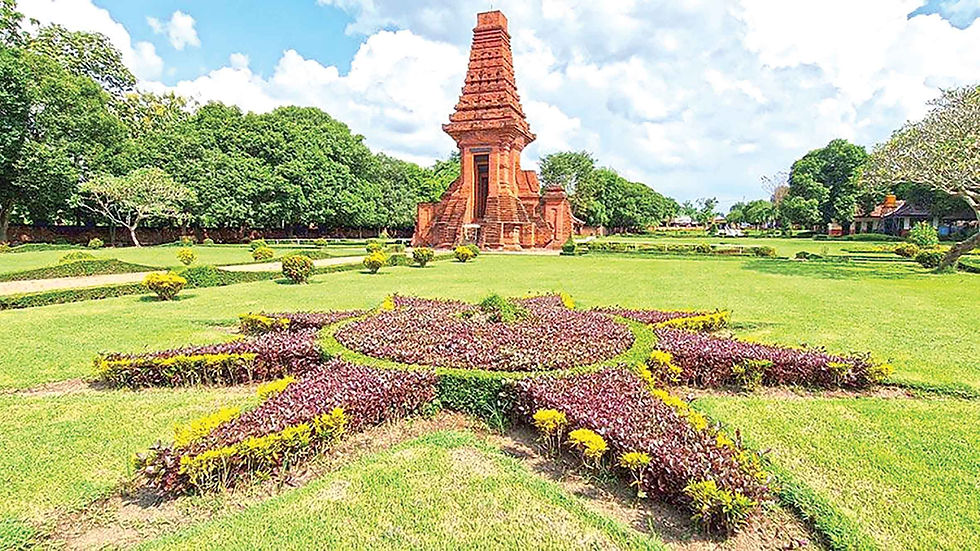
The last article in this column discussed how Java held a uniquely important position of the strongest anchor of the Indic character of Indonesia. Not many Indians are aware of a fact about the supporting or rather the most crucial role that has been played by Bali, a tiny adjacent island thinly separated by sea from Java, in historically protecting a great part of the Javanese inheritance, which matters to world historians, and which should be known to majority Indians. Most of the Indians know Bali only as the sole Hindu-majority outpost in the Muslim-majority archipelago of Indonesia, which possesses its own unique tradition of Hinduism, and attracts tourists from all over the world, eager to visit its impressive temples, scenic interiors, relaxing beaches and Yogic-Ayurvedic treatments rendering resorts. Making known the largely unknown facts about Bali is the purpose of this article.
Majapahit Decline
The downfall of the East Java-based Majapahit empire in the late 15th century was caused mainly by the rebellion of its northern coastal vassals, who were recent converts to Islam and were part of a religio-economic cartel anchored and led by the Sultanate of Malacca on the Malaysian Peninsula. The Central Javanese Sultanate of Demak played the flag-bearer’s role during that call for ‘jihad’, and finished the job of ending Majapahit reign. This changed the Hindu-Buddhist character of the Indonesian archipelago forever, paving the way for rise of Islam as the dominating power. According to many Western historians, it also proved to be a culturally turning point whereafter a cultural decline set in not only in the island of Java, the culture capital of the entire maritime Southeast Asia apart from Indonesia, but also elsewhere. The immediate danger was however posed to the invaluable literary treasure in the custody of the Majapahit court, sacred and otherwise, composed in the Sanskrit-influenced Old Javanese language. That was expectedly a target for destruction by the attackers, to complete their ‘duty’ towards the jihad. Those Majapahit royals who refused to convert, had to flee along with their loyalists, not only to save their lives but also to save that literary treasure. The choice destination was of course Bali.
Different Shade
Although Bali then was overwhelmingly Hindu, its shade of Hinduism, influenced by the difference in ethnicity and the localized culture developed by a closely knit society, was different than that of the Javanese who sought refuge there. Bali however rose to the occasion in not only providing shelter to the people who sought it but also offering due respect and space for whatever they brought along, including their customs and literature. Today, when the Old Javanese may not be known on the island of Java itself, except a handful of academics, it is kept alive by the Balinese through regular dutiful recitation of sacred verses from the old texts, in addition to their Balinese language discourse. Their preservation of this Old Javanese heritage proved to be the only source all the world historians and researchers had to turn to, to carry out their trade, and come out with profound discoveries and rich expositions of the archipelago’s cultural past, for the consumption of the world community. This treasure trove continues to be relevant for a true and complete understanding of the Javanese history and culture, especially in view of the later Javanese literature, including new editions and adaptations of the old classics, having undergone a certain process and degree of Islamization by default, thereby distorting the original picture. This Balinese action of accommodating the helpless Javanese in their territory was no doubt humanitarian, but it was imaginably driven also by the emotion of pride what yesteryear’s vassal would feel while accommodating yesteryear’s sovereign.
The sovereignty of Majapahit over a major portion of the maritime Southeast Asia during its heydays, historically uniting the Indonesian archipelago under a single power for the first time, and thus being the symbol of Indonesian power in the entire region, has been a matter of pride for many Indonesians even today, commoners as well as politicians. They being Muslim by birth has not weaned them away from feeling proud about the Hindu-Buddhist Majapahit. A substantial number from among the top leaders of the freedom struggle, when gathered together to determine the soon to be free nation’s destiny, had argued for modelling the modern nation after Majapahit. Once independent, the first president of the nation, Sukarno, hung the map of Majapahit in his office, to keep the flame of inspiration on for him to try and seek a matching glory for the newly independent nation under his charge. The best example was of a local villager of Trowulan (yesteryear’s capital of Majapahit) introduced himself as not Muslim (alone) but a Majapahit Muslim to the author, without any kind of ‘provocation’, while interacting during the latter’s trip there in 2024. To beat it all, it is found that a well-known Managing Director of a currently Jakarta-based Islamic philanthropic organization ‘IDEAS’ carries the name of Haryo Majapahit. Does one need any more proof of the large-scale and continuing existence of the brand Majapahit in the psyche of common Indonesians, irrespective of their faiths? And, at the end of the day, this should inform all concerned about the historically important and invaluable ‘national service’ rendered by the Bali of the 15th-16th centuries, by sheltering and protecting the Majapahit heritage, which most probably would have been lost forever for today’s Indonesia and also the world.
(The writer is a Ph.D. researcher in international relations. Views personal.)


Comments