

Breaking the Macaulay Mindset

India’s colonial hangover cannot be vanquished until its democratic institutions relearn how to govern themselves.
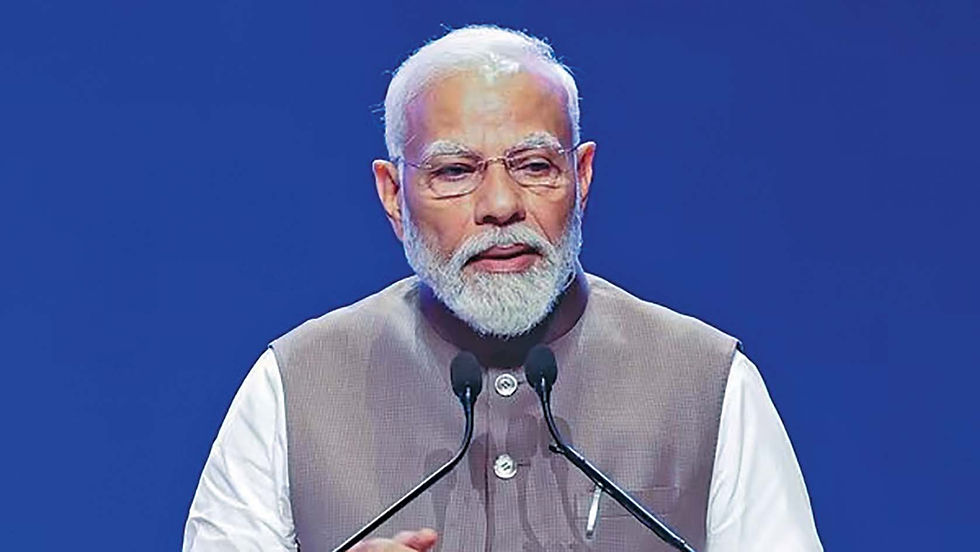
Prime Minister Narendra Modi’s recent invocation of the need to defeat the “Macaulay mindset” has stirred a familiar fault line in India’s public life. Almost at once, the debate collapsed into its usual trenches: the dominance of English, the legacy of colonial education and the supposed invasion of foreign culture. These are easy targets, and comforting ones. They suggest that psychological freedom will arrive once syllabi are rewritten and accents corrected. Yet this diagnosis misses where the problem truly festers. A colonial mindset is not merely inherited through textbooks but rehearsed daily through institutions. And in a sovereign democratic republic, that responsibility rests squarely on the four pillars of democracy, namely the legislature, executive, judiciary and media.
The British cultivated submission through law, bureaucracy and hierarchy. Independent India promised to replace it with self-rule, accountability and equality before the law. Whether that promise has been honoured is an awkward question confronting the republic.
Collective Interests
Consider the legislature. India’s parliaments and assemblies are theatres of ideological combat. Verbal duels, adjournments, walkouts and occasional scuffles are routine. Yet whenever the collective interests of legislators are threatened - from salaries and pensions to legal immunities - partisan fury melts into bipartisan harmony with remarkable speed. The same instinctive coordination is visible between the legislature and executive. When courts are seen to encroach upon legislative terrain, parliaments retaliate through swift amendments, often with cross-party cooperation that would be unthinkable on matters affecting ordinary citizens.
But the most revealing asymmetry lies in how democracy is structured for rulers and ruled. Voters are locked into the blunt ‘first past the post’ system, where candidates can prevail with wafer-thin pluralities, encouraging endless social fragmentation. Elections become exercises in dividing society by caste, language, income, religion and geography into ever-smaller electoral blocs.
Lawmakers, however, often operate under an alternative logic when voting among themselves by ranking candidates, forging wider consensuses, and being forced into accommodation. The result is a permanently polarised society governed by representatives structurally encouraged to reconcile with one another. A people trained to quarrel cannot easily develop the collective confidence needed to overthrow a mindset of subordination.
If the legislature cultivates division, the executive institutionalises resignation. On paper, India is heavily regulated. In practice, enforcement is sporadic to the point of farce. Traffic rules are treated as polite suggestions. Wrong-side driving, phone use at the wheel, encroachment of pavements, haphazard banners blocking sightlines have become the texture of daily civic life.
All of this unfolds in full view of authorities. The message absorbed by citizens is not merely that rules are broken, but that they are expected to be broken. Yet the same streets can be resurfaced overnight when a VIP is scheduled to pass through. The truth is that the state can act decisively when it chooses not to ignore.
The philosophy of ‘civil disobedience’ once dignified the struggle against unjust colonial authority. In post-independence India, it has curdled into civic lawlessness. The pervasive ‘chalta hai’ culture of shortcuts, compromises and casual violations have bred poor quality, low expectations and institutional sloth. And inevitably it deepens the sense that India remains, in practice, an inferior version of those Western societies where laws are followed not because they are feared, but because they are believed.
If the executive weakens respect for rules, the judiciary strains belief in justice itself. “Justice delayed is justice denied” is no longer a moral warning but a statistical description. Chronic shortages of judges, staggering backlogs and cases that outlive the litigants involved have turned the judicial process into a punishment in its own right. Years of expenses and uncertainty grind citizens down regardless of whether acquittal or conviction eventually arrives.
Defensive Reflexes
This erosion of trust is compounded by the judiciary’s own defensive reflexes. Like the other pillars, it is acutely sensitive to any perceived threats to its autonomy and swift to repel them. The collegium system of judicial appointments, for instance, has been ring-fenced against legislative interference with near-sacred intensity. But institutional independence that coexists with prolonged inefficiency slowly hollows out legitimacy.
The media, which is the fourth pillar, is formally tasked with keeping the other three honest. In theory, a vigilant press should expose wrongdoing relentlessly until accountability is unavoidable. In practice, sustained scrutiny is rare. Scandals are pursued intensely only until the next sensation erupts.
What emerges from this institutional mosaic is not a society marching toward psychological freedom, but one trapped in contradiction. Citizens are encouraged to splinter politically, indulged in civic indiscipline, exhausted by judicial delay and overstimulated by relentless media noise. In such an environment, pride seeks refuge not in lived experience, but in distant civilisational achievements and iconic personalities of a long-vanished past.
There is nothing improper in revering history. A civilisation that forgets itself is easily conquered. But pride that rests only on antiquity, unrefreshed by the daily experience of dignity in the present will struggle to shed a slave’s psychology, however often they are reminded of ancient glory.
Defeating the Macaulay mindset is not a cultural skirmish but an institutional reckoning. It requires a polity that discourages fragmentation, an executive that enforces laws impartially rather than theatrically, a judiciary that delivers justice within human timeframes, and a media that sustains accountability beyond the lifespan of a headline. None of this requires a rejection of English, Western ideas or global engagement. It requires something more demanding, and that is the routine practice of self-respect through governance.
Colonial rulers did not simply command India but trained it to doubt itself. Independent India will not unlearn that reflex through rhetoric alone. It will do so only when its citizens encounter, in the ordinary transactions of daily life, a state that functions with fairness, discipline and consequence.
Until those four pillars change how they work, calls to defeat the Macaulay mindset will continue to echo loudly and achieve very little.
(The writer works in the Information Technology sector. Views personal.)


Comments