

Counting Castes, Courting Trouble
- Correspondent
- Feb 5, 2025
- 3 min read
Telangana’s caste survey could prove a political landmine for Rahul Gandhi and the Congress.

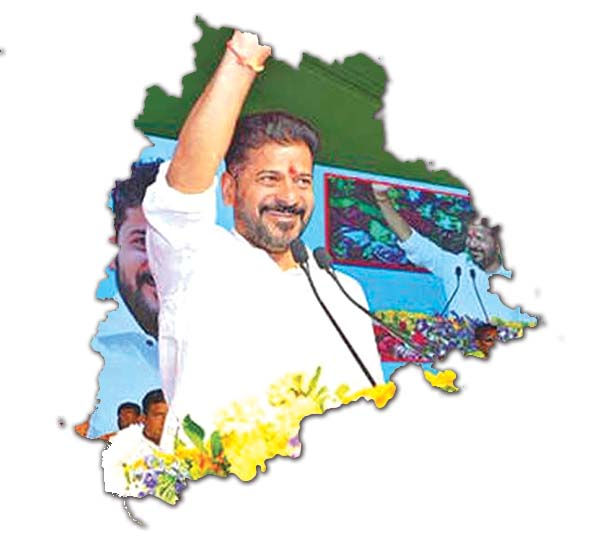
Caste, the defining feature of Indian politics, has always been at the center of any political debate. The Telangana government’s recently released caste survey, completed in record time, has provided a numerical basis for long-standing demands for greater representation, potentially upending political calculations in the state. With Backward Classes (BCs) forming the majority of the state’s population, their leaders are demanding higher political quotas, putting pressure on Revanth Reddy’s Congress-led government.
Unlike its neighbour Karnataka, where Siddaramaiah’s Congress-led government has been sitting pretty on a similar exercise, Reddy appears intent on stirring the caste cauldron in Telangana. However, what was meant to be a tool to consolidate support among BCs could soon become a political liability for the state government as well as Congress leader Rahul Gandhi’s nationwide pitch for a caste census.
The preliminary findings of Telangana’s Socio-Economic, Educational, Employment, Political, and Caste (SEEEPC) Survey hold few surprises. The survey, covering around 9 percent of all households, found that 56.33 percent of Telangana’s population belongs to the Backward Classes (BCs), including 10.08 percent Muslim BCs. Scheduled Castes (SCs) make up 17.43 percent, Scheduled Tribes (STs) 10.45 percent, while the so-called ‘Other Castes’ (OCs) account for just 15.79 percent. These figures largely align with historical estimates but now serve as a rallying cry for BC leaders, who are demanding that their numerical strength translate into increased political and economic representation.
With local body elections due soon, the survey’s findings are bound to shape party strategies. BCs, already seen as a crucial voting bloc, played a pivotal role in the Congress’s victory over the Bharat Rashtra Samithi (BRS) in 2023. Now, BC leaders want tangible political gains. The Congress government, which has only two BC ministers in its Cabinet, now faces intense pressure to act.
The BJP, which is keen to expand its footprint in Telangana after securing eight seats in 2023, is actively courting BCs, sensing an opportunity in Congress’s predicament. The BRS, still reeling from its electoral defeat, is also demanding the immediate implementation of the survey’s findings. If Congress fails to meet BC demands, it risks alienating a key constituency ahead of both local and future assembly elections.
Rahul Gandhi has been the loudest advocate for a nationwide caste census, making it a cornerstone of Congress’s political strategy. Yet, the Telangana survey now forces Congress to walk the talk, raising uncomfortable questions about whether the party is willing to implement the very policies it champions at the national level.
The Karnataka caste survey, completed in 2018, has been a political hot potato for Congress. Despite commissioning the survey, the Karnataka government now led by the Congress has kept its findings under wraps for seven years.
By contrast, Bihar’s caste census was completed relatively swiftly. The Nitish Kumar-led government took just six months and spent Rs. 500 crore to publish its findings, which revealed that BCs and EBCs make up a staggering 63% of Bihar’s population. The move allowed Kumar to claim the mantle of championing backward caste politics while Congress, despite being a coalition partner, played a secondary role. The Telangana survey’s timing is particularly inconvenient for Rahul Gandhi, who has championed a national caste census but now faces internal resistance within his party. The Telangana government has already committed to increasing BC reservations in local body polls, yet BC leaders remain unsatisfied, fearing a repeat of Karnataka’s dithering.
If Congress appears hesitant in Telangana, it risks losing credibility on its national caste census campaign. If it acts decisively, it could alienate upper-caste leaders within the party, triggering internal rifts similar to those in Karnataka. The BJP, which has historically been reluctant to embrace caste-based politics, could exploit Congress’s divisions to consolidate its position among non-BC voters.


Comments