

Despite deep schisms, MVA grins in public

Mumbai: As the state hurtles towards the second and more critical round of civic bodies polls, the Maharashtra Vikas Aghadi (MVA) appears rattled though projecting a smiling face in public as internal differences spill out.
The prime reason for this is the Congress’ decision - to go solo in Mumbai and to leave alliance-making in other civic bodies to the concerned local leadership – that has sent disconcerted partners Shiv Sena (UBT) and Nationalist Congress Party (SP).
The ruling Mahayuti allies are gleeful at the Opposition’s discomfiture that bared old fault-lines and created fresh fears at a crucial time when unity was most needed as a strong political weapon.
Nonchalant Congress leaders reiterate that the step was neither abrupt nor hostile, and taken in view of multiple factors, including ideological reasons, but it had not shut the doors on any ally.
Justifying the contentions, he said the Congress had first approached the NCP (SP) over a month ago to explore a tie-up, and its meaningful response is awaited.
Besides, SS (UBT) MP Sanjay Raut personally met the party’s central leadership in New Delhi this week, hoping to salvage the situation and cobble up a coalition.
No Interference
The message from the Congress central brass was clear: the party high command would not interfere for micro-level civic alliances and it has fully empowered the state unit to decide tie-ups based on local political arithmetic. While the ‘hands-off’ stance has boosted the local Congress’ Mumbai strategy, it has further unsettled the allies.
Closely monitoring the developments, a senior NCP (SP) cautioned that ‘such unilateral tactical decisions’ must not result in forfeiting the secular votes or alienating backward communities that form the backbone of the MVA’s social coalition and its traditional support base.
Contending that the Congress’ was merely ‘posturing’ to bargain hard, the NCP (SP) silently apprehends – “if such uncertainties are prolonged too much, these could mar the MVA’s overall prospects, both in Mumbai and beyond”.
Existential Election
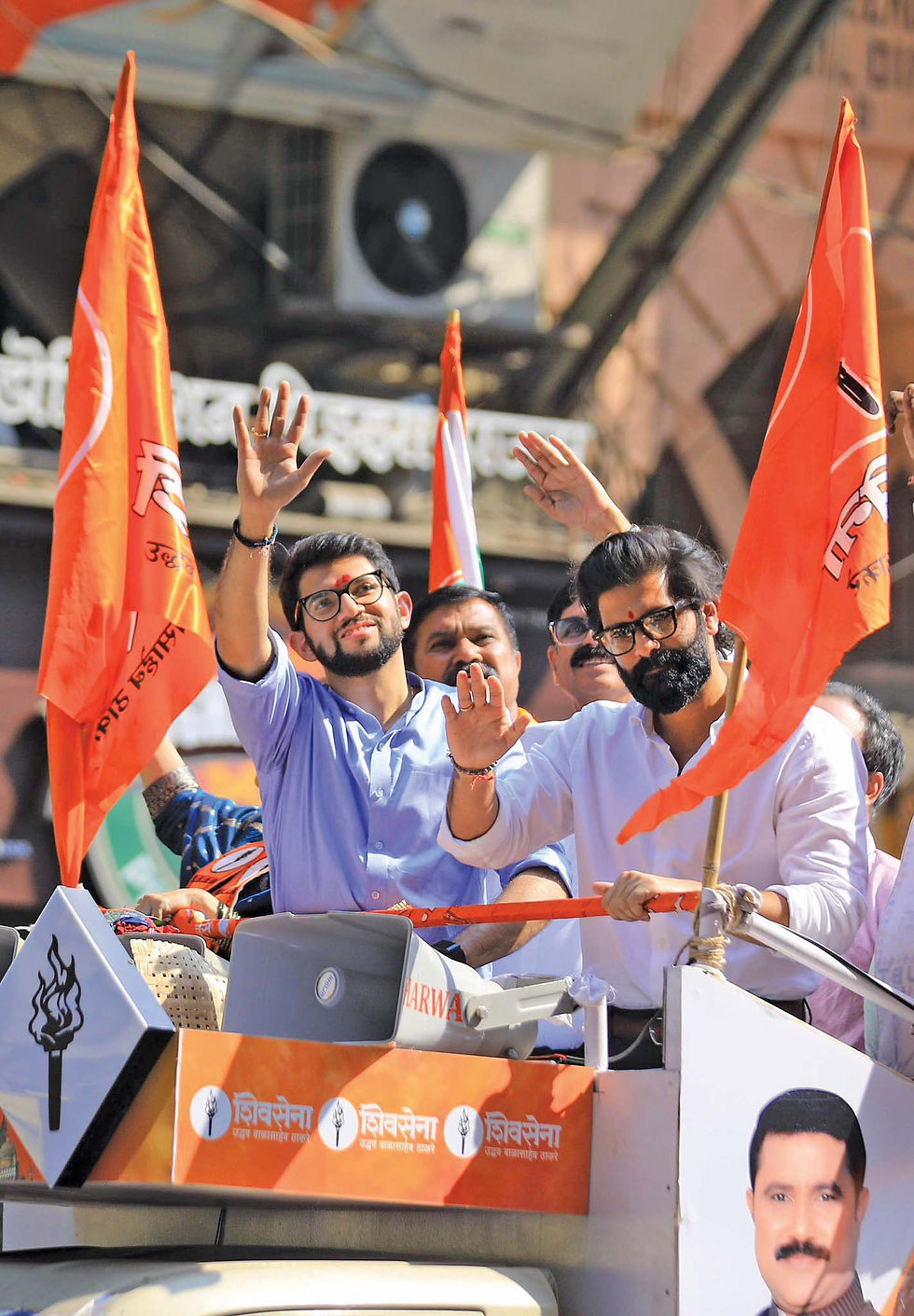
The mood in Shiv Sena (UBT), is grim, but resolute, with a senior Deputy Leader admitting that the coming BMC election is ‘existential’, for the party and the ‘Thackeray’ surname.
Ex-CM Uddhav Thackeray’s SS(UBT) and its new ally, the Maharashtra Navnirman Sena (MNS) headed by cousin Raj Thackeray, the contest is both about safeguarding its legacy as also bagging power.
After ignoring each other for nearly two decades, the Thackeray cousins are now unitedly struggling to reclaim their traditional bastions and the support of the ‘Marathi Manoos’– albeit under highly changed circumstances.
“Nevertheless, this is probably the last opportunity to secure our future. The rival (ruling) camp has grotesque money power, social media reach and sway over the administrative machinery. We have six decades old inter-personal bonds with the Mumbaikars, the enduring charisma and iconic image of Balasaheb Thackeray,” said the Deputy Leader.
Adding to this are Uddhav Thackeray’s enhanced personal credibility after his stint as CM during the Covid-19 Pandemic, and most grudgingly admit that it broadened the SS (UBT)’s acceptability among minorities and marginalised communities.
“Plus, the party’s contributions to the city and state for so long, the support of the loyalists who have not deserted the party will now be severely tested, particularly with the Sena (UBT)-MNS alliance seeking to consolidate the fragmented Marathi vote under vastly changed political circumstances,” he declared.
Wooed by multiple parties, the confused Marathi voter is wary of all – SS (UBT), MNS, the Shiv Sena led by Eknath Shinde, the Bharatiya Janata Party (BJP) – wondering who would prove to be his true ‘messiah’ – thus raising stakes for all.
For the MVA the sheer challenge is – effectively juggle political ambitions with poll arithmetic strategy – or face the electoral battlefield divided and risk oblivion.
Tatkare hopeful of continuing with Mahayuti
State NCP chief Sunil Tatkare asserted on Thursday that no BJP leader has said that his party will be kept out of the Mahayuti alliance for the upcoming civic polls.
He was talking to reporters after NCP head and Deputy Chief Minister Ajit Pawar discussed the party's strategy with his senior colleagues for the local body elections. Besides, Tatkare and other leaders, NCP's national working president Pratik Patel also took part in the discussion.
Replying to questions, Tatkare said no BJP leader has said that NCP will be kept out of the Mahayuti alliance for the civic polls. The coalition comprises the BJP, NCP, and the Shiv Sena, led by Deputy CM Eknath Shinde.
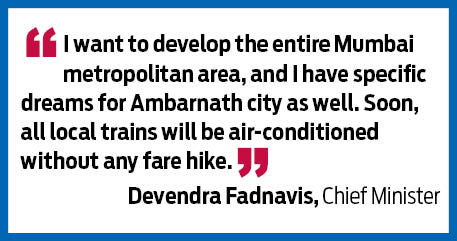
When told about Chief Minister Devendra Fadnavis's remarks that the BJP and NCP will contest the Pune and Pimpri-Chinchwad municipal polls independently, he said, “Pune and Pimpri-Chinchwad don't constitute Maharashtra.”
“The CM has said both parties are strong in these two cities, and if we contest together, we give room to other parties to take advantage. Since civic elections have not been held for nine years, our workers may cross over to the Opposition camp if they do not get a chance to contest,” Tatkare said.
To questions concerning the BJP's opposition to NCP leader Nawab Malik in Mumbai, Tatkare said he has been appointed in charge of an internal committee for election management in the metropolis.
“When it comes to talking to our allies, I am there as the state unit chief. Ajit Pawar and Pratik Patel will step in when required,” he said.
Mahayuti has arrived at consensus on 150 of 227 civic seats: Satam
The ruling Mahayuti has reached consensus on 150 of the 227 seats in Mumbai for the January 15 civic polls, senior BJP leader Ameet Satam said on Thursday.
Discussions on the remaining 77 seats are expected to be completed within the next two to three days, added Satam, the BJP's Mumbai chief.
"We have arrived at consensus on 150 seats. Talks on the remaining 77 seats are ongoing and will be concluded soon. The final decision on these seats will be taken with the concurrence of Chief Minister Devendra Fadnavis and Deputy CM Eknath Shinde," he said while addressing a press conference along with industries minister and Shiv Sena leader Uday Samant.
The objective of the seat-sharing formula is to provide corruption-free civic administration in Mumbai, Satam added.
"It is not important who contests how many seats. The Mahayuti will contest all 227 seats and win more than 150 seats, ensuring that a Mahayuti mayor is elected. The BJP, Shiv Sena and RPI are committed to fulfilling the aspirations of Mumbaikars," he said.

Comments