

Development Insured: Women Take the Lead with Modi’s Bima Sakhi Yojana
- Abhijit Mulye

- Dec 19, 2024
- 4 min read

India’s economy cannot thrive while half its population remains sidelined. At just 20 percent, the female labour-force participation rate in India ranks among the lowest in the world, far below the global average and China’s formidable 40 percent. Women contribute a meagre 17 percent to India’s GDP—less than half the global norm. Estimates suggest that getting more women into the workforce could boost India’s annual GDP growth rate by 1.5 percentage points, pushing it to a robust 9 percent.
Enter the Bima Sakhi Yojana (BSY), launched last week by Prime Minister Narendra Modi in Panipat which aims to empower women economically by training them as LIC insurance agents. Targeting those aged 18 to 70 who have completed their Secondary School Certification (SSC), the scheme offers training, a stipend for the first three years, and commissions based on performance. Participants, addressed as Bima Sakhis, are expected to not only earn sustainable incomes but also expand insurance penetration in India’s underserved regions.
The model cleverly merges social uplift with business objectives. LIC, India’s state-owned insurance giant, benefits by tapping into unbanked rural markets, while Bima Sakhis are equipped to become self-sufficient earners and entrepreneurs. Modi’s government has set an ambitious goal: enrolling 100,000 Bima Sakhis within a year. If successful, the program could quietly reshape India’s rural economy while nudging more women into the workforce.
The Bima Sakhi Yojana builds on a growing ecosystem of women-focused schemes rolled out by Modi’s government over the past decade. Initiatives like Bank Sakhi (banking facilitators), Krishi Sakhi (agriculture advisors), and Pashu Sakhi (livestock specialists) have sought to train women for roles traditionally dominated by men. Programs such as Lakhpati Didi aim to push rural women towards million-rupee incomes. The BSY fits neatly into this broader strategy of promoting financial inclusion through grassroots entrepreneurship.
At its heart, the scheme leverages microfinance principles—tools that have long been touted as game-changers for economic inclusion. Microfinance provides credit, insurance, and savings opportunities to the unbanked, often through self-help groups (SHGs). LIC, which already runs micro-insurance products like Jeevan Mangal and Jeevan Deep, has seen evidence that such models can drive socio-economic empowerment. A study on LIC-linked SHGs found improvements in the financial standing and decision-making abilities of women beneficiaries.
The BSY, however, ups the ante. Beyond offering women a safety net, it positions them as active participants in financial markets. Bima Sakhis will earn commissions on policies sold — Rs.48,000 annually, by government estimates — alongside a monthly stipend of Rs. 7,000 in year one, tapering to Rs. 5,000 by year three. For most rural households, these earnings are transformative. LIC agents typically bring home Rs. 15,000 a month, or Rs. 1.75 lakh annually — a figure that could double household incomes in India’s poorest regions.
Yet the program is not without its challenges. Microfinance initiatives often struggle with patchy implementation, low financial literacy, and poor uptake in rural areas. Women — particularly in deeply patriarchal regions — may face resistance to stepping into public-facing, commission-based roles. A stipend of Rs. 7,000, whilst meaningful, may not be sufficient to attract candidates unless backed by robust awareness campaigns.
Then there is the matter of sustainability. The scheme relies heavily on entrepreneurial success as women must renew policies and attract clients to maintain their income. Without adequate support, training, and mentorship, some Bima Sakhis may falter, leaving them with little more than a short-term stipend. Financial inclusion schemes are only as effective as their execution, and India’s track record on rural outreach remains uneven.
Nonetheless, BSY’s design shows promise. By positioning women as insurance agents, the scheme shifts the narrative around empowerment: rural women are no longer just beneficiaries of government programs but active contributors to the economy. The initiative also has far-reaching implications for India’s insurance sector, where penetration remains abysmally low, especially in rural areas.
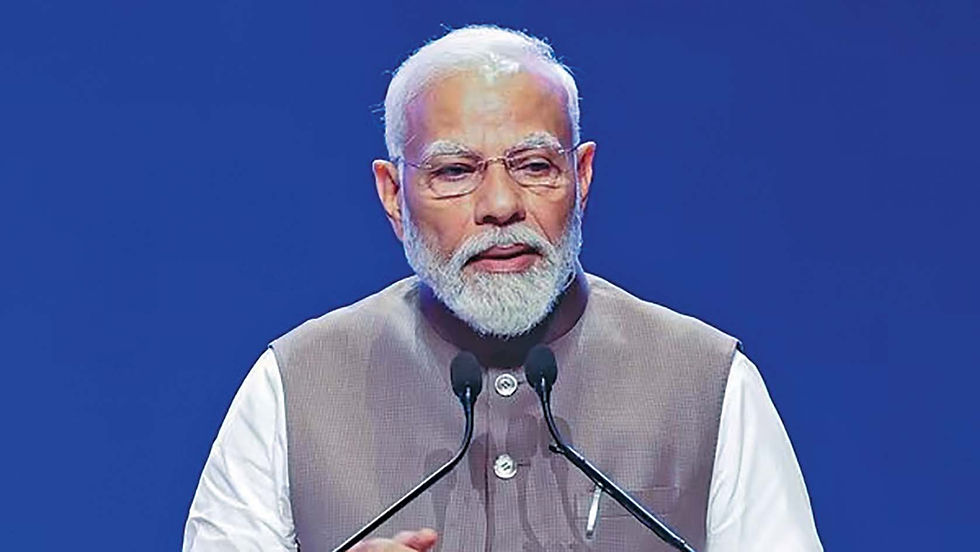
Prime Minister Modi has hailed BSY as a step towards gender parity. At the scheme’s launch, he pointed to India’s growing female workforce in other fields — fighter pilots, police officers, and corporate leaders—as evidence of changing tides. “When women are empowered, new doors of opportunity open for the country,” he declared. He highlighted the 1,200 women-led cooperatives already operating in agriculture and allied sectors, a quiet revolution that BSY seeks to amplify.
The scheme’s success will hinge on its ability to tackle entrenched gender biases and ensure steady, sustainable incomes for participants. If Modi’s goal of recruiting 100,000 Bima Sakhis materializes, the program could inspire similar models of financial inclusion across sectors.
India has miles to go before its gender gap begins to narrow. But as Bima Sakhis begin knocking on doors across rural India, selling policies and promoting financial literacy, they may just nudge the country’s economy and society towards a more balanced, inclusive future.
By turning rural women into breadwinners, the scheme certainly has the potential to transform households and communities. If executed well, India’s Bima Sakhis could become not just agents of insurance but agents of change.


Comments