top of page

By:

Bhalchandra Chorghade

11 August 2025 at 1:54:18 pm

Applause for Cricket, Silence for Badminton

Mumbai: When Lakshya Sen walked off the court after the final of the All England Badminton Championships, he carried with him the disappointment of another near miss. The Indian shuttler went down in straight games to Lin Chun-Yi, who created history by becoming the first player from Chinese Taipei to lift the prestigious title. But the story of Lakshya Sen’s defeat is not merely about badminton final. It is also about the contrasting way India celebrates its sporting heroes. Had the same...

Applause for Cricket, Silence for Badminton

Mumbai: When Lakshya Sen walked off the court after the final of the All England Badminton Championships, he carried with him the disappointment of another near miss. The Indian shuttler went down in straight games to Lin Chun-Yi, who created history by becoming the first player from Chinese Taipei to lift the prestigious title. But the story of Lakshya Sen’s defeat is not merely about badminton final. It is also about the contrasting way India celebrates its sporting heroes. Had the same narrative unfolded on a cricket field, the reaction would have been dramatically different. In cricket, even defeat often becomes a story of heroism. A hard-fought loss by the Indian team can dominate television debates, fill newspaper columns and trend across social media for days. A player who narrowly misses a milestone is still hailed for his fighting spirit. The nation rallies around its cricketers not only in victory but also in defeat. The narrative quickly shifts from the result to the effort -- the resilience shown, the fight put up, the promise of future triumph. This emotional investment is one of the reasons cricket enjoys unparalleled popularity in India. It has built a culture where players become household names and their performances, good or bad, become part of the national conversation. Badminton Fights Contrast that with what happens in sports like badminton. Reaching the final of the All England Championships is a monumental achievement. The tournament is widely considered badminton’s equivalent of Wimbledon in prestige and tradition. Only the very best players manage to reach its final stages, and doing it twice speaks volumes about Lakshya Sen’s ability and consistency. Yet the reaction in India remained largely subdued. There were congratulatory posts, some headlines acknowledging the effort and brief discussions among badminton enthusiasts. But the level of national engagement never quite matched the magnitude of the achievement. In a cricketing context, reaching such a stage would have triggered days of celebration and analysis. In badminton, it often becomes just another sports update. Long Wait India’s wait for an All England champion continues. The last Indian to win the title was Pullela Gopichand in 2001. Before him, Prakash Padukone had scripted history in 1980. These victories remain among the most significant milestones in Indian badminton. And yet, unlike cricketing triumphs that are frequently revisited and celebrated, such achievements rarely stay in the mainstream sporting conversation for long. Lakshya Sen’s journey to the final should ideally have been viewed as a continuation of that legacy, a reminder that India still possesses the talent to challenge the world’s best in badminton. Instead, it risks fading quickly from public memory. Visibility Gap The difference ultimately comes down to visibility and cultural investment. Cricket in India is not merely a sport; it is an ecosystem built over decades through media attention, sponsorship, and mass emotional attachment. Individual sports, on the other hand, often rely on momentary bursts of recognition, usually during Olympic years or when a medal is won. But consistent performers like Lakshya Sen rarely receive the sustained spotlight that their achievements deserve. This disparity can also influence the next generation. Young athletes are naturally drawn to sports where success brings recognition, financial stability and national fame. When one sport monopolises the spotlight, others struggle to build similar appeal. Beyond Result Lakshya Sen may have finished runner-up again, but his performance at the All England Championship is a reminder that India continues to produce world-class athletes in disciplines beyond cricket. The real issue is not that cricket receives immense attention -- it deserves the admiration it gets. The concern is that athletes from other sports often do not receive comparable appreciation for achievements that are equally significant in their own arenas. If India aspires to become a truly global sporting nation, its applause must grow broader. Sporting pride cannot remain confined to one field. Because somewhere on a badminton court, an athlete like Lakshya Sen is fighting just as hard for the country’s colours as any cricketer on a packed stadium pitch. The only difference is how loudly the nation chooses to cheer.

Divergent loyalties

Updated: Oct 30, 2024

BJP

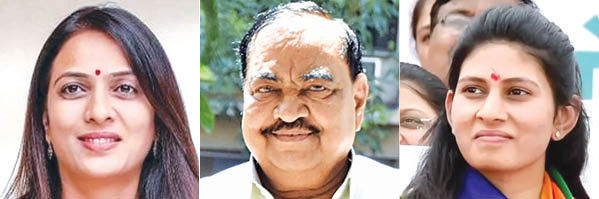
Once lording over the BJP in North Maharashtra, the Khadse family has witnessed flip-flops, corruption cases and embarrassing situations in recent years. Sisters-in-law on opposite sides of the political spectrum while the patriarch, who was waiting to return to his parent party, was given the cold shoulder, forcing him to stay back where he is.


It surprised many and upset his followers when Eknath Khadse, a loyal BJP worker and former minister, quit the party and moved to the undivided NCP in 2020 on the heels of alleged corruption charges. He had started his career as a sarpanch of Kothali village and entered the legislative assembly for the first time in 1987 and since then, has won six consecutive elections till 2019 from the Muktainagar constituency in Jalgaon.


Until his fall from grace within the BJP in 2016, Khadse had been a BJP worker since the 1980s and helped grow the party’s base in North Maharashtra. He was made minister in 1995 during the Shiv Sena-BJP government and has held several key positions over the decades. He was the leader of the opposition between 2009 and 2014 and was commended for his efficient work. When the BJP won the elections in 2014, Khadse had openly shown his desire to become the chief minister. Charges of corruption in a land deal and accusations of misusing his office forced Khadse to resign from the government in 2016. Activist Anjali Damania had led the protest against him after a Pune-based realtor accused him of land grabbing and abusing his position as the revenue minister to get land at lower-than-market prices for his family. Even earlier, he was ridiculed for wasting water to create a temporary helipad for his tour of a drought-stricken Latur when the people were thirsty in the parched region.


In 2020, Khadse quit the BJP and joined the undivided NCP along with his daughter Rohini Khewalkar. Khadse’s party colleagues and workers resented his act of cornering key positions for his family members. While his wife was made director of Mahananda, a milk cooperative, his daughter-in-law Raksha has been a BJP Member of Parliament since 2014. Raksha, a three-time MP from Raver is now a minister state at the centre. Before his daughter Rohini followed him into the NCP, she had contested the assembly elections from Muktainagar in 2019 but had lost to the Shiv Sena candidate.


Earlier this year, Khadse had expressed a desire to be welcomed back into the BJP but the party showed no inclination.

Comments


bottom of page