

E20’s Water Reckoning

Maharashtra sits at the heart of India’s ethanol boom, but climate change and groundwater depletion threaten the sustainability of its biofuel ambitions.
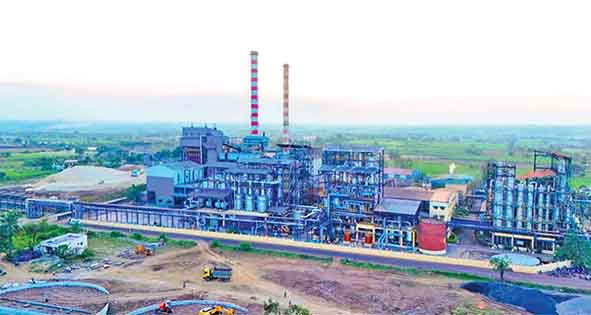
Switching to E20 petrol, which is 20 percent ethanol, is one of India’s most ambitious energy reforms in recent times. The Ethanol-Blended Petrol (EBP) program has transformed the face of India’s sugar business by reducing crude oil imports and transportation emissions, increasing energy security, and raising farmer incomes. This change is happening in the heart of Maharashtra. Maharashtra hosts one of the largest sugar industries in the country and a large number of cooperative and corporate sugar factories. It has become an important contributor to the government’s ethanol blending target. Sugar plants have ceased to be merely sugar plants. They are becoming biofuel complexes of increasing sophistication, supplying ethanol to oil-marketing companies. The program has opened new revenue streams for mills, stabilized the price of sugar, and spurred investment in rural economies.
But there’s an uncomfortable reality behind this victory. Maharashtra is also among the most water-stressed regions of India. Droughts, groundwater depletion and climate-induced variability in rainfall pose a question: Can India’s ethanol revolution be sustained if it is based on one of the world’s most water-intensive crops?
Geostrategic Advantage
India imports around 85 per cent of its crude oil, which continues to be an economic and geopolitical challenge to energy security. Under the National Policy on Biofuels and the EBP Programme, the government hopes to replace some of the imported gasoline with domestically generated ethanol. This program has been a big boon for Maharashtra. Uttar Pradesh and Karnataka are among states that contribute a big part of India's sugar and ethanol production. The government has pushed mills to diversify away from sugar, with incentives such as interest subsidies, guaranteed procurement by oil marketing corporations, and differential pricing for ethanol made from sugarcane juice and molasses.
The advantages are clear. Ethanol has relieved the financial burden of sugar surpluses, increased the liquidity of the mills, and provided relatively stable profits to farmers. It has also contributed to India’s climate targets by replacing fossil fuels with renewable biofuels to some degree. But the long-term viability of these advances depends on an increasingly precious resource: water.
The problem is not ethanol itself but the feedstock used to make it. Sugarcane has a very small share of the cultivated land in India but consumes an inordinately large amount of irrigation water. It is one of the most water-intensive crops in the country, requiring between 1,500 and 2,500 millimetres of water to grow. This will increase the divide in Maharashtra. Marathwada is a region prone to drought and water scarcity. Rainfall has become more erratic with climate change; groundwater levels continue to fall in many districts. However, with environmental constraints, sugarcane agriculture has grown over the years, as it is still one of the most profitable crops in the state due to reliable procurement and strong political support. As ethanol consumption increases, water supplies become even more strained.
India’s clean energy revolution could inadvertently aggravate its water crisis if water supply is not factored into industrial planning.
Questionable Assumptions
Climate change has compounded the problem. Scientific forecasts predicted longer dry spells, more erratic monsoons, and more intense periods of rainfall in western and central India. These changes directly affect groundwater recharge and the reliability of irrigation. The assumption that sugarcane can be produced in unlimited quantities is increasingly questionable. Therefore, future ethanol policy should take into account both production capacity and ecological resilience. Agricultural systems that are increasingly sensitive to climate change cannot underpin a successful transition to a new energy system.
Diversifying feedstock sources beyond sugarcane is vital for the long-term viability of India’s ethanol program. One of such potential alternatives is second-generation (2G) ethanol produced from agricultural residues such as rice straw, maize stalks, bamboo, and other lignocellulosic biomass. Unlike sugarcane, these feedstock sources do not require additional irrigation and also help address the growing problem of burning crop residue. Similarly, surplus maize, damaged food grains and other non-food biomass can be used to boost ethanol production without adding to the burden of water-intensive agriculture.
India has begun investing in second-generation ethanol plants, but these account for an insignificant share. Further investment, technological innovation, and legislative support will be needed to scale up these technologies. This shift to more diverse feedstocks is not only an environmental one, but also one of long-term energy security.
Maharashtra’s sugar lobby is politically powerful, making any talk of reducing sugarcane cultivation a controversial topic. Ethanol has brought financial security to many struggling mills, and sugar cooperatives have long influenced the state’s rural economy. But there should be no trade-off between farmers and environmental sustainability. Rural livelihoods depend on natural resources, and thus securing natural resources is central to securing rural livelihoods. India’s ethanol blending program has certainly boosted energy security, spurred investment in rural areas, and reduced dependence on imported fossil fuels. But not at the cost of environmental security. Energy security matters. India’s next move in its biofuel strategy has to go beyond meeting blending mandates. Policy design should consider water sustainability, climate resilience, and resource efficiency. Future policies need to aim at fast-tracking second-generation ethanol, broadening feedstocks, bolstering watershed management, and ensuring production fits with the regional ecological carrying capacity.
The true success of the E20 program will be decided if India can cut its oil imports without cutting groundwater, increasing water conflicts, or making agriculture more sensitive to climate change. Maharashtra is at the center of this struggle now. It is the ethanol capital of India and has an opportunity to show how clean energy and environmental sustainability can go hand in hand. Otherwise, today’s green fuel could become tomorrow’s water problem.
(The writer is a columnist and climate researcher with experience in political research analysis, ESG research, and energy policy. Views personal.)


Comments