top of page

By:

Uday Jogalekar

13 May 2026 at 3:25:14 pm

From Pracharak to Minister: My Memories of Dilipda

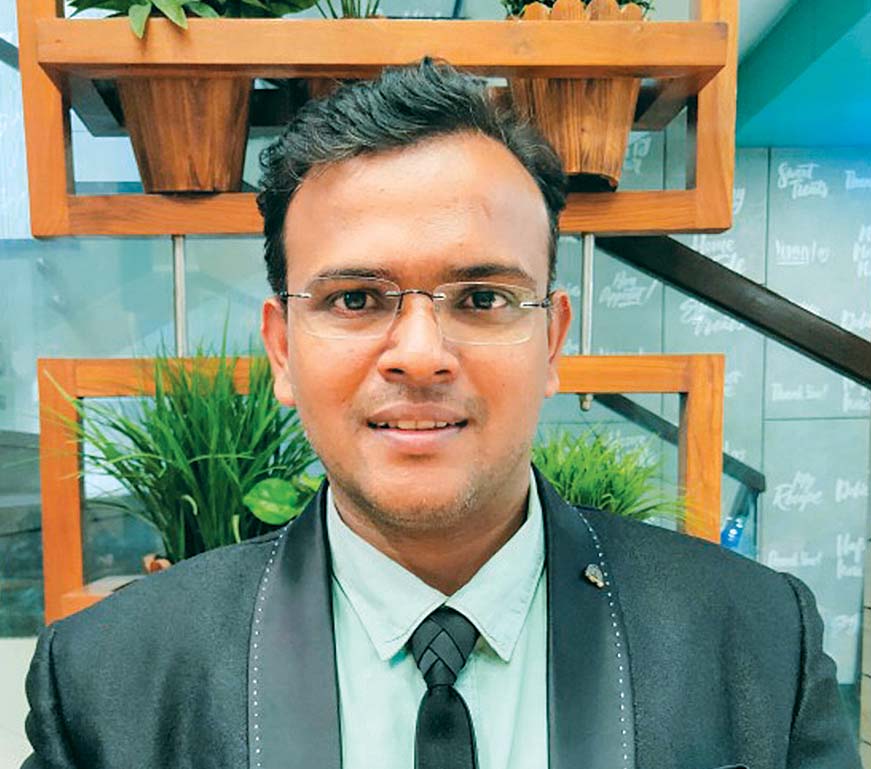
Long before he became a minister, Dilipda had already earned our respect through his simplicity, discipline, and warmth. In 2007, my job brought me to Kolkata. Once there, I began attending the local RSS shakha and gradually became involved in Sangh work. I first met Dilipda during a visit to a swayamsevak’s home. Coincidentally, that same year, he had been appointed to our division. As everyone introduced themselves, Dilipda casually asked me in Marathi, “How are you finding Bengal?” Hearing...

From Pracharak to Minister: My Memories of Dilipda

Long before he became a minister, Dilipda had already earned our respect through his simplicity, discipline, and warmth. In 2007, my job brought me to Kolkata. Once there, I began attending the local RSS shakha and gradually became involved in Sangh work. I first met Dilipda during a visit to a swayamsevak’s home. Coincidentally, that same year, he had been appointed to our division. As everyone introduced themselves, Dilipda casually asked me in Marathi, “How are you finding Bengal?” Hearing a Bengali pracharak — a full-time RSS worker devoted to organisational work — speak fluent Marathi came as a pleasant surprise to me. From that moment onwards, my interactions with Dilipda increased, and I gradually began to understand the many dimensions of his seemingly simple personality. Coming from Maharashtra, where Sangh work generally faced non-violent opposition, adapting to Bengal — where the opposition was often violent — was not easy. In that atmosphere, I learnt from Dilipda how to remain enthusiastic while also keeping fellow workers motivated and active. I often accompanied Dilipda during his visits to our area. He had a remarkable ability to blend effortlessly into any household, warmly enquire about every family member, and make everyone feel as though he were one of their own. Before being appointed to Kolkata, Dilipda had served as an RSS pracharak in the remote Andaman Islands from around 1999–2000 until 2007. Based in Port Blair, he worked under difficult conditions despite limited travel and communication facilities, diverse tribes speaking different languages, and a local mindset that often kept outsiders at a distance. He would often share positive experiences from his years in the Andamans but never once spoke about the hardships he endured. Despite working in such difficult conditions, he never mentioned his personal discomforts. This ability to remain free of complaints despite adversity is a hallmark of a pracharak, and Dilipda embodied it completely. He possessed the rare gift of finding positivity even in challenging situations. Excellent Cook In Bengal during 2007, Sangh work had not yet expanded to the scale it has reached today. At times, pracharaks had to cook their own meals, and this had made Dilipda an excellent cook. Whenever he returned to the city from his travels, our group would eagerly gather to enjoy his khichdi. Our area, Bidhannagar, was located in Salt Lake, a relatively prosperous locality. Adjacent to it were a few underprivileged settlements, and we would occasionally visit the nearby market. To reach the market from Salt Lake, one had to cross a wooden bridge, where the toll was 25 paise for pedestrians and one rupee for bicycles. Observing the difficulties faced by people in those settlements, Dilipda once suggested starting some sewa (service) activity there. That eventually led to the establishment of a homoeopathic clinic in the locality. While setting up the clinic, Dilipda effortlessly guided us through every stage of planning — what arrangements were needed, how the process should be structured, and what challenges might arise. It felt as though the entire plan was already mapped out in his mind. As the clinic became operational, we began noticing the educational difficulties faced by the local children. English, science, and mathematics were particularly challenging subjects for them, which eventually led to the start of a study centre. The idea of involving engineers from Salt Lake’s IT companies also came from Dilipda. Later, by bringing together IT professionals, an “IT Milan” initiative was started, and many of them eventually became swayamsevaks actively involved in Sangh work. Remarkable Ability At the time, the CPM government was in power in Bengal, and there were many obstacles to conducting shakha activities. Dilipda constantly guided us on overcoming these challenges. He had a remarkable ability to identify work that could bring meaningful change, plan it carefully, and execute it with determination and effectiveness. Whether it was service activities, daily shakha work, or handling sensitive cases related to “Love Jihad", Dilipda consistently displayed dedication, clarity of thought, a fighting spirit, and an unwavering readiness to work tirelessly toward the objective. What amazes me even today is that a pracharak like Dilipda — someone far ahead of us in age, experience, and accomplishments — would interact so casually and warmly with ordinary swayamsevaks like us, placing a hand on our shoulders and speaking as though he were a close friend. In 2009, I was transferred back to Mumbai, bringing my Kolkata chapter to an end. Later, in 2014, I learned that Dilipda had been given responsibility in the BJP. And now, in 2026, the BJP forming a government on its own strength speaks volumes about its contribution and leadership. Today, Dilipda has become a minister, and many titles and honours will naturally be associated with him. But to us, he will always remain simply "Dilipda". (The writer is an entrepreneur based in Kalwa, Thane.)

Farming on Borrowed Health

For decades, agricultural policy has been guided by a curious fiction that the farmer is not quite a factor of production, but merely a facilitator of it. Governments measure yield per acre, monitor soil nutrients, subsidise fertiliser and fret over credit flows. Yet the most indispensable input of all, which is the physical and mental well-being of the person tilling the land, remains conspicuously absent from the ledger.


In any conventional industry, the logic is straightforward. Machines depreciate. Their wear and tear are accounted for, insured against and eventually, replaced. Production costs incorporate this gradual erosion of capital.


Punishing Physicality

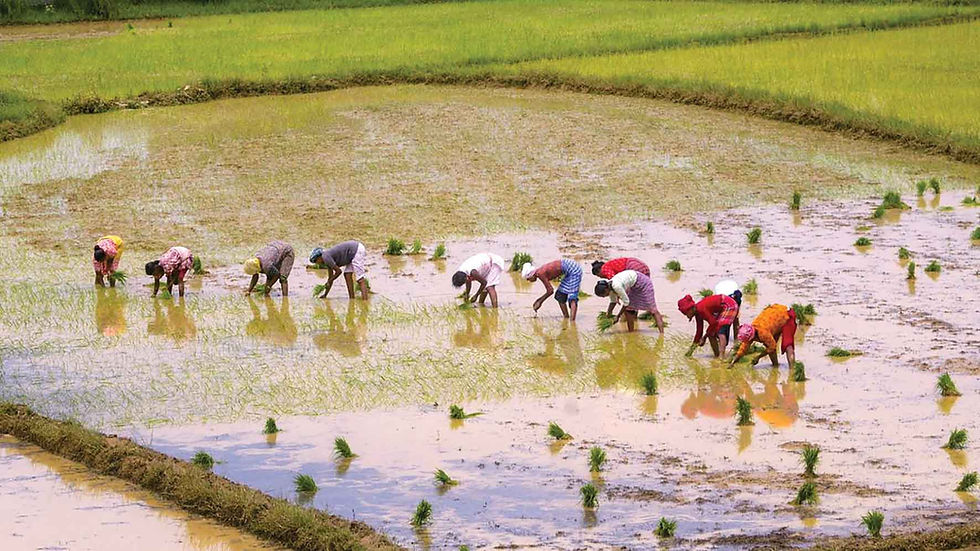
Agriculture, by contrast, operates on an unspoken assumption that its principal ‘machine’ who is the farmer, is infinitely durable. The reality is rather different. Daily exposure to pesticides, the punishing physicality of manual labour and the chronic stress of price volatility steadily erode what might be called the farmer’s ‘health stock.’


This depletion is not merely anecdotal. Across large swathes of the developing world, farmers suffer disproportionately from respiratory illnesses, musculoskeletal disorders and, increasingly, mental-health crises. Yet these costs remain externalised. They are borne privately, often catastrophically, by rural households rather than reflected in the price of the food they produce. The result is a global food system built on an accounting sleight of hand.


Consider the true cost of a kilogram of rice or a bale of cotton. Beyond seeds, water and fertiliser lies an unpriced input: human stamina. If one were to incorporate the cumulative medical expenses and diminished work capacity resulting from a lifetime in agriculture, the arithmetic would shift markedly. Food prices, by some estimates, could rise by a fifth or more. The world, in effect, is eating at a discount that is subsidised not by governments, but by the declining health of its farmers.


Unsustainable Model

Such a model is unsustainable. As the global population marches towards 10 billion, the resilience of food systems will depend not only on technology and climate adaptation, but on the endurance of those who produce food. A workforce that is chronically ill, indebted by medical expenses or physically exhausted cannot be expected to meet rising demand. What appears today as cheap food may tomorrow reveal itself as a costly vulnerability.


The implications extend well beyond national borders. In an era of globalised supply chains, the health of farmers is no longer a parochial concern but a systemic risk. Multinational corporations have grown adept at burnishing their environmental credentials, yet their so-called sustainability completely overlooks human well-being.


A more rigorous approach would treat farmer health as a measurable asset. Imagine a ‘Health Capital Index’ embedded within supply-chain audits. Regions where farmers suffer from high morbidity, early mortality or chronic indebtedness due to healthcare costs would be flagged not merely as social concerns, but as economic risks.


If the diagnosis is clear, the prescription is less so, though several avenues suggest themselves. First, pricing mechanisms must evolve. Minimum support prices and procurement systems should incorporate the true cost of human labour, recognising that manual work is neither costless nor inexhaustible. To continue treating it as such is to perpetuate a hidden subsidy that distorts markets.


Second, insurance frameworks require rethinking. Current schemes largely protect crops against weather vagaries. Yet a failed harvest often begins not with drought or flood, but with the farmer’s inability to sow or tend the field due to illness. Insuring the farmer’s health as the primary productive asset would align incentives more rationally and provide a buffer against shocks that conventional crop insurance overlooks.


Third, the transition towards less chemically intensive farming offers an underappreciated dividend. The case for organic or natural agriculture is typically framed in environmental terms. Equally compelling, however, is its potential to preserve ‘health capital’ by reducing exposure to toxins.


None of this will be easy. Accounting for health depreciation introduces complexities that policymakers have long preferred to sidestep. It may also raise food prices, an outcome few governments relish. Yet the alternative of persisting with a system that quietly depletes its most vital resource is far more perilous.


Economic history offers a lesson. Nations that prosper tend to invest not only in infrastructure and technology, but in human capital. Agriculture, for all its uniqueness, is no exception. Recognising farmer health as economic capital is the beginning of a more honest accounting. Treating the farmer’s body and mind as expendable inputs rather than valuable assets is a miscalculation that distorts both markets and morals.


(The writer is a member of Maharashtra Agriculture Price Commission. Views personal.)


Comments


bottom of page