top of page

By:

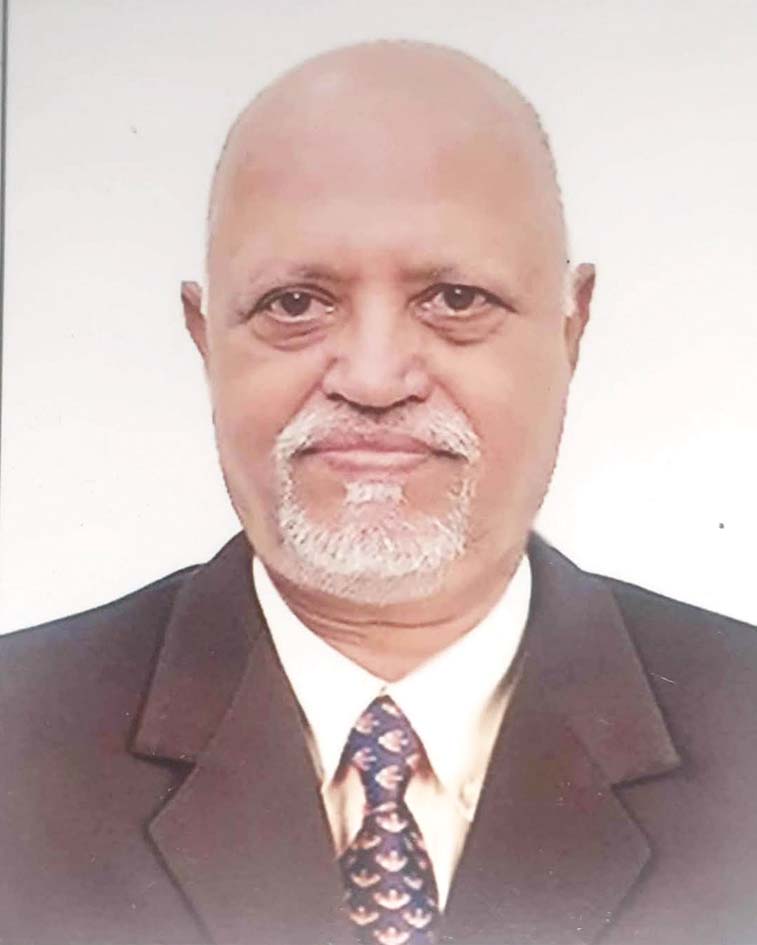
Bhalchandra Chorghade

11 August 2025 at 1:54:18 pm

Applause for Cricket, Silence for Badminton

Mumbai: When Lakshya Sen walked off the court after the final of the All England Badminton Championships, he carried with him the disappointment of another near miss. The Indian shuttler went down in straight games to Lin Chun-Yi, who created history by becoming the first player from Chinese Taipei to lift the prestigious title. But the story of Lakshya Sen’s defeat is not merely about badminton final. It is also about the contrasting way India celebrates its sporting heroes. Had the same...

Applause for Cricket, Silence for Badminton

Mumbai: When Lakshya Sen walked off the court after the final of the All England Badminton Championships, he carried with him the disappointment of another near miss. The Indian shuttler went down in straight games to Lin Chun-Yi, who created history by becoming the first player from Chinese Taipei to lift the prestigious title. But the story of Lakshya Sen’s defeat is not merely about badminton final. It is also about the contrasting way India celebrates its sporting heroes. Had the same narrative unfolded on a cricket field, the reaction would have been dramatically different. In cricket, even defeat often becomes a story of heroism. A hard-fought loss by the Indian team can dominate television debates, fill newspaper columns and trend across social media for days. A player who narrowly misses a milestone is still hailed for his fighting spirit. The nation rallies around its cricketers not only in victory but also in defeat. The narrative quickly shifts from the result to the effort -- the resilience shown, the fight put up, the promise of future triumph. This emotional investment is one of the reasons cricket enjoys unparalleled popularity in India. It has built a culture where players become household names and their performances, good or bad, become part of the national conversation. Badminton Fights Contrast that with what happens in sports like badminton. Reaching the final of the All England Championships is a monumental achievement. The tournament is widely considered badminton’s equivalent of Wimbledon in prestige and tradition. Only the very best players manage to reach its final stages, and doing it twice speaks volumes about Lakshya Sen’s ability and consistency. Yet the reaction in India remained largely subdued. There were congratulatory posts, some headlines acknowledging the effort and brief discussions among badminton enthusiasts. But the level of national engagement never quite matched the magnitude of the achievement. In a cricketing context, reaching such a stage would have triggered days of celebration and analysis. In badminton, it often becomes just another sports update. Long Wait India’s wait for an All England champion continues. The last Indian to win the title was Pullela Gopichand in 2001. Before him, Prakash Padukone had scripted history in 1980. These victories remain among the most significant milestones in Indian badminton. And yet, unlike cricketing triumphs that are frequently revisited and celebrated, such achievements rarely stay in the mainstream sporting conversation for long. Lakshya Sen’s journey to the final should ideally have been viewed as a continuation of that legacy, a reminder that India still possesses the talent to challenge the world’s best in badminton. Instead, it risks fading quickly from public memory. Visibility Gap The difference ultimately comes down to visibility and cultural investment. Cricket in India is not merely a sport; it is an ecosystem built over decades through media attention, sponsorship, and mass emotional attachment. Individual sports, on the other hand, often rely on momentary bursts of recognition, usually during Olympic years or when a medal is won. But consistent performers like Lakshya Sen rarely receive the sustained spotlight that their achievements deserve. This disparity can also influence the next generation. Young athletes are naturally drawn to sports where success brings recognition, financial stability and national fame. When one sport monopolises the spotlight, others struggle to build similar appeal. Beyond Result Lakshya Sen may have finished runner-up again, but his performance at the All England Championship is a reminder that India continues to produce world-class athletes in disciplines beyond cricket. The real issue is not that cricket receives immense attention -- it deserves the admiration it gets. The concern is that athletes from other sports often do not receive comparable appreciation for achievements that are equally significant in their own arenas. If India aspires to become a truly global sporting nation, its applause must grow broader. Sporting pride cannot remain confined to one field. Because somewhere on a badminton court, an athlete like Lakshya Sen is fighting just as hard for the country’s colours as any cricketer on a packed stadium pitch. The only difference is how loudly the nation chooses to cheer.

Gold Prices Signal Strong 2026 Outlook
An AI bubble meltdown may push investors away from equities and into gold, while a softer dollar and low rates provide foundational support for price gains.

Gold has reached once-unthinkable prices at USD 4,468 per troy ounce (31.1347 grams) in 2025, gaining over 72.25 per cent this year as of 23 December 2025. Due to record-high prices in the international market, there is reduced interest in spot buying in the Indian bullion market.


In Mumbai, bullion dealers are offering gold at a 1 per cent discount on international market prices, at the all-time high price of Rs 137,000 per 10 grams, excluding 3 per cent GST.Looking ahead to 2026, major themes that carried the gold price to new heights this year will continue to underwrite its trajectory in the months ahead, boosting the metal even further.


Goldman Sachs sees gold prices climbing 14 per cent to USD 4,900 by December 2026 in its base case, it said in a note on Thursday, while citing upside risks to this view due to a potential expansion of diversification to private investors.


Safe-Haven Demand

Its views on commodities for 2026: Goldman Sachs said it expects structurally high central bank demand and cyclical support from US Federal Reserve interest rate cuts to lift the price of gold. It continues to recommend long exposure in the yellow metal. Strong gold exchange-traded fund (ETF) inflows and central bank purchases are projected to continue into next year as investors, particularly in the West, increasingly recognise the hedge value of gold.


Joe Cavatoni, senior market strategist at the WGC, said, “I think the performance of gold (in 2025) speaks volumes about the global perspective on risk and uncertainty. My sense is that we're going to continue to see these challenges in 2026.”


Risk Factor

This will translate into continued strong ETF flows and central bank demand for the monetary metal for 2026, although central bank buying may come at a slower pace than in the past few years. Another potential 2026 tailwind for gold is a correction in artificial intelligence (AI) stocks. Analysts are increasingly warning that this could happen, and it's possible that AI bubble meltdown concerns may push more investors away from equities and into gold in the coming year. Bank of America Global Research told its clients in late October that gold may be one of the strongest hedges if the AI bubble bursts.


“Optimists buy tech, pessimists buy gold, and hedgers buy both.” The uncertainty generated by Trump’s tariffs is beginning to slow down world trade, which has negative consequences for the AI sector. That will be the thing that ends up popping (the AI bubble). The gold price has an inverse relationship with the US dollar and real interest rates. Analysts forecast a weaker dollar and lower rates by mid-2026. A softer dollar and a low-rate environment would provide foundational support for further gold price gains.


The resulting inflation is expected to push the Fed toward quantitative easing (QE), or the purchasing of government bonds to increase money supply and lower long-term rates, which would further bolster the yellow metal's appeal.Global financial services firm Morgan Stanley sees demand for gold from ETFs and central banks pushing the gold price back up above USD 4,500 per ounce by mid-2026. The World Gold Council (WGC) also expects the themes of risk and uncertainty to continue driving gold. Overall, most analysts' gold price predictions for the upcoming year are in the USD 4,500 to USD 5,000 range.


(The writer is a commodities researcher-cum-analyst. Views personal.)


Comments


bottom of page