

Guarding the Hills
- Correspondent
- Feb 20, 2025
- 3 min read
Updated: Feb 21, 2025
Uttarakhand’s bold land law which restricts land sales is a necessary shield against predatory expansion and cultural erosion.
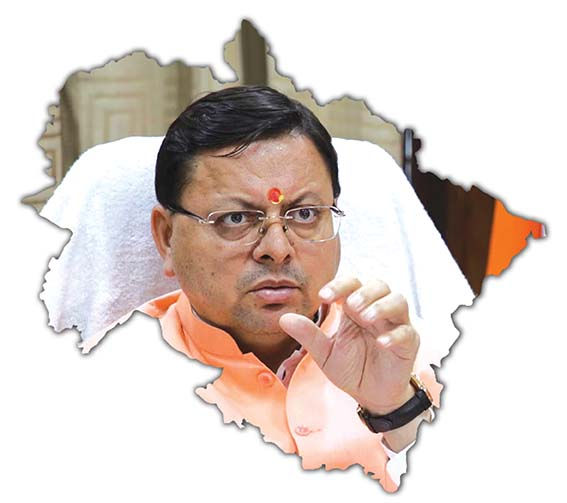
The Uttarakhand government’s decision to prohibit non-residents from purchasing agricultural and horticultural land in 11 of its 13 districts is an astute, overdue course correction. The new draft law, which awaits ratification in the ongoing Assembly session, has already sent predictable ripples through political circles. Critics decry it as parochial and restrictive, but in reality, it is a pragmatic safeguard for the fragile ecosystem, cultural identity and long-term interests of Uttarakhand’s residents. Chief Minister Pushkar Singh Dhami called it a “historic step.” He is not wrong.
Land laws in Uttarakhand have long been a source of friction. Since the state’s formation in 2000, successive governments have oscillated between liberalization and restriction, struggling to balance economic development with local concerns. In 2003, then Chief Minister ND Tiwari of the Congress imposed the first-ever limit on land purchases in hilly areas by non-residents, capping acquisitions at 500 square meters. His successor, B.C. Khanduri of the BJP, tightened this restriction further to 250 square meters. But in 2017, BJP’s Trivendra Singh Rawat flung the doors wide open, removing all ceilings for non-residents outside municipal limits. That decision provoked an outcry, with residents fearing land grabs, demographic shifts, and environmental degradation. It took the 2022 Assembly elections for Dhami’s government to reinstate the 250-square-meter cap. Now, with this latest move, the pendulum has swung decisively in favor of preservation.
The law’s necessity is self-evident. Uttarakhand, a state of unparalleled ecological and cultural significance, has been vulnerable to the forces of unbridled real estate expansion. Its forests, crucial to the region’s biodiversity, have already suffered due to haphazard urbanization. The state is home to some of the world’s highest peaks, but it also faces the dire consequences of climate change and deforestation. Loose land laws have not only facilitated ecological degradation but have also led to an influx of speculators whose interests are at odds with the locals’.
The opposition, particularly the Congress, now criticizes the BJP for rolling back a policy introduced by one of its own leaders. But this is political opportunism. The creation of a dedicated land transaction portal and the requirement for affidavits from non-resident buyers will enhance transparency and curb fraudulent deals.
Economic pragmatists may argue that restricting land sales could deter investment. But the idea that uncontrolled land purchases by non-residents fuel economic growth is flawed. Rampant land speculation does little to benefit local populations, who often find themselves priced out of their own communities. Instead of fostering sustainable development, unchecked sales encourage land hoarding, a practice that serves the interests of a wealthy few while leaving the state’s infrastructure and environment overstretched.
Uttarakhand’s new law is not isolationist but protective. It ensures that agricultural and horticultural land remains in the hands of those who cultivate it, rather than becoming yet another commodity in a speculative real estate bubble.
The state’s decision to bar district magistrates from approving land sales to outsiders is another judicious measure. It eliminates the discretionary loopholes that have, in the past, allowed backdoor transactions to flourish. For too long, bureaucratic approvals have facilitated land acquisitions that disregard local sentiments. With this move, the government reaffirms its commitment to the interests of its own people, rather than external investors with little stake in the state’s long-term welfare.
Predictably, naysayers will brand this law as anti-development or insular. But those familiar with Uttarakhand’s trajectory will recognize it as a necessary intervention. Dhami’s government has acted in accordance with the will of the people, given that this demand has resonated for decades. Far from stifling progress, the law ensures that economic growth is not built on the reckless sale of the very land that sustains the state’s identity and ecology.
Striking a balance between development and preservation is a tightrope walk, but Uttarakhand has chosen wisely. It is a decision that secures its future, never mind the cavillers.


Comments