top of page

By:

Akhilesh Sinha

25 June 2025 at 2:53:54 pm

Between illegal migration and the promise of development

New Delhi: Assam's 2026 election reflects a fierce contest over identity, illegal migration, and development, where youth sentiment, tribal rights, border anxieties, and welfare politics converge to redefine the state's-and Northeast India's-political future.   Over the past decade, Assam's politics has undergone a transformation of remarkable intensity. This shift is not merely a story of power struggles or the thrill of electoral victories and defeats; rather, it reflects a deeper internal...

Between illegal migration and the promise of development

New Delhi: Assam's 2026 election reflects a fierce contest over identity, illegal migration, and development, where youth sentiment, tribal rights, border anxieties, and welfare politics converge to redefine the state's-and Northeast India's-political future.   Over the past decade, Assam's politics has undergone a transformation of remarkable intensity. This shift is not merely a story of power struggles or the thrill of electoral victories and defeats; rather, it reflects a deeper internal conflict within the state, one caught at the intersection of identity, demography, land, and development. What emerges is a portrait of a society negotiating competing anxieties and aspirations, where political change mirrors a broader search for equilibrium. Congress seeks to craft a broader social coalition built around the "shared concerns" of tribal.   In the current electoral landscape, an unexpected emotional issue has also surfaced, the reported death of popular singer Jubin Garg. This development has triggered a strong reaction, particularly among young people. The surge of sentiment on social media, marked by calls for justice and visible public outrage, suggests that if this issue sustains its presence in the campaign discourse, it could significantly influence youth voting behavior.   Another crucial dimension of identity politics is the demand to grant Scheduled Tribe status to six indigenous communities. The Bharatiya Janata Party (BJP) had made this promise in the previous election, but it remains unfulfilled. The opposition has framed this as a case of electoral betrayal, while the BJP has cited administrative and constitutional complexities as the reason for the delay. The issue continues to carry both symbolic and electoral weight.   Political Narratives This election is not merely about the arithmetic of seats; it is equally about the reconfiguration of alliances and the reconstruction of political narratives. The Congress has distanced itself from the All India United Democratic Front (AIUDF) and formed a new platform, the "Assam Sonmilito Morcha," which includes regional players such as the Assam Jatiya Parishad. In the previous election, the alliance with AIUDF helped Congress consolidate Muslim votes, but it also enabled the BJP to polarize Hindu voters more effectively. This time, Congress appears to be attempting to move beyond that image, seeking to craft a broader social coalition built around the "shared concerns" of tribal, Assamese, and other communities.   On the other hand, the BJP's strategy also reflects notable recalibration. Its cautious approach to seat-sharing with the Asom Gana Parishad (AGP) and its focused attention on 15 seats in the Bodoland Territorial Region illustrate this shift. In this region, the BJP has allied with the Bodoland People's Front (BPF), with BPF contesting 11 seats and the BJP 4. In the previous election, BPF had aligned with Congress; however, its resurgence in the Bodoland Territorial Council elections has altered the political equations. This shift is significant, as the Bodoland Territorial Region remains central to Assam's evolving geopolitical balance, making it a decisive arena in the state's new political calculus.   Central Issue In this election, the question of "illegal immigrants" has once again emerged as a central and polarising issue. In Assam, concerns around undocumented migration, particularly involving those alleged to have entered from Bangladesh, have long shaped political discourse. Recent statements by Chief Minister Himanta Biswa Sarma referring to "Miya Muslims," along with large-scale eviction drives targeting what the government describes as illegal encroachments, have further intensified the debate. The state claims to have cleared thousands of acres of government land, framing these actions as necessary for restoring law, order, and enabling development.   The opposition, however, views these measures through a different lens, arguing that they deepen social divisions and disproportionately target specific communities. At the same time, proponents within the state's ruling establishment contend that without addressing illegal land occupation and demographic imbalances, "balanced development" remains unattainable. This assertion is being challenged by the Congress and other opposition parties, who invoke constitutional protections and the need for social harmony.   The impact of eviction and "de-bonding" drives has been particularly visible in sensitive border belts, often referred to as the "Chicken Neck" villages. In these fragile frontier regions, communities such as small farmers, tea garden workers, and borderland populations find themselves in a state of uncertainty, grappling with questions of security and identity. Here, electoral politics is often caught between two competing narratives: resistance to illegal immigration and the urgent demand for local livelihoods.   Direct Inducement On the development front, the ruling BJP is foregrounding its governance record, with the Orunodoi (Arunodoy) scheme as a centerpiece. Just ahead of the elections, under its third phase, direct financial assistance of Rs 9,000 was transferred to nearly four million women beneficiaries, amounting to an outlay of approximately Rs 3,600 crore. Beyond its welfare dimension, the scheme is also widely seen as a calibrated political strategy aimed at consolidating women voters, a demographic that is nearly equal in size to male voters in Assam and, in several regions, exhibits higher turnout rates.   The opposition has sharply criticised the scheme, describing it as a form of "direct electoral inducement." In its "People's Chargesheet," the Congress has leveled serious allegations against the government, including corruption, the prevalence of a "syndicate raj," the transfer of land to corporate interests, and misuse of administrative machinery. According to opposition claims, a structured network influences the allocation of contracts and resources, adversely affecting small businesses, tea garden workers, and ordinary citizens. Alongside these concerns, broader issues such as unemployment, inflation, and growing social discontent have also become integral to the electoral narrative.   While the BJP highlights its administrative assertiveness, such as crackdowns on child marriage and measures aimed at curbing polygamy, as key achievements, the opposition dismisses these as selective interventions, arguing that they divert attention from deeper economic challenges.   Ultimately, the Assam Assembly election of 2026 is not merely about a change in power; it represents a critical inflection point in the state's political trajectory. On one side, the BJP is seeking to legitimize its governance model by linking the issue of illegal immigration with development, security, and stability. On the other, the Congress is attempting to position itself as a viable alternative, emphasizing social balance, institutional politics, and renewed leadership.   For voters, the choice is stark: whether to endorse the promise of stability and continuity, or to pivot toward change. The results on May 4 will not only shape Assam's future but are also likely to influence the broader political direction of Northeast India.

Gulf Tensions, Fertiliser Risks and India’s Natural Farming Hedge

India’s dependence on West Asian fertiliser routes has turned the Iran war into a domestic agricultural risk.

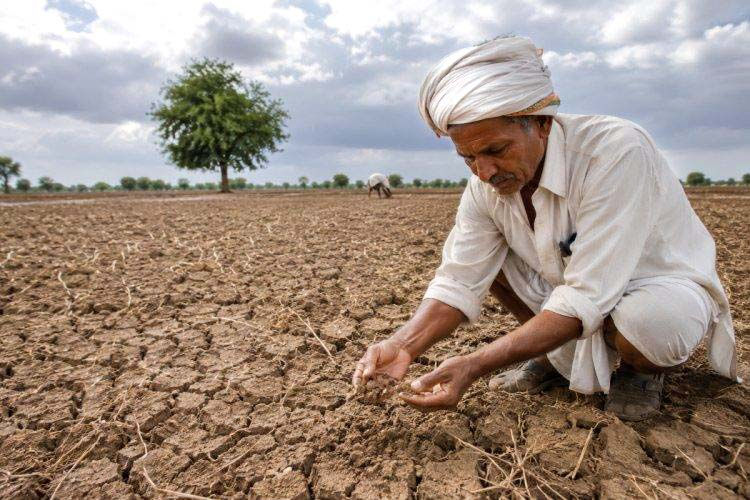
When geopolitics intrudes upon agriculture, the consequences are measured in delayed sowing, rising costs and anxious farmers scanning uncertain skies. With no sign of the ongoing Iran war receding anytime soon, the prospect of a prolonged disruption in fertiliser supply, particularly through the narrow maritime chokepoint of the Strait of Hormuz, poses a tangible threat to India’s Kharif 2026 season. The vulnerability is structural, long-standing and potentially severe.


India’s fertiliser economy is built on a delicate balance between domestic production and imports. Nowhere is this more evident than in nitrogenous fertilisers such as urea. Annual consumption hovers between 35 and 38 million tonnes, while domestic output lags at roughly 30–31 million tonnes. The gap is bridged through imports, typically between 6 and 10 million tonnes a year, sourced largely from the Gulf. Diammonium phosphate (DAP), equally vital, is also heavily imported. In aggregate, roughly two-thirds of India’s nitrogen fertilisers and a substantial share of its phosphatic inputs depend on maritime routes threading through geopolitically sensitive waters.


Cascading Effect

The ongoing conflict can disrupt between a fifth and a third of India’s fertiliser supplies. Such a shock, arriving on the eve of Kharif sowing in June and July, would not merely tighten availability but would trigger cascading effects across prices, subsidies and farm incomes. Fertiliser imports, already projected to cost nearly $18bn in the coming fiscal year, would become costlier or scarcer or both.


The fiscal implications are no less daunting. India’s fertiliser subsidy bill is expected to exceed Rs. 1.2 trillion in FY2025-26. Urea alone is sold to farmers at a heavily controlled price, far below its production and import cost, implying a subsidy of over Rs. 30,000 per tonne. A supply shock would force the government into an unenviable position: either absorb higher global prices, further inflating the subsidy burden, or risk domestic shortages and farmer distress.


It is against this fraught backdrop that a seemingly modest idea gains strategic relevance: reducing dependence on synthetic fertilisers through natural farming. In states such as Maharashtra, where fertiliser use per hectare is already below the national average, the scope for such a transition is both practical and potentially impactful.


Natural farming, often described in India through the rubric of Zero Budget Natural Farming (ZBNF), relies on locally sourced inputs such as cow dung, cow urine, compost and biological cultures to replace synthetic fertilisers. Its advocates argue that it not only reduces input costs but also improves soil health over time. Critics, however, caution that it may not supply sufficient nitrogen at scale, particularly for high-yield, input-intensive crops.


The evidence is, as is often the case in agriculture, mixed but suggestive. Field trials in Andhra Pradesh have shown that ZBNF can maintain yields in the short term when compared with conventional farming, particularly in rain-fed systems. Yet modelling studies indicate that, if adopted wholesale, such methods might replace only between half and four-fifths of current nitrogen use. The implication is clear: natural farming is not a silver bullet. But neither is it irrelevant.


Compelling Calculus

For Maharashtra, the calculus is compelling. The state’s urea consumption, which is estimated at around 2–3 million tonnes annually, is modest relative to its agricultural footprint. Average application rates are significantly lower than in states such as Punjab, suggesting that farmers are already accustomed to relatively lean input regimes. This creates a favourable baseline for partial substitution.


Consider a set of illustrative scenarios. If roughly 10 percent of the state’s farmers were to adopt natural farming practices on a meaningful scale, urea consumption could fall by approximately 250,000 tonnes. At current subsidy rates, this would translate into savings of around Rs. 800 crore. A 30 percent adoption rate could yield savings approaching Rs. 2,400 crore; at 60 percent, the figure could exceed Rs. 4,700 crore.


These sums represent fiscal space that could be redirected towards training, extension services and the development of local bio-input ecosystems.


With the Kharif season approaching, the window for intervention is narrow. The months of April to June 2026 will be decisive. Policy incentives must be activated swiftly, leveraging central schemes such as PM-PRANAM, which encourages states to reduce chemical fertiliser use by sharing subsidy savings. Maharashtra can augment this with its own programmes, offering targeted support for farmers willing to experiment with natural inputs.


Equally critical is the machinery of agricultural extension. Training programmes through Krishi Vigyan Kendras, farmer field schools and peer networks must be scaled up rapidly. Farmers need practical guidance: how to prepare bio-inputs such as Jeevamrit, how to manage mulching, how to integrate legumes into cropping systems. In the absence of such support, adoption will remain hesitant and uneven.


Input supply, too, must be addressed. Natural farming is often described as ‘zero budget,’ but this is something of a misnomer. While it reduces reliance on purchased fertilisers, it still requires access to biological cultures, organic matter and, in many cases, livestock-derived inputs. Ensuring the availability of these through cooperatives, local enterprises and dairy networks will be essential.


None of this obviates the risks. Farmers are, by necessity, conservative in their practices, particularly when faced with uncertainty. A sudden shift away from synthetic fertilisers, even if encouraged, may be perceived as risky - especially if the memory of past shortages looms large. Early adopters may encounter teething troubles, including modest yield declines or pest pressures. These must be mitigated through insurance mechanisms, targeted support and clear communication.


Meanwhile, the geopolitical risk itself remains unpredictable. Should a conflict escalate and disrupt shipments, India will need to activate contingency measures: diversifying import sources, ramping up domestic production and, if necessary, rationing supplies. Bio-fertilisers such as Azotobacter and Azospirillum could provide partial relief, but they cannot fully substitute for synthetic nitrogen in the short term.


Rebalancing Equation

The broader lesson is one of resilience. India’s fertiliser strategy has long prioritised availability and affordability, often at the expense of diversification and sustainability. The result is a system that functions efficiently in normal times but is exposed to external shocks. Natural farming, for all its limitations, offers a way to modestly rebalance this equation.


It would be naïve to suggest that a few months of policy push can transform agricultural practices across a state as large and diverse as Maharashtra. But it is equally mistaken to dismiss incremental change. Even a partial reduction in fertiliser demand that can be achieved through targeted adoption can help ease pressure on supply chains, moderate subsidy outlays and, perhaps most importantly, buy time.


In an era where geopolitics increasingly shapes economic outcomes, agriculture cannot remain insulated. The fields of Maharashtra may seem far removed from the tensions of West Asia, but the fertilisers that sustain them are not. It is high time to recognise and act upon this interdependence. By doing this, India has an opportunity to turn a looming vulnerability into a measured, if modest, strength.


(The writer is a member of Maharashtra Agriculture Price Commission. Views personal.)
Comments


bottom of page